
 AI-generated
Boston Fern
Nephrolepis exaltata
Also known as Feather Palm
Boston fern is a classic, arching, feathery fern that looks best in a hanging basket or on a stand where its fronds can spill over. It needs steady moisture, bright indirect light and above-average humidity, so it suits bathrooms and kitchens well. It's not hard, but it lets you know quickly if the air or the soil gets too dry.
Saving is free with a KinClub account, and it works here and in the KinClub app. Sign up free
Care profile
- Light
- Bright, indirect lightLow → direct sun
- Water
- Keep moistAbout every 5 days
- Difficulty
- ModerateTricky → easy
- Coldest it tolerates
- 50°F
- Humidity
- High
- Mature size
- MediumSmall → tree-size
- Growth rate
- Moderate to fast
- How common
- EverywhereRare → everywhere
- Plant family
- Nephrolepidaceae
Pets and toxicity
Non-toxic to cats
Listed as non-toxic to cats by the ASPCA.
Non-toxic to dogs
Listed as non-toxic to dogs by the ASPCA.
Source: ASPCA toxic and non-toxic plants. If a pet eats any houseplant, call your vet or an animal poison helpline.
How to care for Boston Fern
Light
Give it bright, indirect light, such as a spot near an east window or a few feet back from a south or west window. Avoid direct midday sun, which scorches the fronds.
Watering
Keep the soil evenly damp like a wrung-out sponge, never soggy and never fully dry. In an average home this usually means watering every 4 to 7 days, less often in winter. Water until it drains from the bottom, then empty the saucer.
Soil
Use a peat- or coco-based potting mix rich in organic matter that holds moisture but still drains. Adding a handful of perlite per few quarts of mix helps keep it from packing down.
Feeding
From spring to early autumn, feed every 4 to 6 weeks with a balanced liquid fertilizer diluted to half strength. Skip feeding in winter, and don't fertilize dry soil.
Repotting
Repot every 1 to 2 years in spring when roots fill the pot or push up through the surface. Move up only one size, about 2 inches wider, or divide the plant instead.
Propagation
Divide a crowded plant in spring by cutting the root ball into sections, each with several fronds and healthy roots. Pot them in fresh moist mix and keep them humid while they settle in.
Common problems
- Brown, crispy frond tips: the air is too dry or the soil dried out. Raise humidity with a humidifier or grouping plants, and water more regularly.
- Lots of leaflets dropping: usually caused by dry air, drafts, or a recent move. Keep it away from heaters and vents and keep the soil evenly damp.
- Yellowing fronds: often from overwatering or poor drainage. Check the drainage holes, let the top of the soil barely dry, and remove yellow fronds.
- Sticky residue or small bumps on fronds: scale or mealybugs. Wipe them off with alcohol-dipped cotton swabs and repeat weekly, or treat with insecticidal soap.
Similar plants
Same light needs and difficulty.
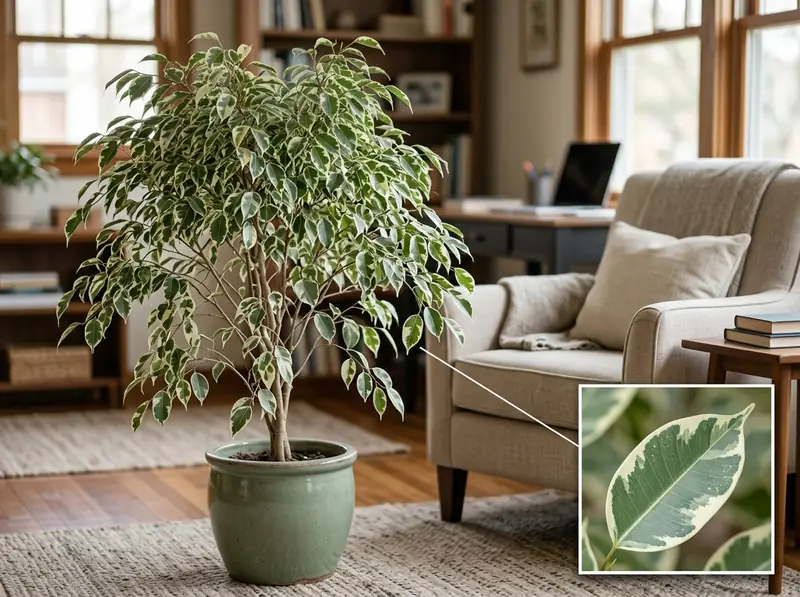 AI-generated
Variegated Weeping Fig
Ficus benjamina 'Variegata'
- Bright, indirect light
- Moderate watering
Toxic to cats and dogs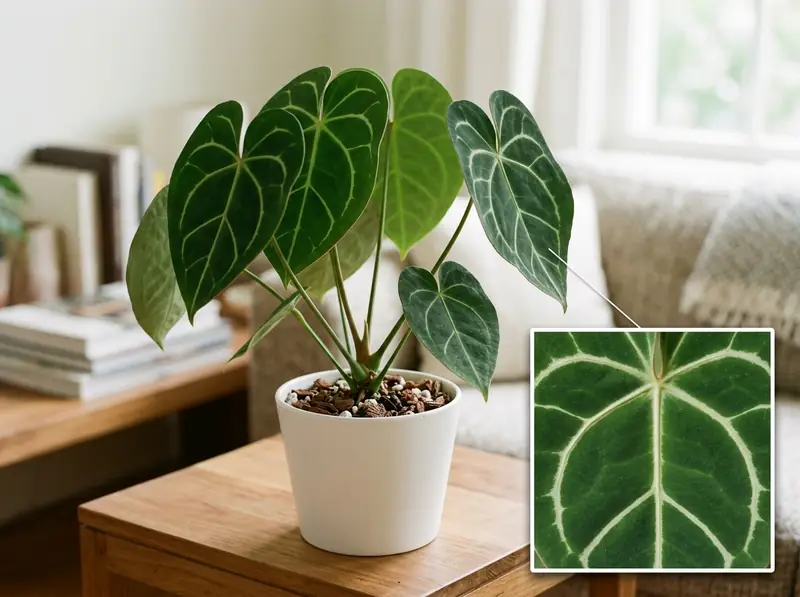 AI-generated
Velvet Cardboard Anthurium
Anthurium clarinervium
- Bright, indirect light
- Moderate watering
Pets: not yet checked AI-generated
 AI-generated