
 AI-generated
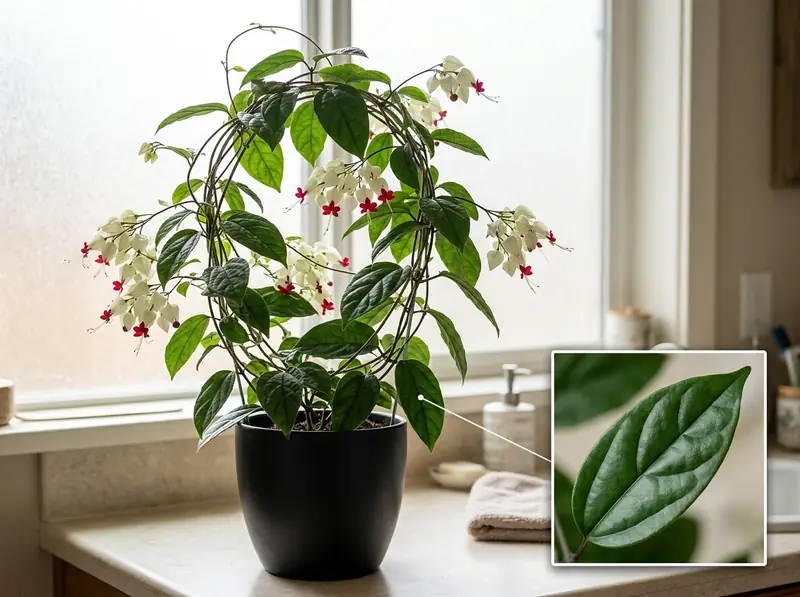
Bleeding Heart Vine
Clerodendrum thomsoniae
Bleeding heart vine is a twining climber with glossy green leaves and striking clusters of white, balloon-like calyces with crimson flowers emerging from them. It grows quickly in bright, indirect light and is best given a small trellis or hoop to climb. A cooler, drier winter rest and a spring pruning help it bloom well.
Saving is free with a KinClub account, and it works here and in the KinClub app. Sign up free
Care profile
- Light
- Bright, indirect lightLow → direct sun
- Water
- Moderate wateringAbout every 7 days
- Difficulty
- ModerateTricky → easy
- Coldest it tolerates
- 55°F
- Humidity
- Medium to high
- Mature size
- LargeSmall → tree-size
- Growth rate
- Fast
- How common
- CommonRare → everywhere
- Plant family
- Lamiaceae
Pets and toxicity
Cats and dogs: not yet checked
Not yet checked against ASPCA — don't assume it's safe for pets.
No toxicity source on record for this plant yet. If a pet eats any houseplant, call your vet or an animal poison helpline.
How to care for Bleeding Heart Vine
Light
Give it bright, indirect light, such as near an east or south window with a sheer curtain. A few hours of gentle morning sun helps flowering, but hot midday sun can scorch the leaves.
Watering
Water when the top inch of soil feels dry, about once a week in spring and summer, until water runs out the bottom. In winter, while it rests, water only enough to keep the soil from drying out completely, roughly every 2-3 weeks.
Soil
Use a well-draining, peat-based or coco-based potting mix with some perlite added, about one part perlite to four parts mix. Make sure the pot has drainage holes.
Feeding
Feed every 2-4 weeks in spring and summer with a balanced liquid fertilizer at half the label strength. Stop feeding in fall and winter.
Repotting
Repot every 1-2 years in spring into a pot 1-2 inches wider, once roots fill the pot. Prune back at the same time to keep it tidy.
Propagation
Take 4-6 inch stem cuttings with a few leaf nodes in spring or early summer. Root them in moist mix or water with warmth and humidity; it can take several weeks and not every cutting succeeds.
Common problems
- Leaves yellow and drop in winter: this is often normal dormancy or cold drafts, so reduce water and keep it away from cold windows.
- No flowers: usually too little light or no winter rest, so provide brighter light and a cooler, drier rest period.
- Crisp brown leaf edges: dry air or irregular watering, so water consistently and mist or use a pebble tray.
- Sticky leaves or tiny white flies: whiteflies or aphids, so wipe leaves, use insecticidal soap weekly and isolate the plant.
- Fine webbing under leaves: spider mites, so rinse the plant and spray with insecticidal soap, repeating for several weeks.
Similar plants
Same light needs and difficulty.
 AI-generated
 AI-generated
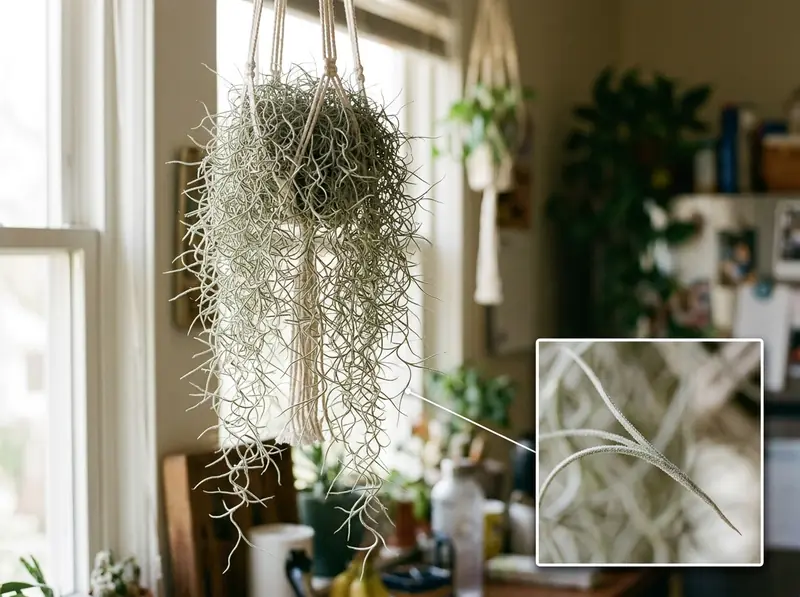
Spanish Moss
Tillandsia usneoides
- Bright, indirect light
- Moderate to moist watering
Pets: not yet checked AI-generated
 AI-generated