
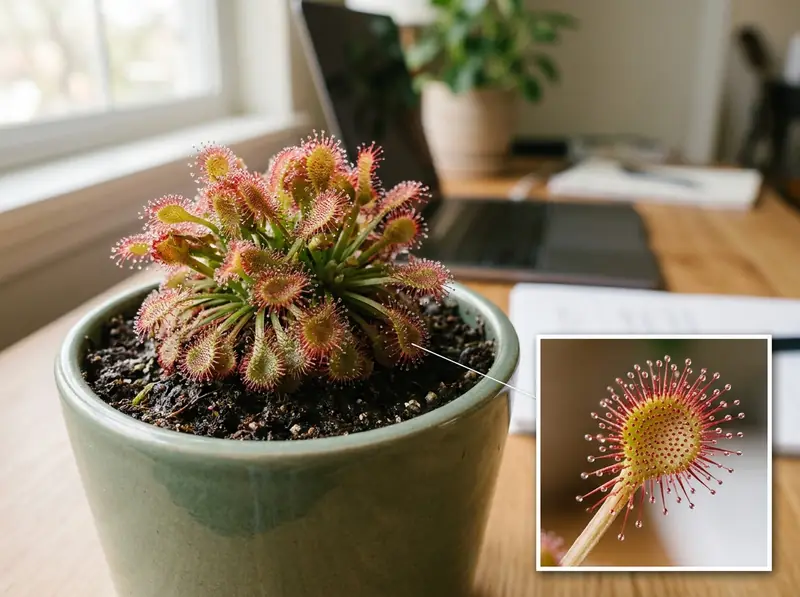
 AI-generated
Alice Sundew
Drosera aliciae
Alice sundew is a small South African rosette sundew with flat, spoon-shaped leaves that turn red in sun and glisten with sticky droplets. It is among the easiest sundews to grow on a sunny windowsill and handles cool nights.
Saving is free with a KinClub account, and it works here and in the KinClub app. Sign up free
Care profile
- Light
- Direct sunLow → direct sun
- Water
- Keep moistAbout every 3 days
- Difficulty
- ModerateTricky → easy
- Coldest it tolerates
- 35°F
- Humidity
- Medium to high
- Mature size
- SmallSmall → tree-size
- Growth rate
- Slow to moderate
- How common
- RareRare → everywhere
- Plant family
- Droseraceae
Pets and toxicity
Cats and dogs: not yet checked
Not yet checked against ASPCA — don't assume it's safe for pets.
No toxicity source on record for this plant yet. If a pet eats any houseplant, call your vet or an animal poison helpline.
How to care for Alice Sundew
Light
Give 4 or more hours of direct sun, such as a south or west window, or a strong grow light 6 inches above. Strong light turns the leaves red and brings out the dew.
Watering
Use only distilled, rain or reverse-osmosis water. Stand the pot in an inch of water in summer and keep it damp, with a little less in winter when it slows.
Soil
Use a mix of 1 part peat moss to 1 part perlite or silica sand, with no fertilizer, in a plastic pot with drainage holes.
Feeding
Do not fertilize; the sticky leaves trap tiny gnats. If needed, feed one tiny bug per plant occasionally.
Repotting
Repot every year or two in spring into fresh peat and sand. Divide off-sets when you do.
Propagation
Take leaf cuttings, laying a healthy leaf flat on damp peat under bright light, or separate the offset rosettes at the base.
Common problems
- No dew on the leaves means low light, dry air or the soil drying out; move it brighter and refill the tray.
- Tap water or fertilizer browns the leaf tips and kills the roots; use only distilled or rain water, and no fertilizer.
- Aphids and fungus gnats occasionally show up; rinse aphids off and use yellow sticky traps for the gnats.
- Do not touch the leaves, which can damage the sticky glands; let the plant catch its own insects.
Similar plants
Same light needs and difficulty.
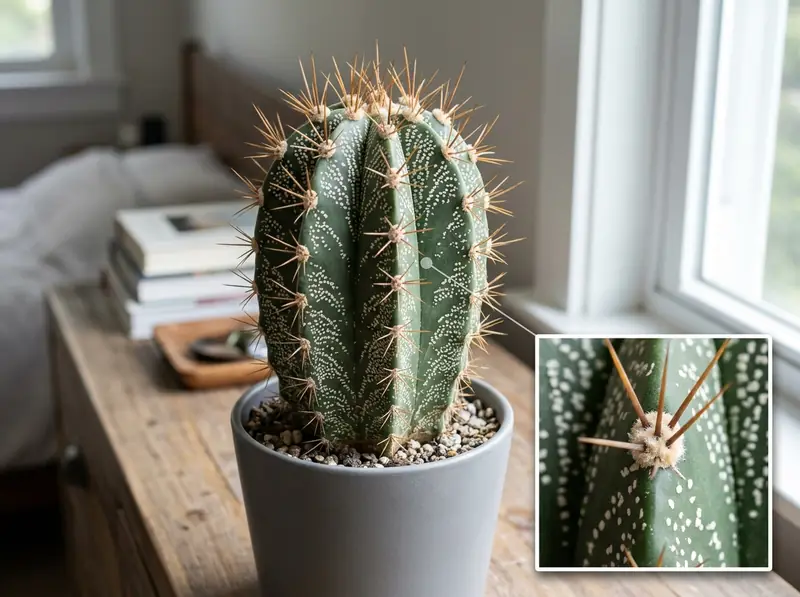 AI-generated
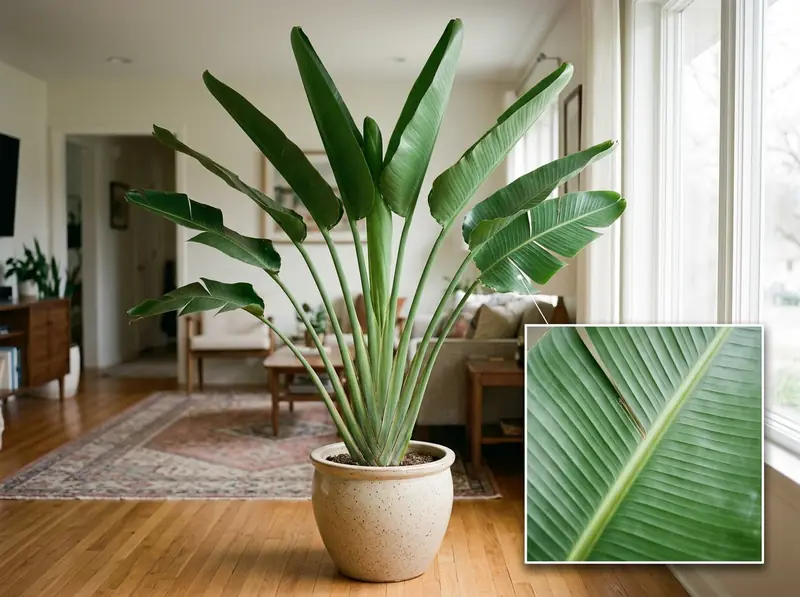 AI-generated
 AI-generated
 AI-generated