
 AI-generated
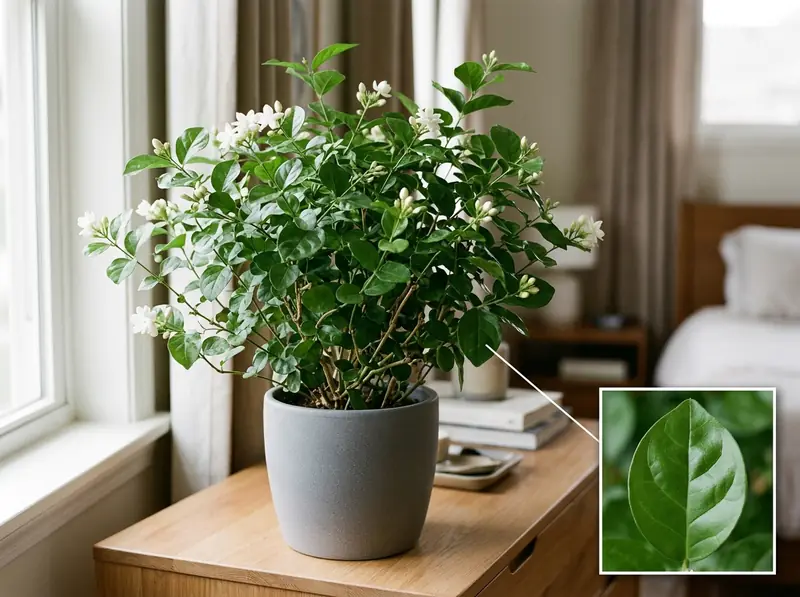
Arabian Jasmine
Jasminum sambac
Also known as Jasminum bicorollatum, Jasminum blancoi, Jasminum fragrans, Jasminum heyneanum, Jasminum odoratum, Jasminum pubescens, Jasminum quadrifolium, Jasminum quinqueflorum, Jasminum sanjurium, Jasminum trifoliatum, Jasminum undulatum, Jasminum zambac
Arabian jasmine is a compact, bushy shrub grown for its glossy leaves and very fragrant white flowers that open in the evening. It needs several hours of direct sun, regular water and a slightly cooler winter rest to bloom well. It suits a sunny window and is moderately easy with good light.
Saving is free with a KinClub account, and it works here and in the KinClub app. Sign up free
Care profile
- Light
- Direct sunLow → direct sun
- Water
- Moderate wateringAbout every 5 days
- Difficulty
- ModerateTricky → easy
- Coldest it tolerates
- 50°F
- Humidity
- Medium to high
- Mature size
- Medium to largeSmall → tree-size
- Growth rate
- Moderate to fast
- How common
- CommonRare → everywhere
- Plant family
- Oleaceae
Pets and toxicity
Cats and dogs: not yet checked
Not yet checked against ASPCA — don't assume it's safe for pets.
Source: ASPCA toxic and non-toxic plants. If a pet eats any houseplant, call your vet or an animal poison helpline.
How to care for Arabian Jasmine
Light
Give it at least 4-6 hours of direct sun daily, such as a south or west window, for best growth and flowering. In low light it grows leggy and rarely blooms; a grow light helps in winter.
Watering
Water when the top inch of soil feels dry, about every 4-7 days in summer, until water runs out the drainage holes. Never leave it standing in water, and water less often in winter.
Soil
Use a well-draining potting mix with added perlite or coarse sand, roughly 2 parts mix to 1 part perlite. Slightly acidic soil, pH 6.0-6.5, suits it well.
Feeding
Feed every 2-4 weeks in spring and summer with a balanced or bloom-boosting liquid fertilizer at half strength. Stop or reduce feeding in winter.
Repotting
Repot every 1-2 years in spring when roots fill the pot, moving up only 1-2 inches in pot diameter. It blooms better when slightly root-bound.
Propagation
Take 4-6 inch semi-ripe stem cuttings in spring or summer, dip in rooting hormone and plant in moist perlite and peat mix. Keep warm and humid; roots form in about 4-8 weeks.
Common problems
- Few or no flowers: move to more direct sun, feed with a bloom fertilizer, and prune lightly after flowering.
- Yellow leaves and leaf drop: usually overwatering or cold drafts, so let the top inch dry and move it away from cold windows.
- Sticky leaves or tiny webbing point to aphids, scale or spider mites: wipe leaves, spray with insecticidal soap weekly until clear.
- Leggy growth: prune back by about a third in early spring to encourage bushy new stems.
Similar plants
Same light needs and difficulty.
 AI-generated
 AI-generated
 AI-generated
 AI-generated