
 AI-generated
Mexican Fan Palm
Washingtonia robusta
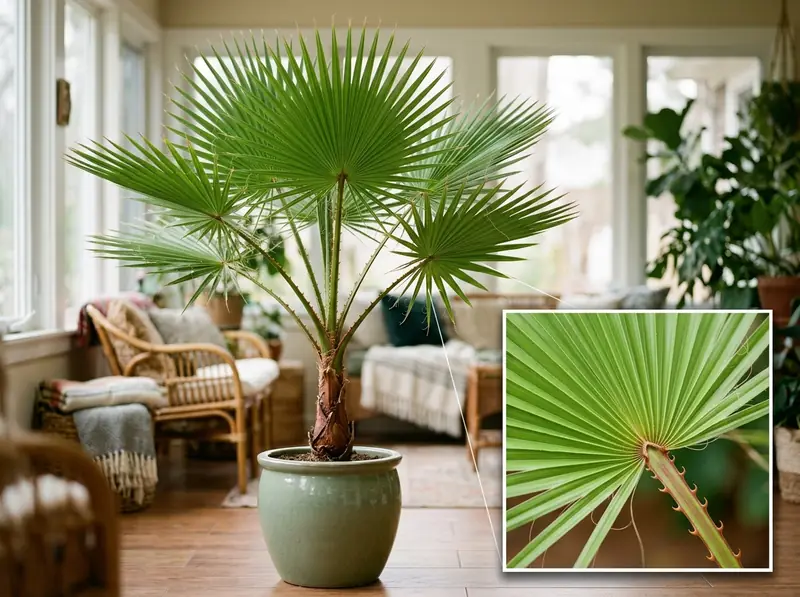
Mexican Fan Palm is a fast-growing fan palm with stiff, bright green, fan-shaped fronds on long spiny stems. Indoors it needs plenty of direct sun and eventually becomes a tall floor plant. It tolerates dry air and some cold, but it is unhappy in dim rooms.
Saving is free with a KinClub account, and it works here and in the KinClub app. Sign up free
Care profile
- Light
- Direct sunLow → direct sun
- Water
- Moderate wateringAbout every 7 days
- Difficulty
- Easy to moderateTricky → easy
- Coldest it tolerates
- 30°F
- Humidity
- Low
- Mature size
- Tree-sizeSmall → tree-size
- Growth rate
- Fast
- How common
- CommonRare → everywhere
- Plant family
- Arecaceae
Pets and toxicity
Cats and dogs: not yet checked
Not yet checked against ASPCA — don't assume it's safe for pets.
No toxicity source on record for this plant yet. If a pet eats any houseplant, call your vet or an animal poison helpline.
How to care for Mexican Fan Palm
Light
Give it several hours of direct sun, ideally a south- or west-facing window. It also does well outdoors in full sun in summer if moved out gradually over a week or two.
Watering
Water deeply when the top 1-2 inches of soil are dry, about every 7 days in summer, until water runs out the bottom. Water less often in winter, roughly every 10-14 days, and empty the saucer.
Soil
Use a well-draining potting mix, such as standard potting soil with about 20-30% perlite or coarse sand added. Use a pot with large drainage holes.
Feeding
Feed monthly in spring and summer with a balanced palm or general fertilizer at half strength. Skip feeding in fall and winter.
Repotting
Repot every 2-3 years in spring into a pot only 2-3 inches wider, handling the roots carefully because palms resent root damage. Mature plants can be top-dressed with fresh soil instead.
Propagation
It is grown from seed only, which is slow and needs warmth, often taking 1-3 months to sprout. It does not make offsets or root from cuttings, so most owners buy young plants.
Common problems
- Brown leaf tips: caused by dry soil, fluoride in tap water, or salt buildup. Water deeply, flush the soil occasionally, and use filtered water if possible.
- Spider mites: fine webbing and stippled fronds in dry indoor air. Rinse the fronds and treat with insecticidal soap every 7 days until gone.
- Yellowing lower fronds: often overwatering or poor drainage, though old fronds yellow naturally. Let the soil dry and remove only fully brown fronds.
- Leggy, floppy growth: too little light. Move to a sunnier window or add a grow light.
Similar plants
Same light needs and difficulty.
 AI-generated
 AI-generated
 AI-generated
 AI-generated