
 AI-generated
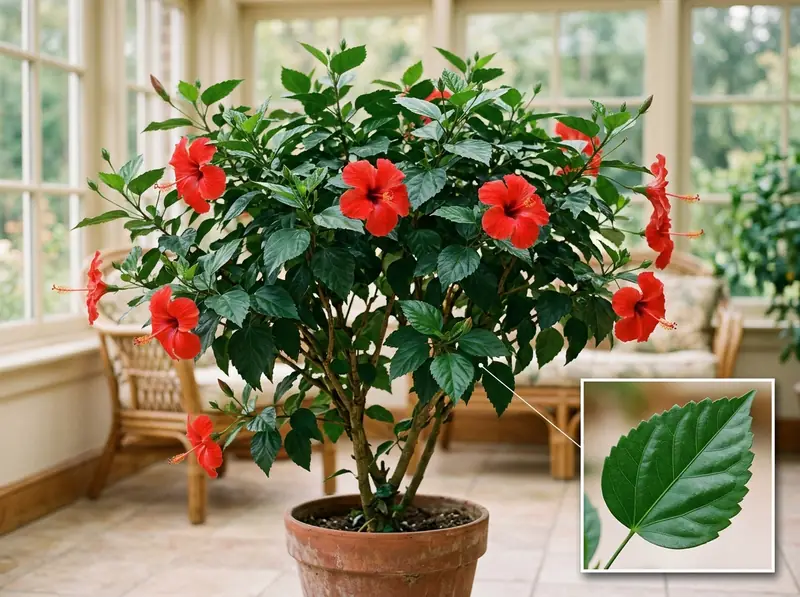
Tropical Hibiscus
Hibiscus rosa-sinensis
Tropical hibiscus is a fast-growing shrub with large, showy flowers that each last only a day or two. It needs plenty of direct sun, regular water and steady feeding to keep blooming. It can live indoors all year, or outdoors in summer, but it dislikes sudden changes and temperatures below about 50°F.
Saving is free with a KinClub account, and it works here and in the KinClub app. Sign up free
Care profile
- Light
- Direct sunLow → direct sun
- Water
- Moderate to moist wateringAbout every 5 days
- Difficulty
- ModerateTricky → easy
- Coldest it tolerates
- 50°F
- Humidity
- Medium to high
- Mature size
- LargeSmall → tree-size
- Growth rate
- Fast
- How common
- Very commonRare → everywhere
- Plant family
- Malvaceae
Pets and toxicity
Cats and dogs: not yet checked
Not yet checked against ASPCA — don't assume it's safe for pets.
No toxicity source on record for this plant yet. If a pet eats any houseplant, call your vet or an animal poison helpline.
How to care for Tropical Hibiscus
Light
Give it at least 4-6 hours of direct sun a day, such as a south- or west-facing window. Without strong light it will grow leaves but few flowers.
Watering
Water thoroughly when the top inch of soil is dry, until water runs out the drainage holes. In summer that may be every 3-5 days, and in winter every 1-2 weeks. Never let it sit in a saucer of water.
Soil
Use a well-draining, peat- or coir-based potting mix with some perlite added. Aim for slightly acidic soil, about pH 6.0-6.5.
Feeding
In spring and summer, feed every 2 weeks with a diluted fertilizer that is low in phosphorus and high in potassium. Stop or cut back in winter.
Repotting
Repot every 1-2 years in spring, going up only 1-2 inches in pot size, because hibiscus flowers best when slightly root-bound. Once it reaches the size you want, refresh the top few inches of soil instead.
Propagation
Take 4-6 inch softwood cuttings in spring or summer and dip them in rooting hormone. Root them in moist mix under a clear bag in warm, bright light. Rooting takes about 4-8 weeks and is not always reliable.
Common problems
- Bud drop: caused by sudden changes in light, temperature or watering. Keep conditions steady and avoid drafts.
- Yellow leaves: usually from overwatering or a nutrient shortage. Let the soil dry a little more and feed regularly in the growing season.
- Sticky leaves and curled new growth: aphids or whiteflies. Rinse the plant off and treat with insecticidal soap every 7 days.
- Fine webbing and stippled leaves: spider mites in dry air. Rinse the leaves and raise humidity.
- Leggy growth: too little light. Move it to a sunnier window and prune in spring.
Similar plants
Same light needs and difficulty.
 AI-generated
 AI-generated
 AI-generated
 AI-generated