
 AI-generated
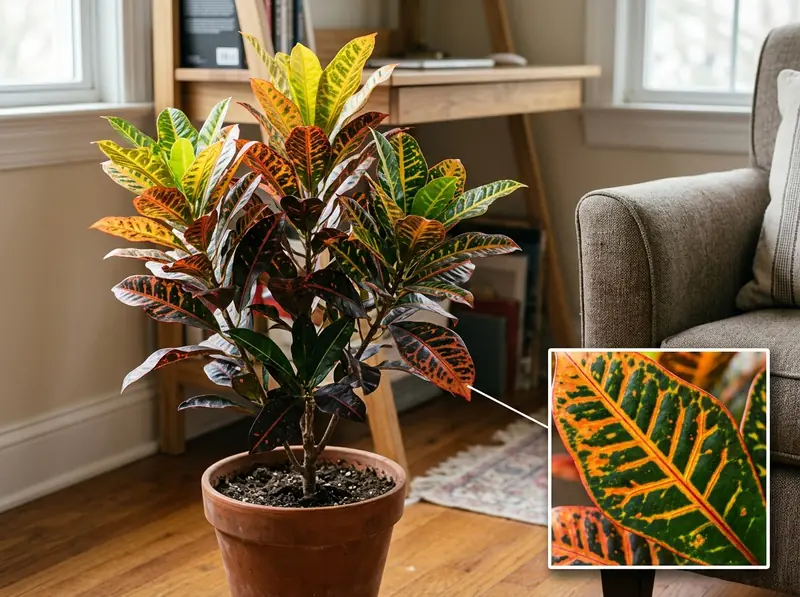
Croton
Codiaeum variegatum
Croton is a bold foliage plant with thick, glossy leaves splashed in red, yellow, orange and green. It needs lots of bright light, steady warmth and humidity to hold its colors, and it can drop leaves if moved or chilled. Give it a bright, stable spot and consistent watering and it will reward you with vivid color.
Saving is free with a KinClub account, and it works here and in the KinClub app. Sign up free
Care profile
- Light
- Direct sunLow → direct sun
- Water
- Moderate wateringAbout every 7 days
- Difficulty
- ModerateTricky → easy
- Coldest it tolerates
- 55°F
- Humidity
- High
- Mature size
- Medium to largeSmall → tree-size
- Growth rate
- Moderate
- How common
- Very commonRare → everywhere
- Plant family
- Euphorbiaceae
Pets and toxicity
Cats and dogs: not yet checked
Not yet checked against ASPCA — don't assume it's safe for pets.
No toxicity source on record for this plant yet. If a pet eats any houseplant, call your vet or an animal poison helpline.
How to care for Croton
Light
Give it the brightest spot you have, ideally a south- or west-facing window with several hours of direct sun. Bright light is what keeps the leaf colors vivid; in dim rooms the leaves turn green.
Watering
Water thoroughly when the top inch of soil feels dry, until water drains out, then empty the saucer. Expect about once a week in the growing season and less in winter; don't let the soil dry out completely or stay soggy.
Soil
Use a well-draining, peat- or coir-based potting mix with some perlite or bark added. Choose a pot with drainage holes.
Feeding
Feed every 2 to 4 weeks in spring and summer with a balanced liquid houseplant fertilizer at half the label strength. Stop or reduce to every 6 to 8 weeks in winter.
Repotting
Repot every 2 to 3 years in spring, only going up 1 to 2 inches in pot diameter, since it likes being slightly snug. Handle gently because roots dislike disturbance.
Propagation
Take 4 to 6 inch tip cuttings in spring or summer and let the milky sap dry or rinse it off. Root them in moist mix or water with bottom heat around 75°F and high humidity; it can take several weeks.
Common problems
- Leaf drop after moving or a cold draft: keep it in a steady, warm spot above 60°F and away from vents and doors.
- Brown, crispy leaf edges from dry air: mist is not enough, so use a humidifier or pebble tray and keep it away from heaters.
- Webbing and speckled leaves mean spider mites: rinse leaves, wipe undersides, and treat with insecticidal soap weekly for several weeks.
- Colors fading to green: move to a brighter spot with more direct sun.
- Sticky residue or cottony white spots point to scale or mealybugs: wipe with alcohol-dipped cotton swabs and repeat.
Similar plants
Same light needs and difficulty.
 AI-generated
 AI-generated
 AI-generated
 AI-generated