
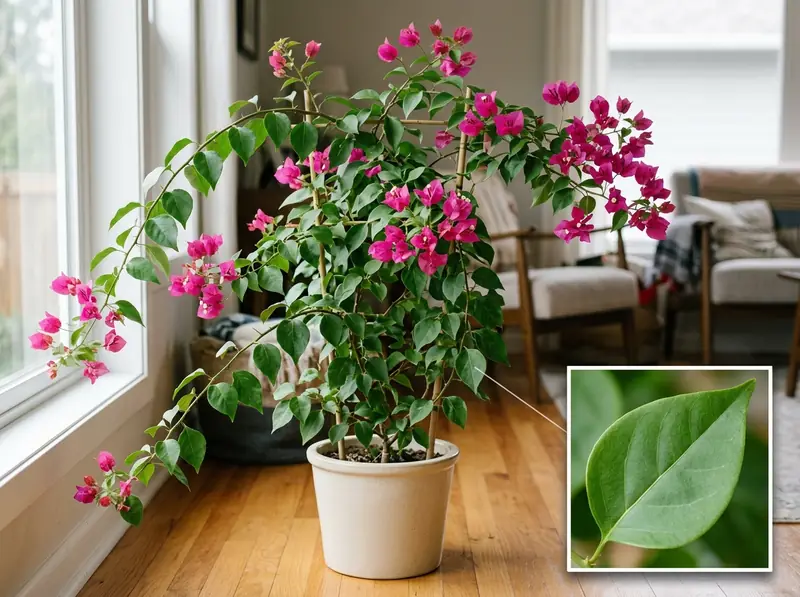
 AI-generated
Bougainvillea
Bougainvillea glabra
Bougainvillea is a vigorous, thorny climber famous for papery, brightly colored bracts in magenta, pink, orange or white. Indoors it needs as much direct sun as you can give it and a dry spell between waterings. Prune after blooming to keep it compact and flowering.
Saving is free with a KinClub account, and it works here and in the KinClub app. Sign up free
Care profile
- Light
- Direct sunLow → direct sun
- Water
- Let it dry outAbout every 7 days
- Difficulty
- ModerateTricky → easy
- Coldest it tolerates
- 40°F
- Humidity
- Medium
- Mature size
- LargeSmall → tree-size
- Growth rate
- Fast
- How common
- Very commonRare → everywhere
- Plant family
- Nyctaginaceae
Pets and toxicity
Cats and dogs: not yet checked
Not yet checked against ASPCA — don't assume it's safe for pets.
No toxicity source on record for this plant yet. If a pet eats any houseplant, call your vet or an animal poison helpline.
How to care for Bougainvillea
Light
Give it at least 5-6 hours of direct sun daily, ideally in a south- or west-facing window. Move it outdoors in summer once nights stay above 50°F.
Watering
Water deeply until it drains, then let the top 1-2 inches of soil dry before watering again, roughly every 5-10 days in summer. In winter water much less, only enough to keep the stems from shriveling.
Soil
Use a fast-draining potting mix, such as regular mix with about one-third perlite or coarse sand added. Pick a pot with drainage holes.
Feeding
Feed every 2-4 weeks in spring and summer with a bloom-boosting fertilizer diluted to half strength. Stop feeding in winter.
Repotting
Repot only every 2-3 years in spring, moving up one pot size, as it flowers best when slightly root-bound. Handle the roots gently because they resent disturbance.
Propagation
Take 4-6 inch semi-hardwood cuttings in spring or early summer, dip in rooting hormone and keep in a warm, bright spot with bottom heat. Rooting is slow and often unreliable.
Common problems
- Leaf drop after moving: it sulks with changes in light or temperature, so move it gradually and keep it in a steady sunny spot.
- No blooms: usually too little light or too much water or nitrogen; increase sun, water less and use a bloom fertilizer.
- Aphids or mealybugs on new growth: wipe off or rinse, then treat with insecticidal soap every 7 days until clear.
- Yellow leaves with wet soil: let the soil dry out more and check the pot drains freely.
- Leggy growth: prune back by about one-third after a flush of blooms to encourage branching and more flowers.
Similar plants
Same light needs and difficulty.
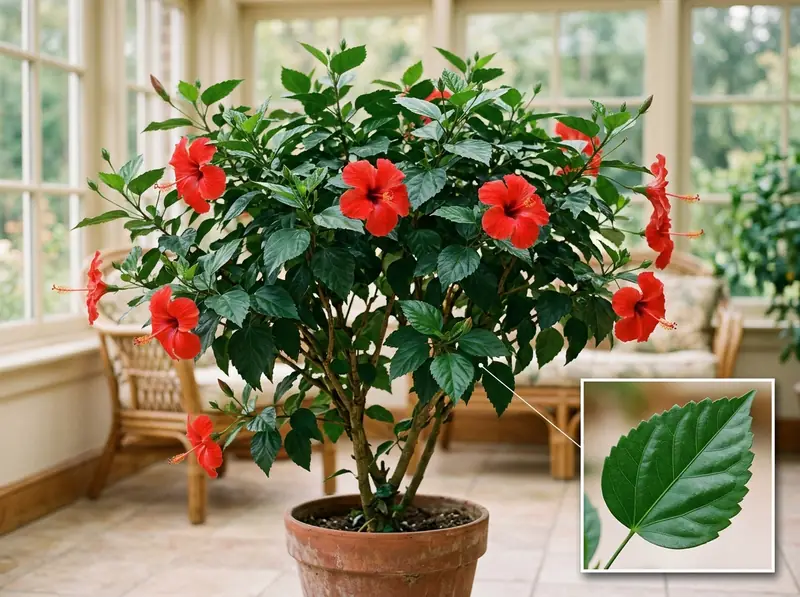 AI-generated
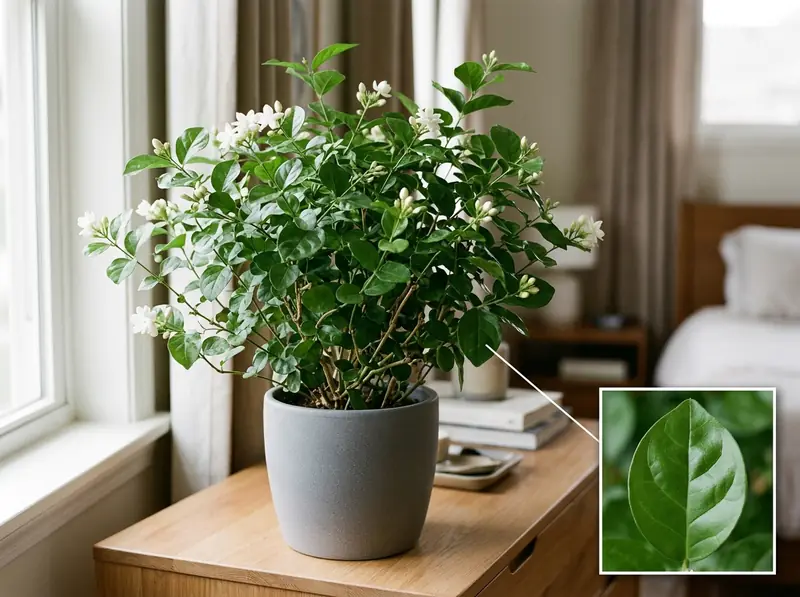 AI-generated
 AI-generated
 AI-generated