
 AI-generated
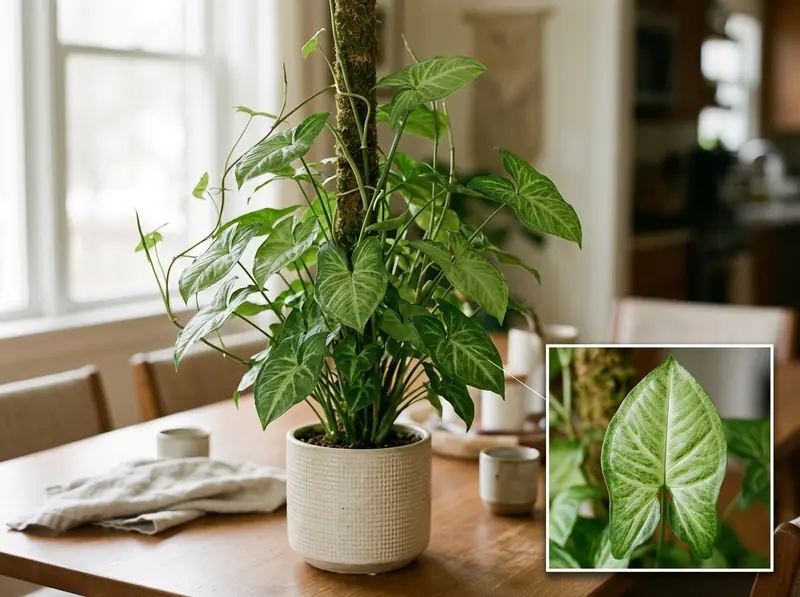
Arrowhead Plant
Syngonium podophyllum
Also known as Arrow-Head Vine, Nephthytis, Green Gold Naphthysis, African Evergreen, Trileaf Wonder
Arrowhead plant is a fast-growing, easygoing foliage plant with arrow-shaped leaves in green, pink, or cream. It does well in bright, indirect light and is forgiving of occasional missed waterings. Pinch it back to keep it bushy, or give it a moss pole or trellis to climb as it matures.
Saving is free with a KinClub account, and it works here and in the KinClub app. Sign up free
Care profile
- Light
- Medium to bright, indirect lightLow → direct sun
- Water
- Moderate wateringAbout every 7 days
- Difficulty
- EasyTricky → easy
- Coldest it tolerates
- 55°F
- Humidity
- Medium
- Mature size
- MediumSmall → tree-size
- Growth rate
- Fast
- How common
- Very commonRare → everywhere
- Plant family
- Araceae
Pets and toxicity
Toxic to cats
Keep away from cats. Call your vet or a pet poison helpline if a cat chews it.
Toxic to dogs
Keep away from dogs. Call your vet or a pet poison helpline if a dog chews it.
Source: ASPCA toxic and non-toxic plants. If a pet eats any houseplant, call your vet or an animal poison helpline.
How to care for Arrowhead Plant
Light
Give it bright, indirect light, such as a spot a few feet from an east or north-facing window. It tolerates medium light but grows more slowly there. Keep it out of direct midday sun, which scorches the leaves.
Watering
Water when the top inch of soil feels dry, usually about once a week in the growing season. Water thoroughly until it drains from the bottom, then empty the saucer. Water less often in winter.
Soil
Use a well-draining, peat- or coco-based potting mix. Mixing in about a quarter perlite or orchid bark helps keep it from staying soggy.
Feeding
Feed every 4 weeks in spring and summer with a balanced liquid houseplant fertilizer at half the label strength. Skip feeding in fall and winter.
Repotting
Repot every 1 to 2 years in spring when roots fill the pot or grow out of the drainage holes. Move up just one pot size, about 1 to 2 inches wider.
Propagation
Take stem cuttings 4 to 6 inches long with at least one node and a leaf. Root them in water or moist mix in bright indirect light, which takes 2 to 4 weeks.
Common problems
- Leggy, sparse growth: move to brighter light and pinch back the tips to encourage branching.
- Yellow lower leaves: usually overwatering, so let the top inch dry out and check that the pot drains.
- Brown crispy leaf edges: caused by dry soil, low humidity, or fertilizer salts. Water more evenly and flush the soil occasionally.
- Spider mites (fine webbing, speckled leaves): rinse the leaves and treat with insecticidal soap every 5 to 7 days.
Similar plants
Same light needs and difficulty.
 AI-generated
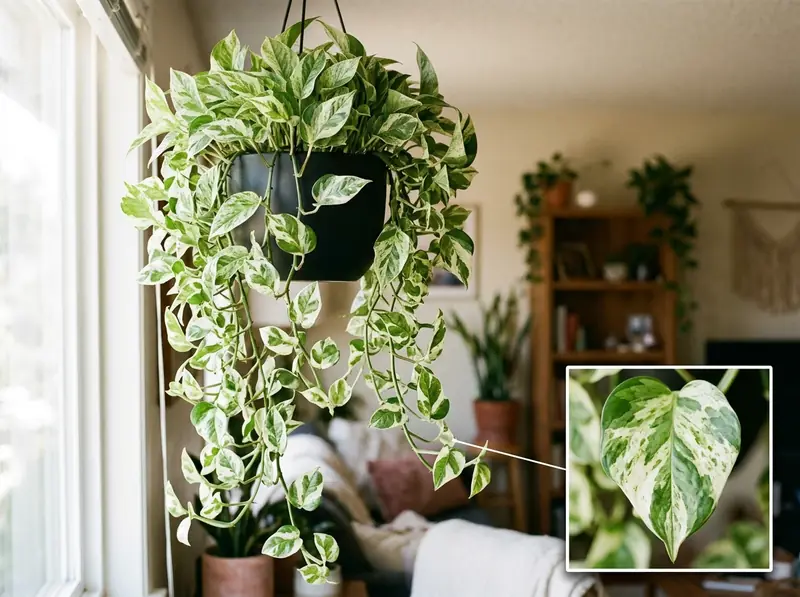
Snow Queen Pothos
Epipremnum aureum 'Snow Queen'
- Bright, indirect light
- Dry to moderate watering
Toxic to cats and dogs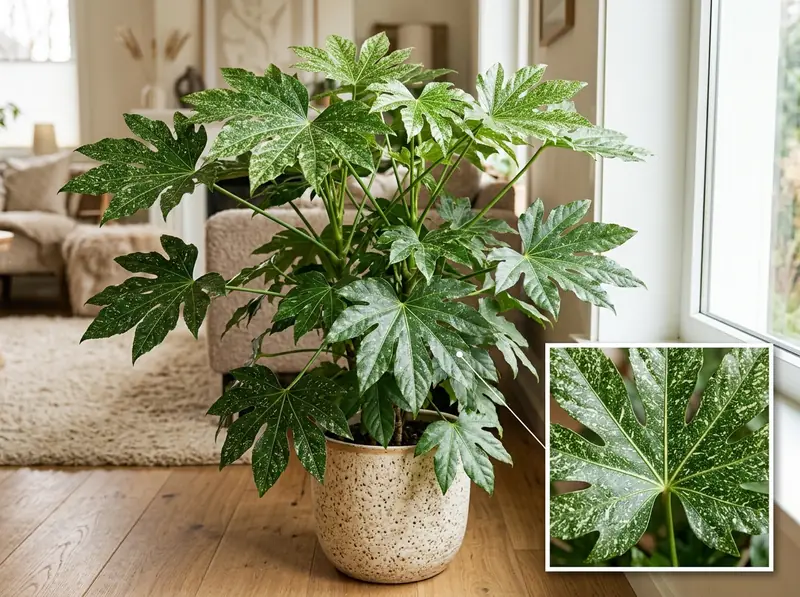 AI-generated
Spider's Web Fatsia
Fatsia japonica 'Spider's Web'
- Bright, indirect light
- Moderate watering
Pets: not yet checked AI-generated
Chinese Money Plant
Pilea peperomioides
- Bright, indirect light
- Dry to moderate watering
Pets: not yet checked AI-generated
Christmas Cactus
Schlumbergera × buckleyi
- Bright, indirect light
- Moderate watering
Pets: not yet checked