
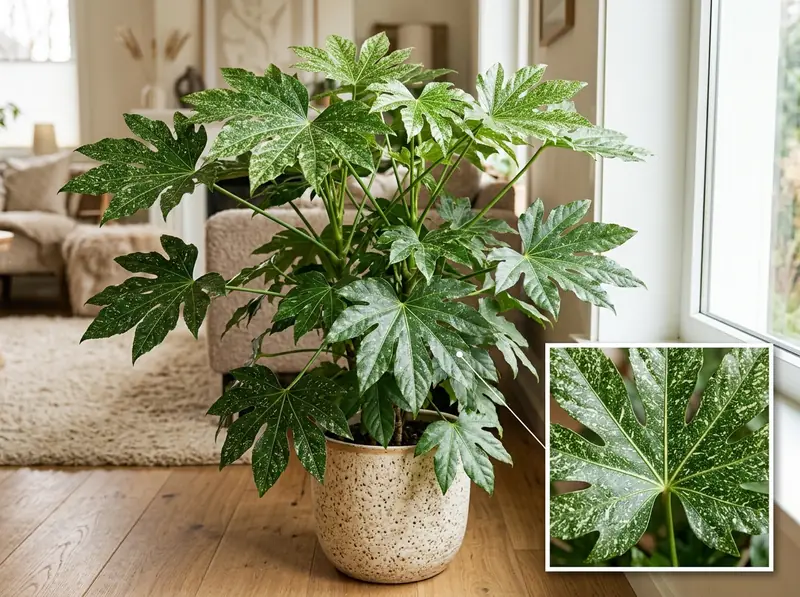
 AI-generated
Spider's Web Fatsia
Fatsia japonica 'Spider's Web'
Spider's Web Fatsia is a bold, shrubby plant with large, hand-shaped glossy leaves dusted with white speckling. It prefers a cool, bright room out of hot sun and steady, moderate watering. It's easier in cooler homes; hot, dry air is what trips it up.
Saving is free with a KinClub account, and it works here and in the KinClub app. Sign up free
Care profile
- Light
- Bright, indirect lightLow → direct sun
- Water
- Moderate wateringAbout every 7 days
- Difficulty
- Easy to moderateTricky → easy
- Coldest it tolerates
- 30°F
- Humidity
- Medium
- Mature size
- LargeSmall → tree-size
- Growth rate
- Moderate
- How common
- CommonRare → everywhere
Pets and toxicity
Cats and dogs: not yet checked
Not yet checked against ASPCA — don't assume it's safe for pets.
No toxicity source on record for this plant yet. If a pet eats any houseplant, call your vet or an animal poison helpline.
How to care for Spider's Web Fatsia
Light
Give bright indirect light or a spot with gentle morning sun, such as near an east-facing window. Protect it from hot midday sun, which scorches the pale speckled leaves; it tolerates some shade but the variegation fades.
Watering
Water thoroughly when the top inch of soil feels dry, about once a week in the growing season, and let excess drain away. Water less in winter, when the plant is cooler and growing slowly, but don't let the root ball dry out completely.
Soil
Use a good quality, peat-based or coir-based potting mix with about 20-30% perlite or bark for drainage. The pot must have drainage holes.
Feeding
Feed every 4 weeks from spring through summer with a balanced liquid houseplant fertiliser at half the label strength. Do not feed in autumn and winter.
Repotting
Repot every 2 years in spring, moving up only 2 inches in pot diameter, when roots circle the pot or poke out of the drainage holes. Top-dress with fresh mix in the years between.
Propagation
Take semi-ripe stem cuttings in summer, or separate rooted suckers, and keep them warm and humid. Rooting is slow and inconsistent, so take several cuttings; air layering is more reliable for large stems.
Common problems
- Drooping leaves: check the soil first; water if it is dry, or let it dry out and check for root rot if it is soggy.
- Brown crispy leaf edges: usually dry air or irregular watering, so move it away from heaters and water more evenly.
- Fine webbing and stippled leaves: spider mites in dry heated air; wipe leaves, spray with water, and treat with insecticidal soap weekly.
- Sticky leaves or small brown bumps on stems: scale insects; rub off with alcohol-soaked cotton swabs and repeat weekly.
- Leaf drop in winter: often from hot dry rooms or cold drafts, so keep it in a cooler, steady spot.
Similar plants
Same light needs and difficulty.
 AI-generated
 AI-generated
 AI-generated
 AI-generated