
 AI-generated
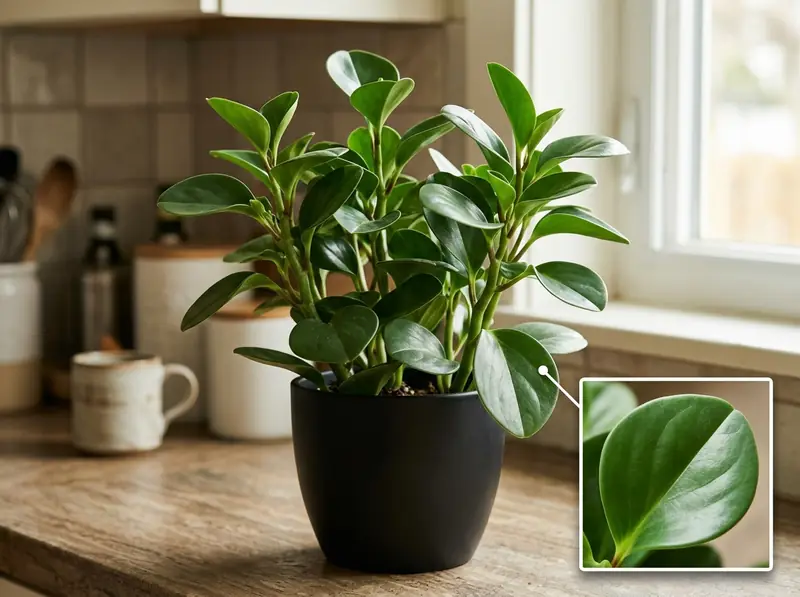
Baby Rubber Plant
Peperomia obtusifolia
Also known as American Rubber Plant, Pepper Face, Blunt Leaf Peperomia, Rhynchophorum
Baby rubber plant is a compact, glossy-leaved Peperomia that stays under about a foot tall, and it suits desks, shelves and windowsills. It is forgiving and easy to keep: bright, indirect light and a good dry-down between waterings are what it needs most. Overwatering is the most common way to lose one.
Saving is free with a KinClub account, and it works here and in the KinClub app. Sign up free
Care profile
- Light
- Bright, indirect lightLow → direct sun
- Water
- Let it dry outAbout every 10 days
- Difficulty
- EasyTricky → easy
- Coldest it tolerates
- 50°F
- Humidity
- Medium
- Mature size
- SmallSmall → tree-size
- Growth rate
- Moderate
- How common
- Very commonRare → everywhere
- Plant family
- Piperaceae
Pets and toxicity
Non-toxic to cats
Listed as non-toxic to cats by the ASPCA.
Non-toxic to dogs
Listed as non-toxic to dogs by the ASPCA.
Source: ASPCA toxic and non-toxic plants. If a pet eats any houseplant, call your vet or an animal poison helpline.
How to care for Baby Rubber Plant
Light
Give it bright, indirect light, such as a spot near an east window or a few feet back from a south or west window. It tolerates medium light but grows more slowly and less compactly, and direct midday sun can scorch the leaves.
Watering
Water thoroughly when the top 1 to 2 inches of soil are dry, usually every 10 to 14 days in summer and every 3 weeks or so in winter. Empty the saucer afterwards, since the fleshy stems and shallow roots rot easily in wet soil.
Soil
Use a light, airy, well-draining mix, such as standard houseplant mix with about one-third perlite or orchid bark added. Always use a pot with drainage holes.
Feeding
Feed every 4 to 6 weeks in spring and summer with a balanced houseplant fertilizer diluted to half strength. Skip feeding in fall and winter.
Repotting
Repot only every 2 to 3 years, in spring, when roots fill the pot. Move up just one size (1 to 2 inches wider), because it prefers being slightly snug.
Propagation
Take a 3 to 4 inch stem cutting with a couple of leaves, or a single leaf with a bit of stem attached. Root in water or moist perlite-rich mix in bright, indirect light; roots usually form in 3 to 6 weeks.
Common problems
- Yellowing, mushy lower leaves and dark soft stems mean overwatering or root rot: let the soil dry out, cut away rotted parts, and repot in fresh mix if needed.
- Wrinkled, limp leaves point to underwatering: give a thorough soak and then stick to a more regular schedule.
- Leggy growth with sparse leaves is from low light: move to a brighter spot and pinch stem tips to encourage bushiness.
- Cottony white clusters in leaf joints are mealybugs: dab with a cotton swab dipped in rubbing alcohol and repeat weekly until gone.
- Leaf drop in winter often follows cold drafts or temperatures below 50°F: keep it away from cold windows and vents.
Similar plants
Same light needs and difficulty.
 AI-generated
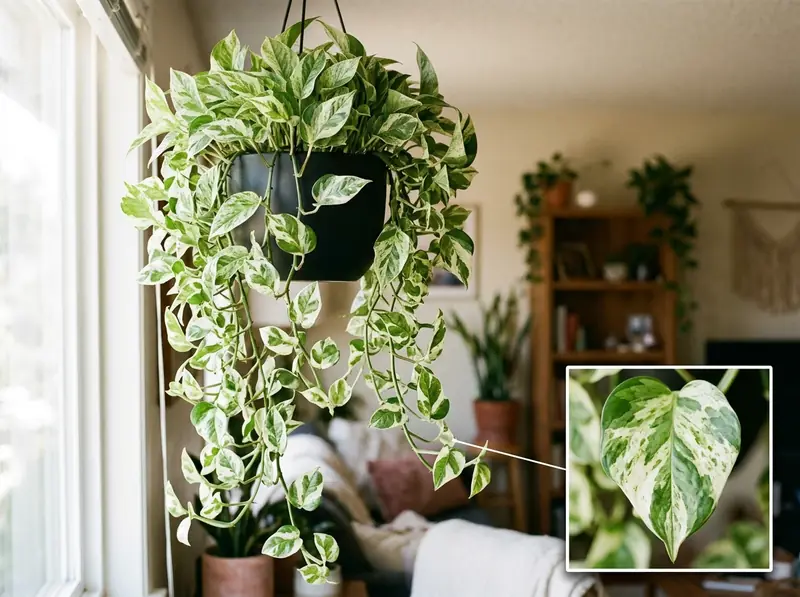
Snow Queen Pothos
Epipremnum aureum 'Snow Queen'
- Bright, indirect light
- Dry to moderate watering
Toxic to cats and dogs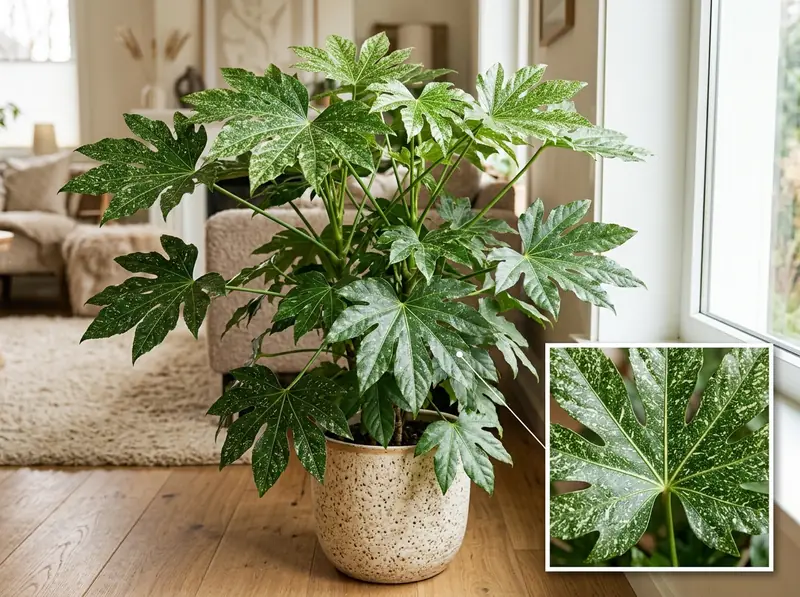 AI-generated
Spider's Web Fatsia
Fatsia japonica 'Spider's Web'
- Bright, indirect light
- Moderate watering
Pets: not yet checked AI-generated
Chinese Money Plant
Pilea peperomioides
- Bright, indirect light
- Dry to moderate watering
Pets: not yet checked AI-generated
Christmas Cactus
Schlumbergera × buckleyi
- Bright, indirect light
- Moderate watering
Pets: not yet checked