
 AI-generated
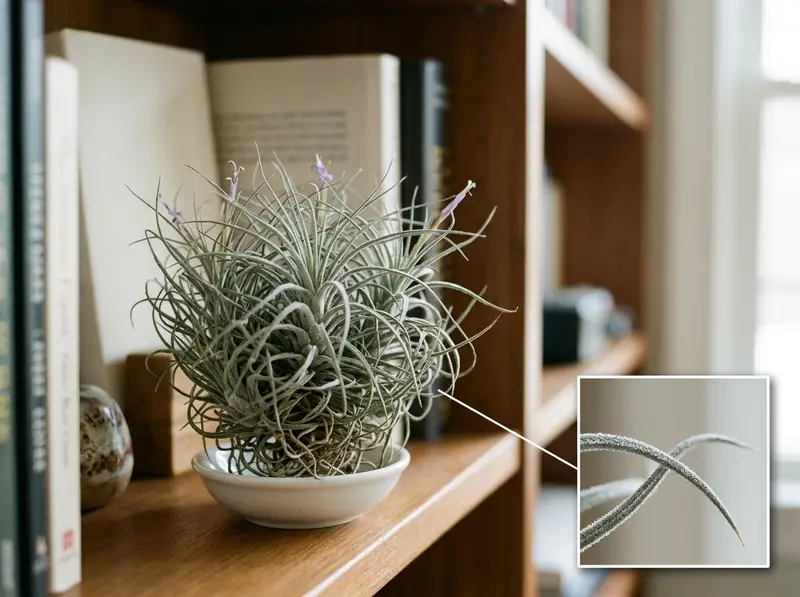
Ball Moss
Tillandsia recurvata
Ball moss is a small, silvery-gray air plant that forms a loose tufted clump and needs no soil. Give it bright light, a weekly soak, and good airflow so it dries quickly afterward. It is easy to grow and slow to spread, and it can be divided into new clumps.
Saving is free with a KinClub account, and it works here and in the KinClub app. Sign up free
Care profile
- Light
- Bright, indirect lightLow → direct sun
- Water
- Let it dry outAbout every 7 days
- Difficulty
- EasyTricky → easy
- Coldest it tolerates
- 40°F
- Humidity
- Low
- Mature size
- SmallSmall → tree-size
- Growth rate
- Slow
- How common
- CommonRare → everywhere
- Plant family
- Bromeliaceae
Pets and toxicity
Cats and dogs: not yet checked
Not yet checked against ASPCA — don't assume it's safe for pets.
No toxicity source on record for this plant yet. If a pet eats any houseplant, call your vet or an animal poison helpline.
How to care for Ball Moss
Light
Give bright light, including a few hours of gentle direct sun from an east or west window. Turn it occasionally so all sides get light.
Watering
Soak or dunk the plant in room-temperature water for 10 to 20 minutes about once a week, or mist thoroughly 2 to 3 times a week. Let it dry fully within 4 hours afterward; water less in winter.
Soil
It needs no soil, because it is an air plant that takes in water through its leaves. Display it on a rock, wood or in an open holder, or loosely wired to bark, and avoid packing it in potting mix.
Feeding
Feed once a month in the growing season with a bromeliad or air-plant fertilizer diluted to quarter strength, added to the soaking water. Skip it in winter.
Repotting
No repotting is needed since it grows without soil. Simply move it to a larger mount or display when the clump gets crowded, or divide it into smaller clumps.
Propagation
Divide the clump by gently pulling apart small offsets, or pups, from the parent. Each piece with some roots or a firm base can be mounted and cared for as a new plant.
Common problems
- Brown, mushy center: the plant stayed wet too long, so dry it after every soak and improve airflow.
- Curled, shriveled leaves: the plant is thirsty, so soak it for 30 minutes and then increase how often you water.
- Dull green, weak growth: light is too low, so move it to a brighter window.
- Mealybugs or scale on the leaves: dab them with rubbing alcohol on a cotton swab and isolate the plant.
Similar plants
Same light needs and difficulty.
 AI-generated
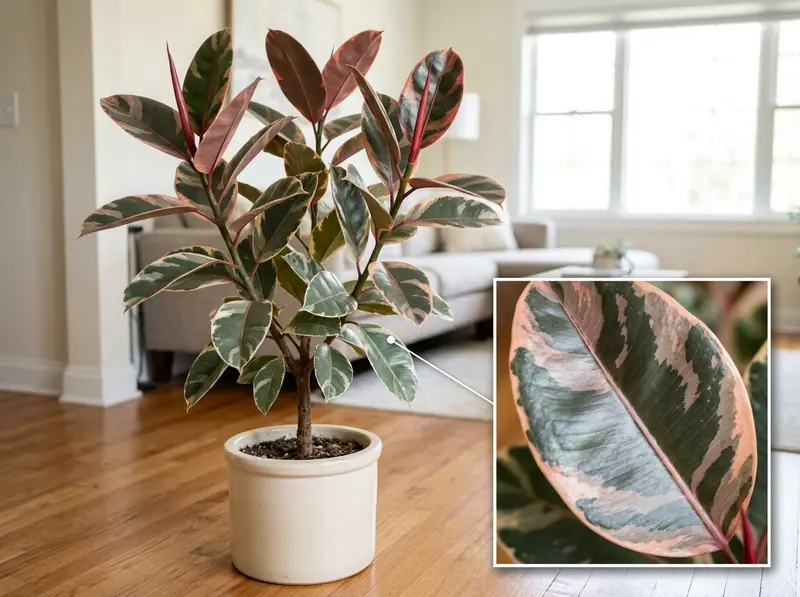
Ruby Rubber Plant
Ficus elastica 'Ruby'
- Bright, indirect light
- Moderate watering
Toxic to cats and dogs AI-generated
 AI-generated
Chinese Money Plant
Pilea peperomioides
- Bright, indirect light
- Dry to moderate watering
Pets: not yet checked AI-generated
Christmas Cactus
Schlumbergera × buckleyi
- Bright, indirect light
- Moderate watering
Pets: not yet checked