
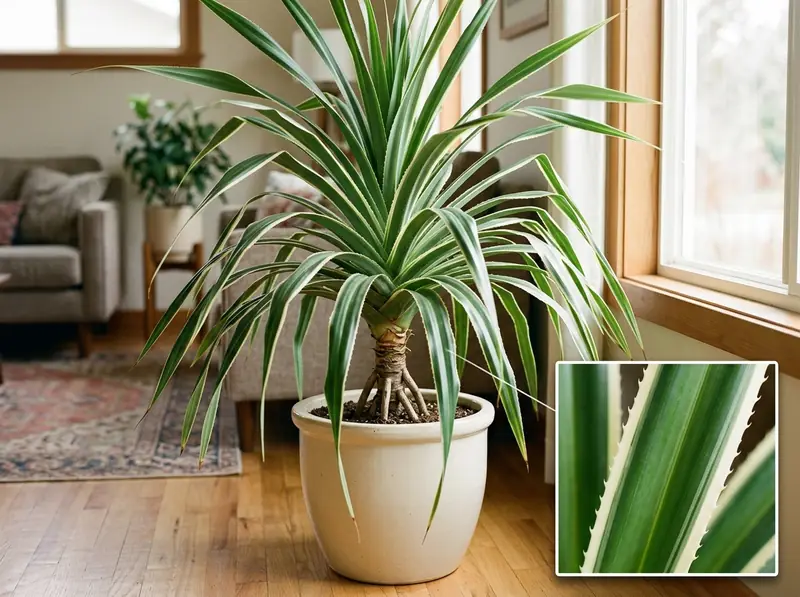
 AI-generated
Screw Pine
Pandanus veitchii
Screw pine is a slow-growing, architectural plant with spiralling rosettes of stiff green leaves edged in creamy white and small spines. It prefers bright, indirect light and moderate watering, and it forms a small trunk with aerial roots as it ages. Give it room and handle it with gloves because of the spiny leaf edges.
Saving is free with a KinClub account, and it works here and in the KinClub app. Sign up free
Care profile
- Light
- Bright, indirect lightLow → direct sun
- Water
- Moderate wateringAbout every 7 days
- Difficulty
- Easy to moderateTricky → easy
- Coldest it tolerates
- 55°F
- Humidity
- Medium
- Mature size
- LargeSmall → tree-size
- Growth rate
- Slow to moderate
- How common
- CommonRare → everywhere
- Plant family
- Pandanaceae
Pets and toxicity
Cats and dogs: not yet checked
Not yet checked against ASPCA — don't assume it's safe for pets.
No toxicity source on record for this plant yet. If a pet eats any houseplant, call your vet or an animal poison helpline.
How to care for Screw Pine
Light
Give it bright, indirect light, such as a spot a few feet from an east or south-facing window. Gentle morning sun is fine, but avoid hot midday sun, which scorches the variegated leaves.
Watering
Water thoroughly when the top 1-2 inches of soil feel dry, about every 7-10 days in summer, and let excess drain away. Water less often in winter, roughly every 2 weeks, and never leave the pot standing in water.
Soil
Use a well-draining potting mix, such as regular indoor potting soil with about 25% perlite or coarse sand added. The pot must have drainage holes.
Feeding
Feed every 4 weeks in spring and summer with a balanced liquid houseplant fertilizer at half the label strength. Skip feeding in fall and winter.
Repotting
Repot every 2-3 years in spring, only when roots fill the pot, going up just 1-2 inches in diameter. It likes being slightly snug, and the aerial roots should be kept above the soil or only lightly covered.
Propagation
Remove offsets (pups) that form at the base once they are 6-8 inches tall and have a few roots of their own. Pot them in a moist, gritty mix and keep them warm and humid until they establish.
Common problems
- Brown leaf tips: caused by dry air or irregular watering. Water evenly, group with other plants, and trim the browned tips with clean scissors.
- Yellow, soft lower leaves: usually overwatering. Let the soil dry more between waterings and check that the pot drains freely.
- Fading variegation: light is too low. Move it to a brighter spot out of direct midday sun.
- Webbing and fine speckling on leaves: spider mites. Wipe leaves, rinse the plant, and repeat every few days, or use insecticidal soap.
Similar plants
Same light needs and difficulty.
 AI-generated
 AI-generated
 AI-generated
 AI-generated