
 AI-generated
Basket Plant
Callisia fragrans
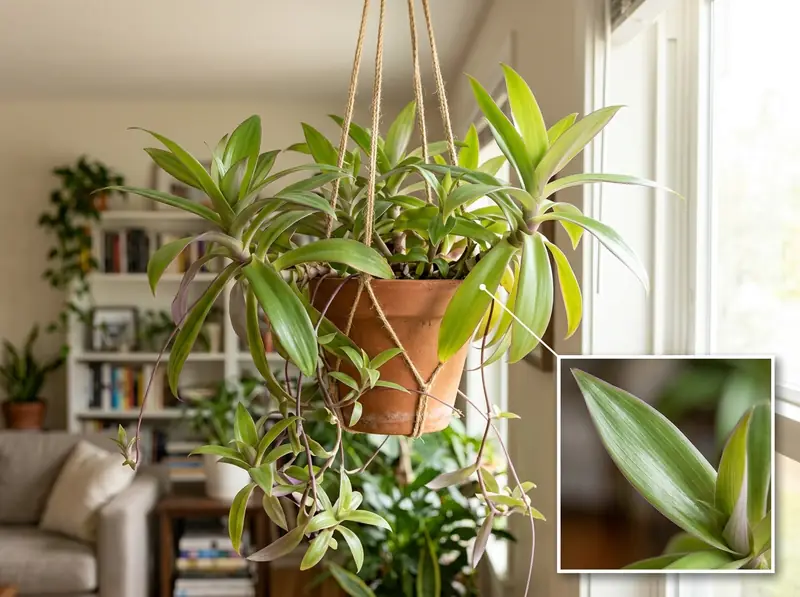
Basket plant (Callisia fragrans) is a fast-growing, easy trailing plant with arching rosettes of glossy, fleshy green leaves that can take on a purple tinge in brighter light. It thrives in bright indirect light with moderate watering, and is well suited to a hanging basket or high shelf. Mature plants may send out long runners with baby plantlets, which are simple to root for new plants.
Saving is free with a KinClub account, and it works here and in the KinClub app. Sign up free
Care profile
- Light
- Bright, indirect lightLow → direct sun
- Water
- Moderate wateringAbout every 9 days
- Difficulty
- EasyTricky → easy
- Coldest it tolerates
- 50°F
- Humidity
- Medium
- Mature size
- MediumSmall → tree-size
- Growth rate
- Fast
- How common
- CommonRare → everywhere
- Plant family
- Commelinaceae
Pets and toxicity
Cats and dogs: not yet checked
Not yet checked against ASPCA — don't assume it's safe for pets.
No toxicity source on record for this plant yet. If a pet eats any houseplant, call your vet or an animal poison helpline.
How to care for Basket Plant
Light
Give it bright indirect light, such as a spot near an east or lightly shaded south or west window. A little gentle direct morning sun brings out the purple tinge, but hot midday sun scorches the leaves.
Watering
Water when the top inch or two of soil is dry, roughly every 7 to 10 days in the growing season, until water runs from the drainage holes. Cut back to every 2 to 3 weeks in winter and never leave the pot standing in water.
Soil
Use a well-draining potting mix, such as regular indoor mix with about a quarter perlite or coarse sand added. The pot must have drainage holes.
Feeding
Feed every 3 to 4 weeks from spring through summer with a balanced liquid houseplant fertilizer diluted to half strength. Do not feed in winter.
Repotting
Repot every 1 to 2 years in spring when roots fill the pot, going up just one size (1 to 2 inches wider). Plants in hanging baskets often do better being refreshed with cuttings than repotted into a huge pot.
Propagation
Snip a runner or the baby plantlets at the tips and set them in water or moist soil; they root in 1 to 3 weeks. Plant several in one pot for a fuller look.
Common problems
- Leggy, sparse growth: move to brighter light and pinch back the stems to encourage branching.
- Brown, crispy leaf tips: usually dry air or irregular watering, so water more evenly and avoid hot vents.
- Soft, mushy stems: overwatering or poor drainage, so cut away rotted parts, let soil dry and repot in fresh mix if needed.
- Fine webbing and speckled leaves: spider mites, so rinse the plant and apply insecticidal soap weekly until clear.
- Faded, bleached leaves: too much direct sun, so move it back from the window.
Similar plants
Same light needs and difficulty.
 AI-generated
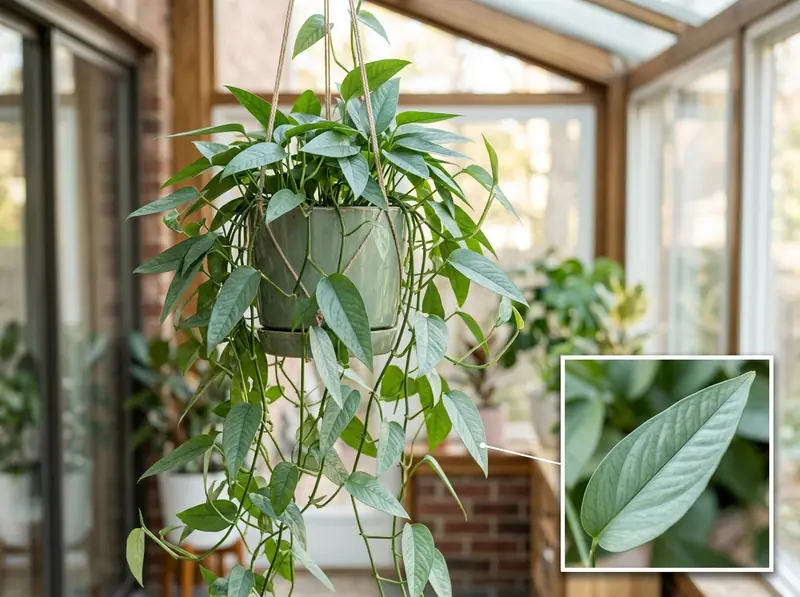
Cebu Blue Pothos
Epipremnum pinnatum 'Cebu Blue'
- Bright, indirect light
- Moderate watering
Toxic to cats and dogs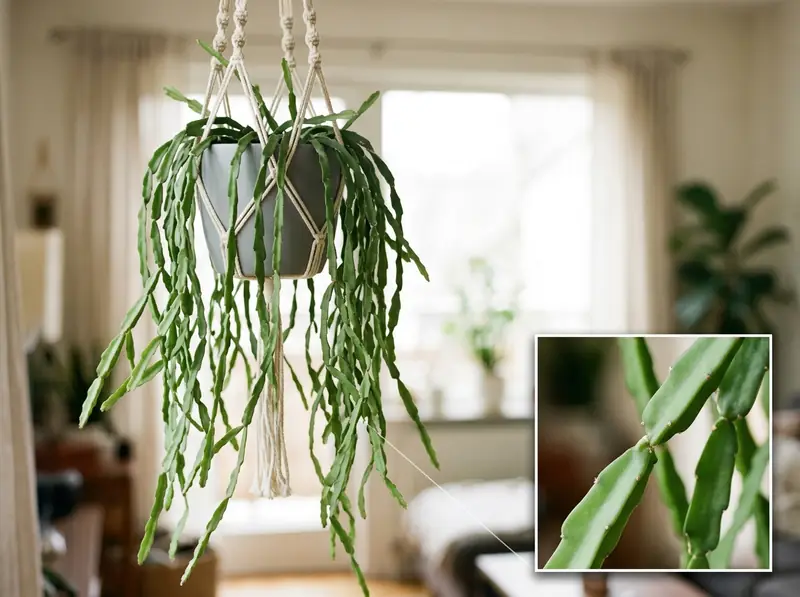 AI-generated
 AI-generated
Chinese Money Plant
Pilea peperomioides
- Bright, indirect light
- Dry to moderate watering
Pets: not yet checked AI-generated
Christmas Cactus
Schlumbergera × buckleyi
- Bright, indirect light
- Moderate watering
Pets: not yet checked