
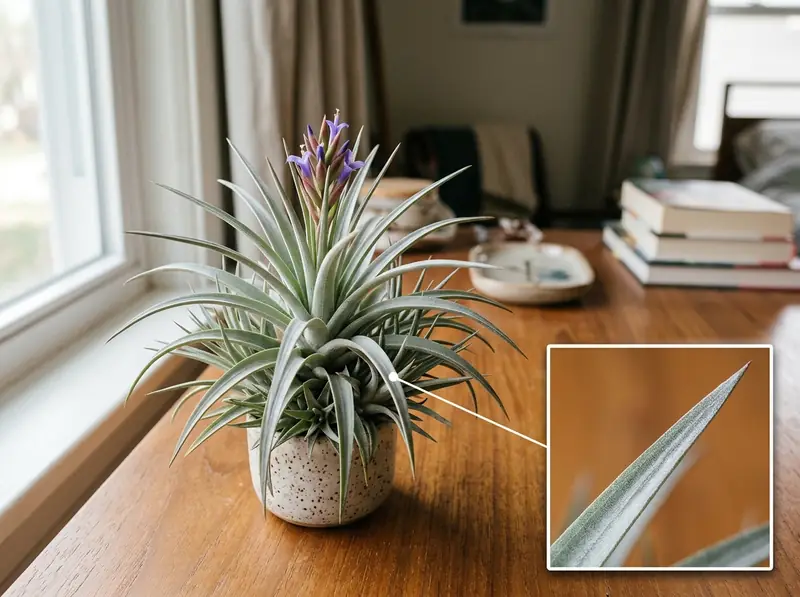
 AI-generated
Bergeri Air Plant
Tillandsia bergeri
Bergeri air plant is a small, silvery-green Tillandsia from Argentina. It grows as a rosette of narrow leaves and can form clumps, with purple-blue flowers. It needs no soil, just bright light, a weekly soak and good airflow to dry out afterward. It is forgiving for beginners, but it rots if water sits in the center.
Saving is free with a KinClub account, and it works here and in the KinClub app. Sign up free
Care profile
- Light
- Bright, indirect lightLow → direct sun
- Water
- Let it dry outAbout every 7 days
- Difficulty
- EasyTricky → easy
- Coldest it tolerates
- 45°F
- Humidity
- Medium
- Mature size
- SmallSmall → tree-size
- Growth rate
- Slow
- How common
- EnthusiastRare → everywhere
- Plant family
- Bromeliaceae
Pets and toxicity
Cats and dogs: not yet checked
Not yet checked against ASPCA — don't assume it's safe for pets.
No toxicity source on record for this plant yet. If a pet eats any houseplant, call your vet or an animal poison helpline.
How to care for Bergeri Air Plant
Light
Give bright, indirect light, such as a spot within a few feet of an east or south window. Gentle morning sun is fine, but shade it from hot midday sun through glass.
Watering
Soak in room-temperature water for 10-20 minutes, or rinse thoroughly, about once a week. In cooler or dim rooms, water every 10-14 days. Shake out excess water and let it dry fully within 4 hours.
Soil
It needs no soil, because it is an epiphyte. Mount it on bark, driftwood or a wire holder, or set it loosely in a dish. Avoid wet or soil-filled pots, and do not glue or wire it tightly around the base.
Feeding
Feed once a month in the growing season with a bromeliad or air plant fertilizer diluted to 1/4 strength. Add it to the soaking water, and skip feeding in winter.
Repotting
It does not need repotting. Just move it to a larger mount if it outgrows its current one, and use loose wire or removable ties to keep the base free.
Propagation
Separate pups when they reach about one-third to one-half the size of the parent. Twist or cut them off gently and let them grow as their own plant. Plants flower once and then produce pups.
Common problems
- Brown, crispy leaf tips mean it is too dry: soak for longer or more often, and move it away from heaters.
- Mushy, blackened center means rot from trapped water: dry it upside down after each watering and improve airflow. Rot usually cannot be reversed once the center pulls out.
- Pale, bleached leaves mean too much direct sun: move back from the window or add a sheer curtain.
- Cottony white bugs in leaf bases are mealybugs: dab with rubbing alcohol on a cotton swab and rinse well.
Similar plants
Same light needs and difficulty.
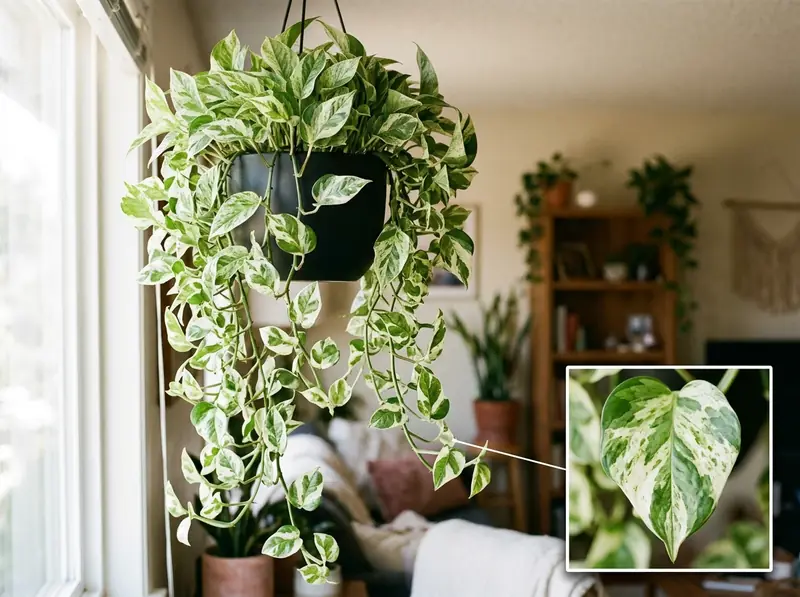 AI-generated
Snow Queen Pothos
Epipremnum aureum 'Snow Queen'
- Bright, indirect light
- Dry to moderate watering
Toxic to cats and dogs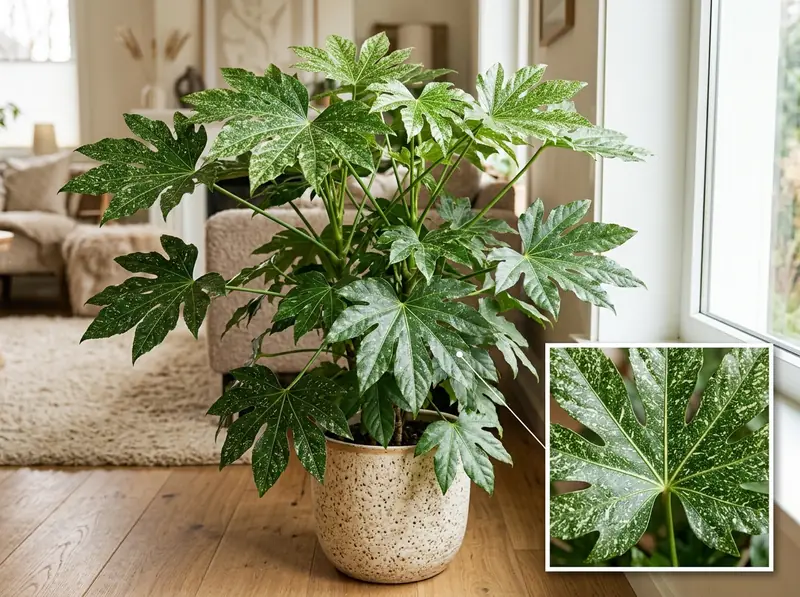 AI-generated
Spider's Web Fatsia
Fatsia japonica 'Spider's Web'
- Bright, indirect light
- Moderate watering
Pets: not yet checked AI-generated
Chinese Money Plant
Pilea peperomioides
- Bright, indirect light
- Dry to moderate watering
Pets: not yet checked AI-generated
Christmas Cactus
Schlumbergera × buckleyi
- Bright, indirect light
- Moderate watering
Pets: not yet checked