
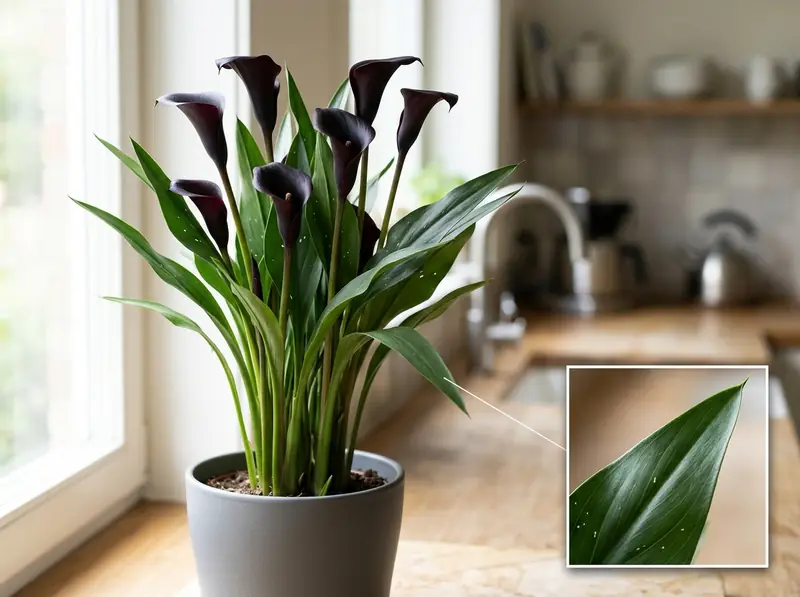
 AI-generated
Black Star Calla Lily
Zantedeschia 'Black Star'
Black Star calla lily is a dark, nearly black-purple calla grown from a tuber, with arrow-shaped leaves and velvety blooms. It flowers in spring or summer, then rests for a few months before starting again.
Saving is free with a KinClub account, and it works here and in the KinClub app. Sign up free
Care profile
- Light
- Bright, indirect lightLow → direct sun
- Water
- Moderate to moist wateringAbout every 5 days
- Difficulty
- ModerateTricky → easy
- Coldest it tolerates
- 40°F
- Humidity
- Medium
- Mature size
- MediumSmall → tree-size
- Growth rate
- Moderate to fast
- How common
- RareRare → everywhere
Pets and toxicity
Cats and dogs: not yet checked
Not yet checked against ASPCA — don't assume it's safe for pets.
No toxicity source on record for this plant yet. If a pet eats any houseplant, call your vet or an animal poison helpline.
How to care for Black Star Calla Lily
Light
Bright indirect light with a few hours of gentle morning sun encourages flowers. It tolerates medium light but blooms less. Avoid hot afternoon sun that scorches the leaves.
Watering
Water when the top inch is dry, about every 5 days while growing and blooming, keeping the mix evenly moist. Once the leaves yellow after blooming, withhold water and rest the tuber.
Soil
Use a rich, well-draining mix of potting soil with some perlite or compost. The tuber rots in soggy soil.
Feeding
Feed every 2 weeks while growing and blooming with a high-potassium liquid fertilizer at half strength. Stop when the leaves yellow.
Repotting
Repot the tuber in late winter or spring into fresh mix, burying it 2 inches deep in a pot 6 to 8 inches wide.
Propagation
Divide the tuber offsets in spring when you repot; each piece with an eye will grow. They flower in about a year.
Common problems
- Yellowing after the bloom is dormancy, not a problem; dry the tuber, then restart in spring.
- Soft tuber rot comes from wet soil during dormancy; keep it dry and cool.
- Spider mites and thrips mark the leaves; rinse the foliage and use insecticidal soap.
- Few flowers mean low light or no rest period; give more light and a dormancy.
Similar plants
Same light needs and difficulty.
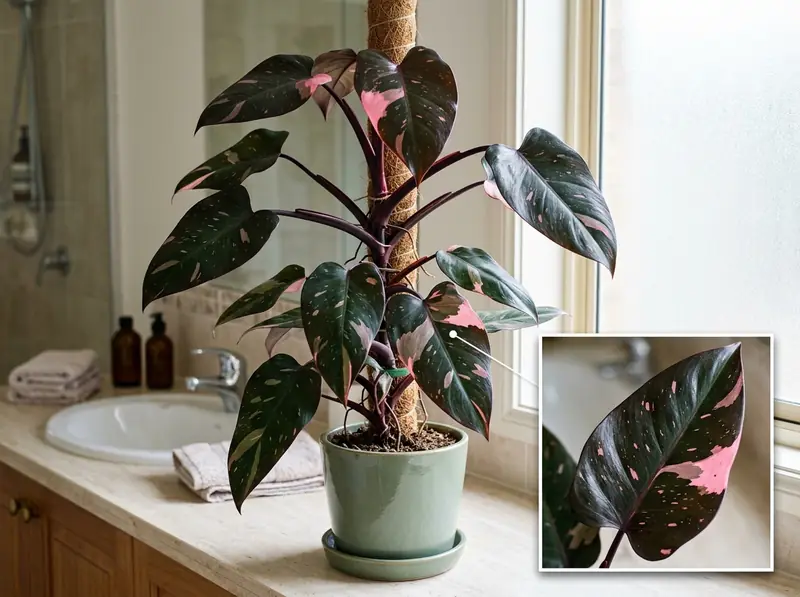 AI-generated
Pink Princess Philodendron
Philodendron erubescens 'Pink Princess'
- Bright, indirect light
- Moderate watering
Toxic to cats and dogs AI-generated
 AI-generated
 AI-generated