
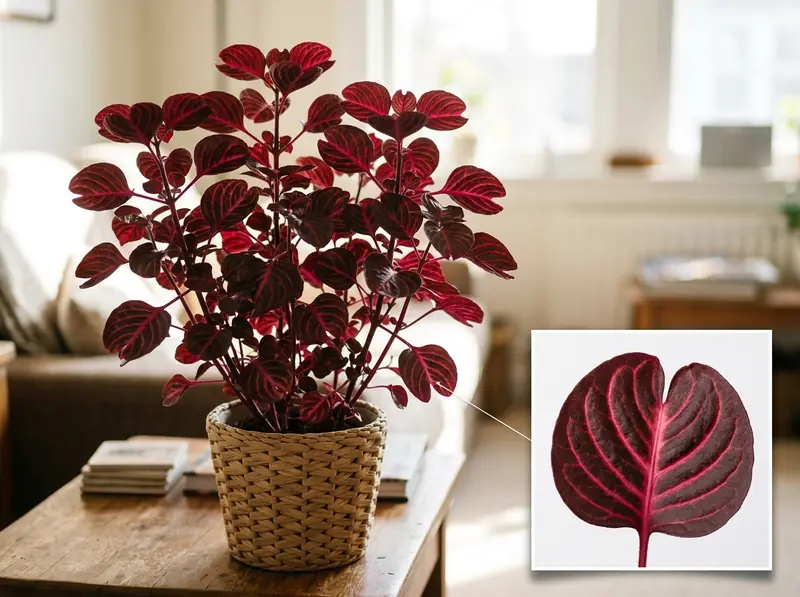
 AI-generated
Bloodleaf
Iresine herbstii
Also known as Chicken Gizzard, Yellow Bloodleaf, Joseph's Coat, Chicken-Gizzard, Bloodleaf Plant
Bloodleaf is a fast-growing foliage plant with bold burgundy-red leaves marked with pink veins. It needs bright light to keep its color and regular watering, and it stays compact if you pinch it often. It is easy to replace from cuttings when it gets leggy.
Saving is free with a KinClub account, and it works here and in the KinClub app. Sign up free
Care profile
- Light
- Bright, indirect lightLow → direct sun
- Water
- Moderate to moist wateringAbout every 7 days
- Difficulty
- ModerateTricky → easy
- Coldest it tolerates
- 50°F
- Humidity
- Medium to high
- Mature size
- MediumSmall → tree-size
- Growth rate
- Fast
- How common
- CommonRare → everywhere
- Plant family
- Amaranthaceae
Pets and toxicity
Non-toxic to cats
Listed as non-toxic to cats by the ASPCA.
Non-toxic to dogs
Listed as non-toxic to dogs by the ASPCA.
Source: ASPCA toxic and non-toxic plants. If a pet eats any houseplant, call your vet or an animal poison helpline.
How to care for Bloodleaf
Light
Give it several hours of bright light, including some gentle morning or winter sun, near an east or south window. Strong light keeps the leaf color vivid.
Watering
Water when the top inch of soil feels dry, about once a week in the growing season. Water thoroughly until it drains, then empty the saucer; it wilts quickly if left dry.
Soil
Use a general-purpose, well-draining potting mix. Adding a handful of perlite per few quarts improves drainage.
Feeding
Feed every 2 to 4 weeks from spring through summer with a balanced liquid fertilizer at half the label strength. Stop or reduce in winter.
Repotting
Repot in spring when roots fill the pot, usually every year or two, moving up one pot size (1 to 2 inches wider). Fast growers often do better when replaced with fresh cuttings.
Propagation
Take 3 to 4 inch stem cuttings below a node and root them in water or moist potting mix. They usually root in 1 to 2 weeks.
Common problems
- Leggy, sparse growth: move to brighter light and pinch back the stem tips regularly to encourage branching.
- Faded leaf color: the plant is not getting enough light, so move it to a brighter spot.
- Wilting with dry soil: water thoroughly; it normally recovers quickly. Avoid letting it wilt repeatedly.
- Sticky leaves or tiny webbing: check for aphids, whiteflies or spider mites; rinse the plant and treat with insecticidal soap.
Similar plants
Same light needs and difficulty.
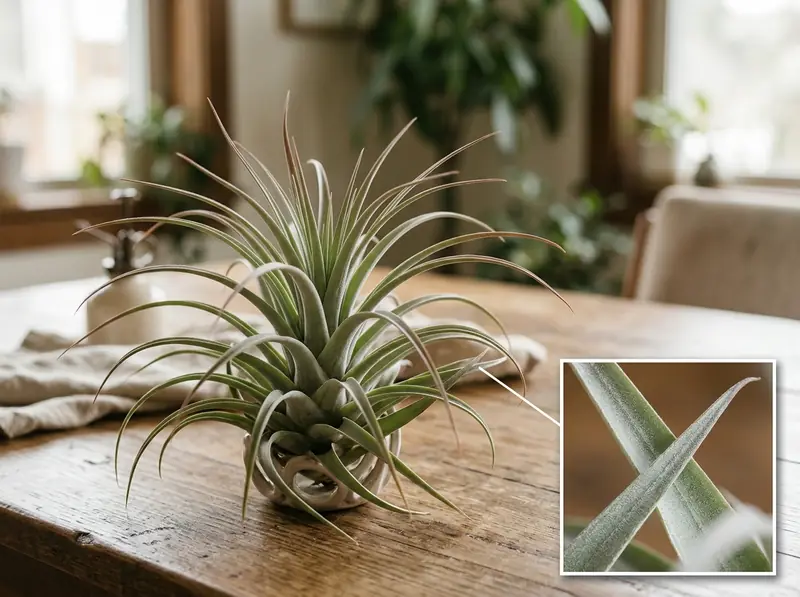 AI-generated
Geminiflora Air Plant
Tillandsia geminiflora
- Bright, indirect light
- Dry to moderate watering
Pets: not yet checked AI-generated
 AI-generated
 AI-generated