AI-generated image, not a photograph of this plant. Real plants look different depending on light, soil, temperature and age.
PolypodiaceaeCommon in stores
Blue Star Fern
Phlebodium aureum 'Blue Star'
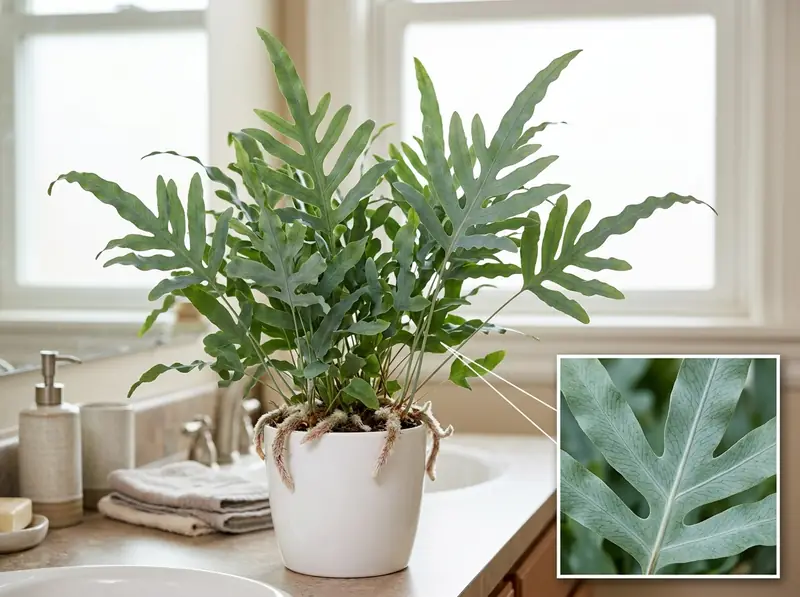
Blue Star Fern is a cultivar of Phlebodium aureum with arching, deeply lobed fronds in a striking silvery blue-green. It is not variegated, so it cares just like the species: bright indirect light, water when the top inch dries, and a chunky, fast-draining mix. Its fuzzy rhizomes crawl over the soil surface, so leave them uncovered.
Pets: not yet checked
💡
Saving is free with a KinClub account, and it works here and in the KinClub app. Sign up free
🪴 Care profile
Light
Bright, indirect lightLow → direct sun
Water
Moderate wateringAbout every 7 days
Difficulty
ModerateTricky → easy
Coldest it tolerates
55°F
Humidity
Medium to high
Mature size
MediumSmall → tree-size
Growth rate
Moderate
How common
CommonRare → everywhere
Plant family
Polypodiaceae
🐾 Pets and toxicity
Cats and dogs: not yet checked
Not yet checked against ASPCA — don't assume it's safe for pets.
No toxicity source on record for this plant yet. If a pet eats any houseplant, call your vet or an animal poison helpline.
🌿 How to care for Blue Star Fern
Light
Give bright, indirect light, such as a spot near an east window or a few feet back from a south or west window. Gentle morning sun is fine, but hot midday sun scorches the fronds.
Watering
Water thoroughly when the top inch or so of soil feels dry, usually about every 7 days in the growing season, and let excess drain away. Water less often in winter, and never leave the pot standing in water.
Soil
Use a chunky, airy mix, such as standard potting soil blended with orchid bark and perlite in roughly equal parts. It must drain fast and never get soggy.
Feeding
Feed every 4 weeks in spring and summer with a balanced liquid fertilizer diluted to half strength. Skip feeding in fall and winter.
Repotting
Repot only every 2 to 3 years, when rhizomes crowd the pot, and go up just one size. Shallow, wide pots suit its surface-creeping rhizomes. Do the job in spring.
Propagation
Divide in spring by cutting a rhizome section with at least one frond and some roots, then pot it with the rhizome on the surface. Pin it down lightly until it anchors. It is slower than most plants to establish.
Common problems
Brown, crispy frond tips: air or soil is too dry, so raise humidity a little and water more evenly.
Yellowing fronds with soft rhizomes: overwatering or heavy soil, so let it dry out and repot into a chunkier mix.
Pale, bleached fronds: too much direct sun, so move it back from the window.
Small bumps or white cottony spots on fronds: scale or mealybugs, so wipe off with alcohol-dampened cotton and repeat weekly.
Fuzzy rhizomes looking odd: they are normal, so do not cut them off or bury them.

 AI-generated
 AI-generated
 AI-generated
 AI-generated
 AI-generated