AI-generated image, not a photograph of this plant. Real plants look different depending on light, soil, temperature and age.
NepenthaceaeRare in stores
Burbidge's Pitcher Plant
Nepenthes burbidgeae
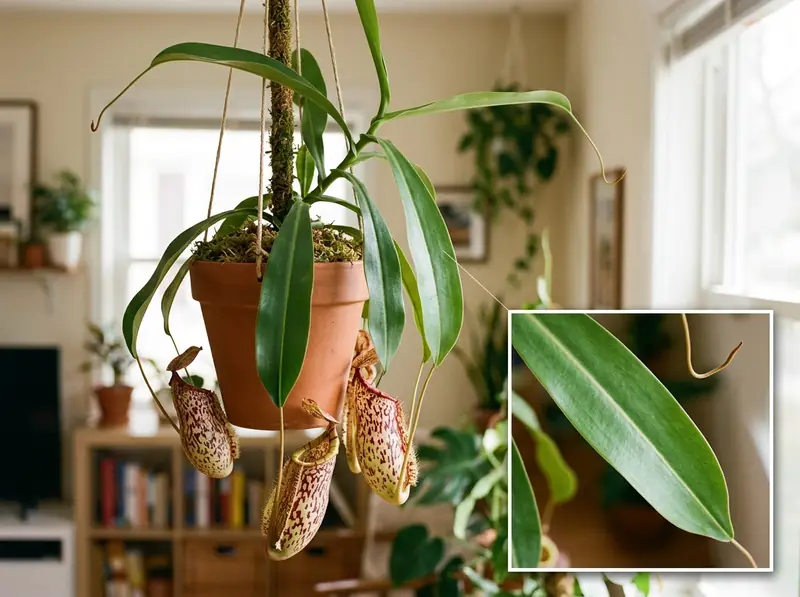
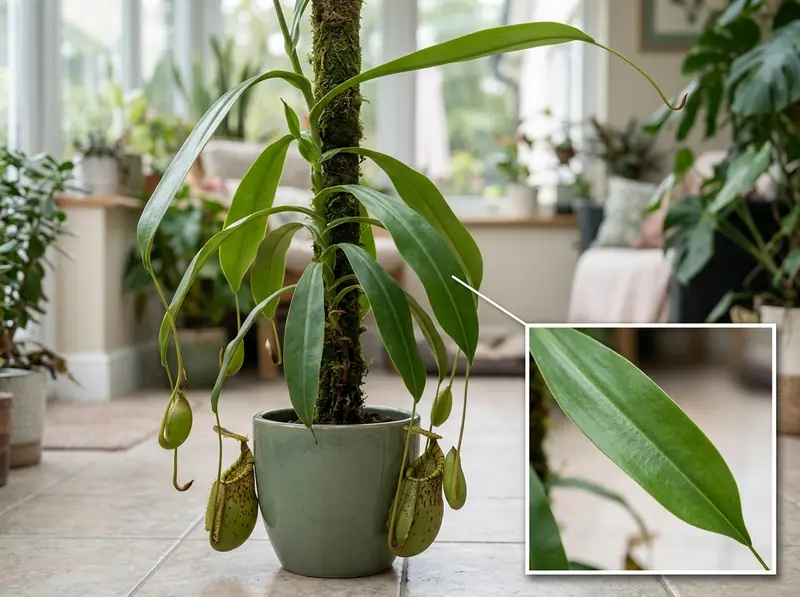
Burbidge's pitcher plant is a highland species from Mount Kinabalu, known for its pale pitchers with dark mottling. It prefers cool, humid conditions, which makes it harder to keep than the tolerant hybrids.
Pets: not yet checked
💡
Saving is free with a KinClub account, and it works here and in the KinClub app. Sign up free
🪴 Care profile
Light
Bright, indirect lightLow → direct sun
Water
Keep moistAbout every 4 days
Difficulty
ChallengingTricky → easy
Coldest it tolerates
40°F
Humidity
High
Mature size
MediumSmall → tree-size
Growth rate
Slow
How common
RareRare → everywhere
Plant family
Nepenthaceae
🐾 Pets and toxicity
Cats and dogs: not yet checked
Not yet checked against ASPCA — don't assume it's safe for pets.
No toxicity source on record for this plant yet. If a pet eats any houseplant, call your vet or an animal poison helpline.
🌿 How to care for Burbidge's Pitcher Plant
Light
Prefers bright, indirect light, such as an east window or a few hours of gentle morning sun, or a grow light for 12 hours. Avoid hot afternoon sun, since it dislikes high heat.
Watering
Keep the mix evenly damp, never soggy, using distilled, rain or reverse-osmosis water; water every 3 to 5 days as the surface dries. It does best in cool conditions, about 60 to 75°F by day and cooler at night.
Soil
Use a nutrient-poor, airy mix such as 1 part long-fibered sphagnum moss, 1 part perlite and 1 part orchid bark, in a pot with drainage holes. Avoid ordinary potting soil and fertilizer-laced mixes.
Feeding
Do not fertilize the soil. If it doesn't catch insects, add a pinch of a diluted orchid fertilizer to a few pitchers once a month, or just leave it.
Repotting
Repot every 1 to 2 years in spring when the mix breaks down, into a deep pot or hanging basket with fresh sphagnum-based mix.
Propagation
Stem cuttings with 2 to 3 nodes can be rooted in damp sphagnum under high humidity and cool temperatures, but they are slow, often 3 to 4 months.
Common problems
Pitchers fail to form in warm, dry air; use a humidifier and keep nights cool.
Brown tips come from tap water minerals; switch to distilled water.
Soggy mix causes root rot; use airy, fast-draining mix.
Heat above 85°F stalls growth; move to a cooler spot.

 AI-generated
 AI-generated
 AI-generated
 AI-generated
 AI-generated