
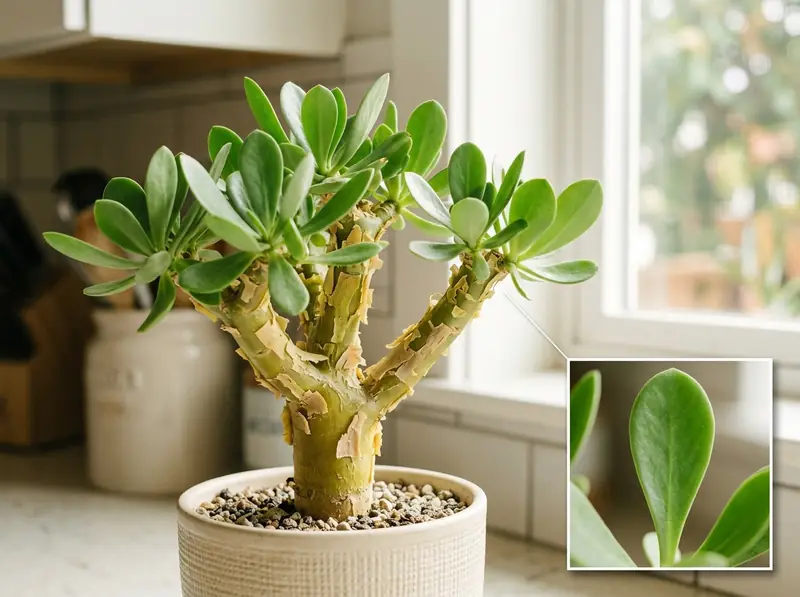
 AI-generated
Butterbush
Tylecodon paniculatus
Butterbush (Tylecodon paniculatus) is a South African succulent with a thick, peeling yellow-green trunk and bare stems in summer. It grows in the cool months and rests in the heat.
Saving is free with a KinClub account, and it works here and in the KinClub app. Sign up free
Care profile
- Light
- Direct sunLow → direct sun
- Water
- Let it dry outAbout every 14 days
- Difficulty
- ModerateTricky → easy
- Coldest it tolerates
- 35°F
- Humidity
- Low
- Mature size
- MediumSmall → tree-size
- Growth rate
- Slow
- How common
- RareRare → everywhere
- Plant family
- Crassulaceae
Pets and toxicity
Cats and dogs: not yet checked
Not yet checked against ASPCA — don't assume it's safe for pets.
No toxicity source on record for this plant yet. If a pet eats any houseplant, call your vet or an animal poison helpline.
How to care for Butterbush
Light
Needs full sun, such as a south or west window, or strong light under a grow light. Too little light makes it stretch. Protect it from the hottest midday summer sun behind glass.
Watering
It grows in the cool months. Water thoroughly every 2 weeks in fall and winter when it has leaves, then stop almost entirely in summer once the leaves drop.
Soil
Use a gritty cactus mix with extra pumice or coarse sand. It needs sharp drainage and rots in damp soil.
Feeding
Feed once or twice during the fall and winter growth with a diluted cactus fertilizer. Do not feed while dormant.
Repotting
Repot every 3 to 4 years in early fall into a shallow pot only slightly wider. Keep roots dry for a week after.
Propagation
Take stem cuttings in spring, let the cut dry 1 to 2 weeks, then root in gritty mix. Seed also works.
Common problems
- Rot at the base comes from watering in summer dormancy; keep it dry then.
- Leaf drop in early summer is normal for this winter-growing succulent.
- Mealybugs hide in crevices of the trunk; dab with alcohol on a cotton swab.
- Flopping stems mean too little light; move it somewhere sunnier.
Similar plants
Same light needs and difficulty.
 AI-generated
 AI-generated
 AI-generated
 AI-generated