
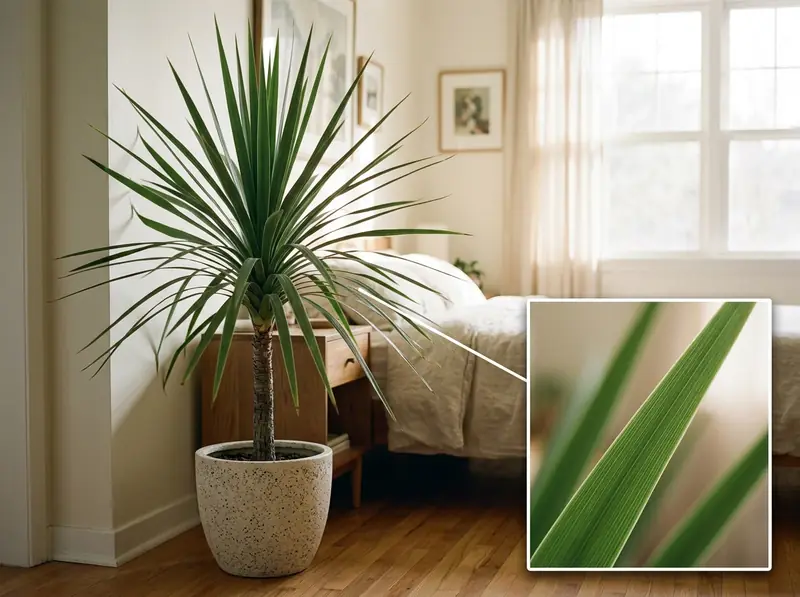
 AI-generated
Cabbage Tree
Cordyline australis
Also known as Giant Dracaena, Palm Lily, Grass Palm
A tough, spiky New Zealand tree with long, sword-shaped leaves that grows into a floor-standing plant indoors. It wants lots of light and cool winters, and rewards you with a sculptural look. Give it your sunniest window.
Saving is free with a KinClub account, and it works here and in the KinClub app. Sign up free
Care profile
- Light
- Direct sunLow → direct sun
- Water
- Moderate wateringAbout every 10 days
- Difficulty
- Easy to moderateTricky → easy
- Coldest it tolerates
- 25°F
- Humidity
- Medium
- Mature size
- Large to tree-sizeSmall → tree-size
- Growth rate
- Moderate
- How common
- CommonRare → everywhere
- Plant family
- Asparagaceae
Pets and toxicity
Toxic to cats
Keep away from cats. Call your vet or a pet poison helpline if a cat chews it.
Toxic to dogs
Keep away from dogs. Call your vet or a pet poison helpline if a dog chews it.
Source: ASPCA toxic and non-toxic plants. If a pet eats any houseplant, call your vet or an animal poison helpline.
How to care for Cabbage Tree
Light
Wants the brightest spot you have, with at least 4-6 hours of direct sun, such as a south or west window. It tolerates bright indirect light but grows lax and sparse there.
Watering
Water when the top 2 inches of soil are dry, roughly every 10 days in summer. Cut back to every 3-4 weeks in winter when the plant is cooler and slower.
Soil
Use a fast-draining potting mix with extra perlite or coarse sand. A heavy pot with drainage holes keeps the tall plant from tipping over.
Feeding
Feed monthly in spring and summer with a balanced liquid fertilizer at half strength. Skip fall and winter.
Repotting
Repot every 2-3 years in spring into a pot 2 inches wider. Shed lower leaves are normal and leave a bare trunk over time.
Propagation
Take stem cuttings or remove basal suckers in spring and root them in a gritty mix. Seed works but is slow.
Common problems
- Brown leaf tips: caused by dry soil, fluoride in tap water, or dry heated air. Water deeply and use filtered water if the problem keeps coming back.
- Lower leaves dying: normal slowly, but fast loss usually means too little light or soggy roots. Move it brighter and let it dry between waterings.
- Spider mites in dry winter air: look for fine webbing and speckled leaves. Wash the leaves and spray with insecticidal soap weekly for three weeks.
Similar plants
Same light needs and difficulty.
 AI-generated
 AI-generated
 AI-generated
 AI-generated