
 AI-generated
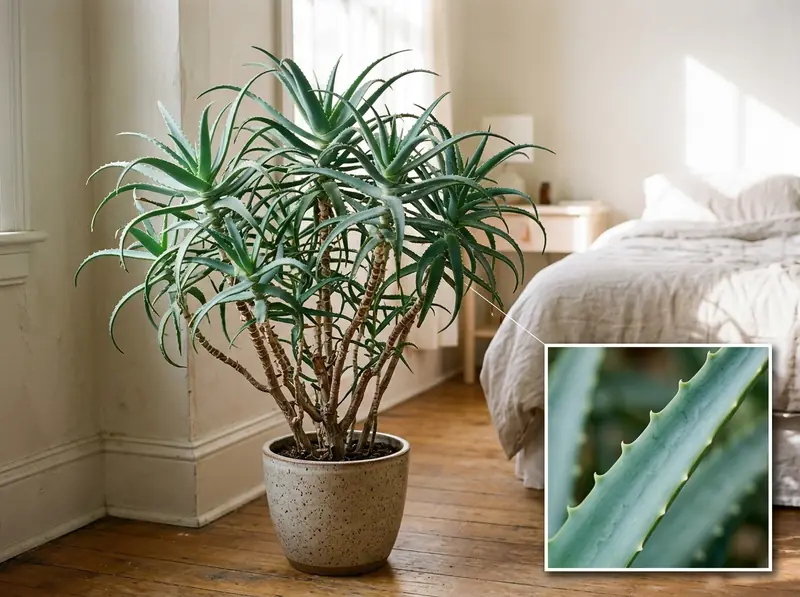
Candelabra Aloe
Aloe arborescens
Candelabra aloe is a tough, branching succulent that forms a large clump of long, toothed, blue-green leaves and can reach 4-6 feet indoors with enough light. It wants lots of sun, gritty soil, and infrequent deep watering. With a cool, bright winter it may reward you with orange-red flower spikes.
Saving is free with a KinClub account, and it works here and in the KinClub app. Sign up free
Care profile
- Light
- Direct sunLow → direct sun
- Water
- Let it dry outAbout every 18 days
- Difficulty
- EasyTricky → easy
- Coldest it tolerates
- 35°F
- Humidity
- Low
- Mature size
- LargeSmall → tree-size
- Growth rate
- Moderate
- How common
- CommonRare → everywhere
- Plant family
- Asphodelaceae
Pets and toxicity
Cats and dogs: not yet checked
Not yet checked against ASPCA — don't assume it's safe for pets.
No toxicity source on record for this plant yet. If a pet eats any houseplant, call your vet or an animal poison helpline.
How to care for Candelabra Aloe
Light
Give it at least 4-6 hours of direct sun, ideally in a south or west window. Bright light keeps the growth compact and the leaves blue-green; move it outdoors in summer gradually.
Watering
Soak the soil thoroughly, then let it dry out completely before watering again, usually every 2-3 weeks in summer. In winter water only about once a month or less, and never leave the pot standing in water.
Soil
Use a gritty cactus or succulent mix, or ordinary potting mix with about one-third perlite or coarse sand. The pot must have drainage holes; terracotta helps the soil dry faster.
Feeding
Feed with a half-strength balanced fertilizer or cactus fertilizer 2-3 times during spring and summer. Do not feed in fall and winter.
Repotting
Repot every 2-3 years in spring when crowded with pups or top-heavy, going up only one pot size. Use a heavy, stable pot as tall plants tip over easily.
Propagation
Cut or pull off offsets (pups) with some roots, or take a stem cutting. Let the cut end dry and callus for several days, then plant in dry gritty mix and wait a week before watering lightly.
Common problems
- Leggy, leaning stems: the plant needs more light, so move it to a sunnier window and turn it regularly.
- Mushy base or soft leaves: caused by overwatering, so let the soil dry fully, and if the stem is rotten, cut above the rot and re-root.
- Cottony white clusters in leaf joints are mealybugs: dab with rubbing alcohol on a cotton swab and repeat weekly.
- No flowers: usually too little light or no cool winter rest, so give it a sunnier spot and cooler winter temperatures (around 50-60°F).
- Brown, shriveled lower leaves: normal with age, but widespread shriveling means it needs a deep watering.
Similar plants
Same light needs and difficulty.
 AI-generated
 AI-generated
 AI-generated
 AI-generated