
 AI-generated
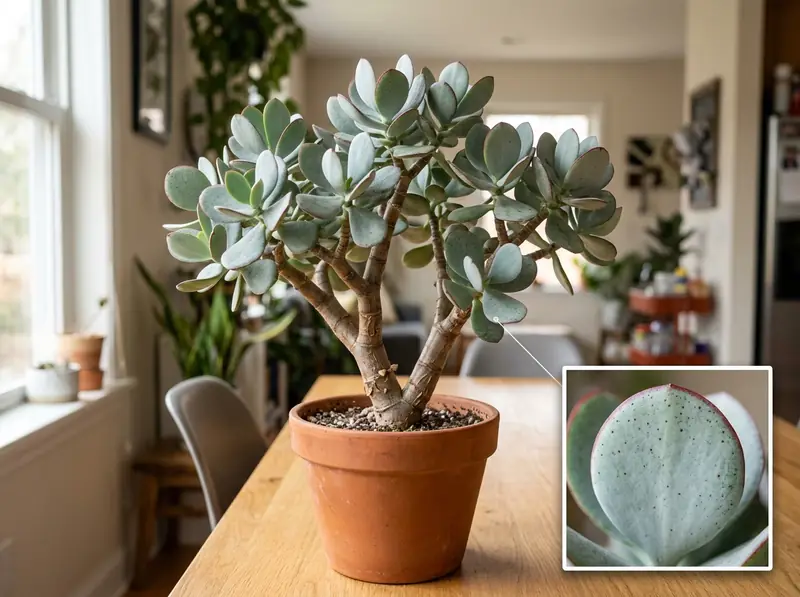
Silver Dollar Jade
Crassula arborescens
Also known as Chinese Jade, Silver Jade Plant, Silver Dollar
Silver dollar jade is a slow-growing succulent shrub with rounded, silvery blue-green leaves edged in red, and it develops a thick, woody trunk over time. It thrives on bright light and neglect, needing water only when the soil has dried completely. It is a good choice for a sunny window and a forgiving one for beginners.
Saving is free with a KinClub account, and it works here and in the KinClub app. Sign up free
Care profile
- Light
- Direct sunLow → direct sun
- Water
- Let it dry outAbout every 14 days
- Difficulty
- EasyTricky → easy
- Coldest it tolerates
- 45°F
- Humidity
- Low
- Mature size
- MediumSmall → tree-size
- Growth rate
- Slow
- How common
- CommonRare → everywhere
- Plant family
- Crassulaceae
Pets and toxicity
Toxic to cats
Keep away from cats. Call your vet or a pet poison helpline if a cat chews it.
Toxic to dogs
Keep away from dogs. Call your vet or a pet poison helpline if a dog chews it.
Source: ASPCA toxic and non-toxic plants. If a pet eats any houseplant, call your vet or an animal poison helpline.
How to care for Silver Dollar Jade
Light
Give it at least 4 to 6 hours of bright light, including some direct sun, such as a south or west window. Move it to full sun gradually to avoid scorching the leaves.
Watering
Soak thoroughly, then let the soil dry out completely before watering again, usually every 2 to 3 weeks in summer. In winter cut back to about once a month or less.
Soil
Use a gritty cactus or succulent mix, or regular potting soil with about one-third perlite or coarse sand. A terracotta pot with a drainage hole helps the soil dry quickly.
Feeding
Feed with a diluted (half-strength) balanced or cactus fertilizer about once a month in spring and summer. Do not feed in fall and winter.
Repotting
Repot every 2 to 3 years in spring, only into a pot one size larger, since it likes being snug. Use a heavy, stable pot because older plants become top-heavy.
Propagation
Twist off a healthy leaf or cut a stem tip, let it dry for several days until the end callouses, then set it on dry gritty soil. Water lightly once roots form in a few weeks.
Common problems
- Leaf drop and mushy stems: caused by overwatering; let the soil dry fully, and cut away rotted tissue and re-root healthy stems.
- Leggy, stretched growth: not enough light; move to a sunnier window and prune back to encourage branching.
- White cottony patches on stems or leaf joints: mealybugs; dab with rubbing alcohol on a cotton swab and repeat weekly.
- Wrinkled leaves: soil has been dry too long; give a deep soak and resume a regular schedule.
Similar plants
Same light needs and difficulty.
 AI-generated
 AI-generated
 AI-generated
 AI-generated
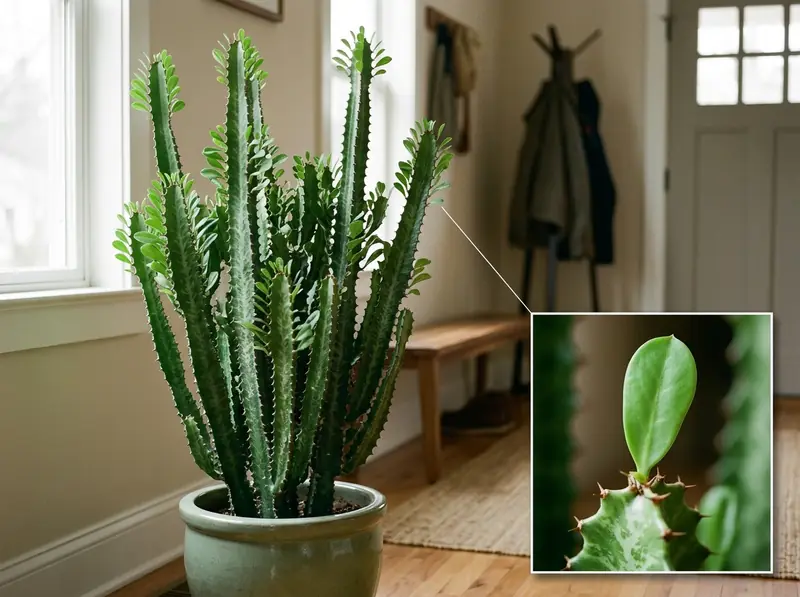
African Milk Tree
Euphorbia trigona
- Bright, indirect to direct sun
- Let it dry out
Pets: not yet checked