
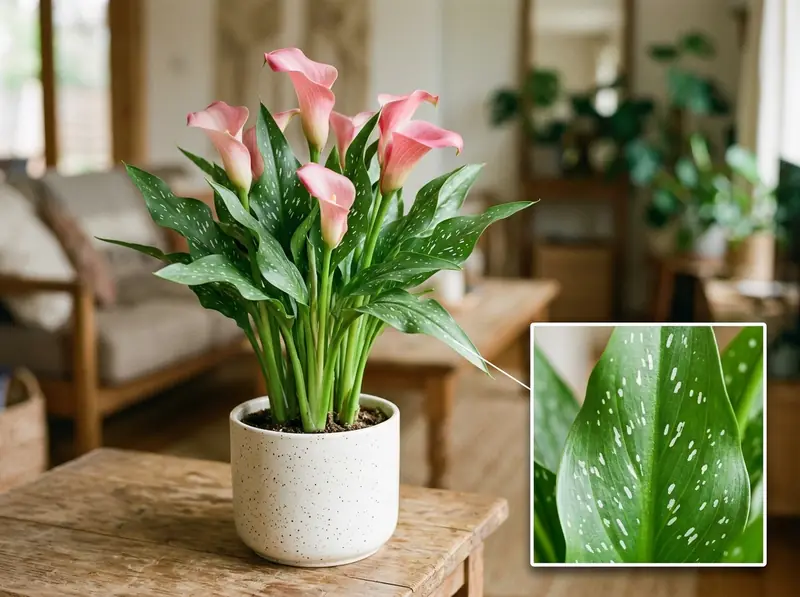
 AI-generated
Captain Romance Calla Lily
Zantedeschia 'Captain Romance'
Captain Romance is a compact calla lily with silvery-spotted green leaves and soft pink funnel-shaped flowers that last for weeks. It grows from a tuber and flowers best in bright light with steady moisture. After blooming it goes dormant for a couple of months, then regrows.
Saving is free with a KinClub account, and it works here and in the KinClub app. Sign up free
Care profile
- Light
- Bright, indirect lightLow → direct sun
- Water
- Keep moistAbout every 7 days
- Difficulty
- ModerateTricky → easy
- Coldest it tolerates
- 50°F
- Humidity
- Medium
- Mature size
- MediumSmall → tree-size
- Growth rate
- Moderate to fast
- How common
- RareRare → everywhere
Pets and toxicity
Cats and dogs: not yet checked
Not yet checked against ASPCA — don't assume it's safe for pets.
No toxicity source on record for this plant yet. If a pet eats any houseplant, call your vet or an animal poison helpline.
How to care for Captain Romance Calla Lily
Light
Give bright, indirect light, such as an east window or a few feet back from a south or west one. Morning sun is fine, but shade the plant from hot afternoon sun, which scorches leaves and fades the pink spathes.
Watering
Keep the soil evenly damp but not soggy while it is growing and flowering, usually about once a week. Water less as the leaves yellow after bloom, and stop completely during the 2 to 3 month dormant rest.
Soil
Use a rich, well-draining potting mix with extra perlite or bark, about 2 parts mix to 1 part perlite. Plant the tuber 2 inches deep with the growing tips up, in a pot with drainage holes.
Feeding
Feed every 2 to 3 weeks with a high-potassium, bloom-type fertilizer at half strength once leaves are up. Stop feeding when flowers fade and the plant heads toward dormancy.
Repotting
Repot the tuber into fresh mix each year when it restarts after dormancy, moving up only one pot size. Several tubers can share a 6 to 8 inch pot for a fuller display.
Propagation
Divide the tuber clumps when dormant, cutting so each piece has at least one growing eye, and let the cuts dry a day before planting. New tubers take a year or two to reach flowering size.
Common problems
- Yellow leaves after blooming are normal dormancy; cut back watering, let it dry, and rest the tuber before repotting.
- Leaf drooping with soggy soil means root or tuber rot; unpot, trim soft tissue, and replant in dry, fresh mix.
- Webbing and speckled leaves point to spider mites; rinse the plant and treat with insecticidal soap weekly for 3 weeks.
- No flowers usually means too little light or feeding with high-nitrogen fertilizer; move brighter and switch to a bloom formula.
Similar plants
Same light needs and difficulty.
 AI-generated
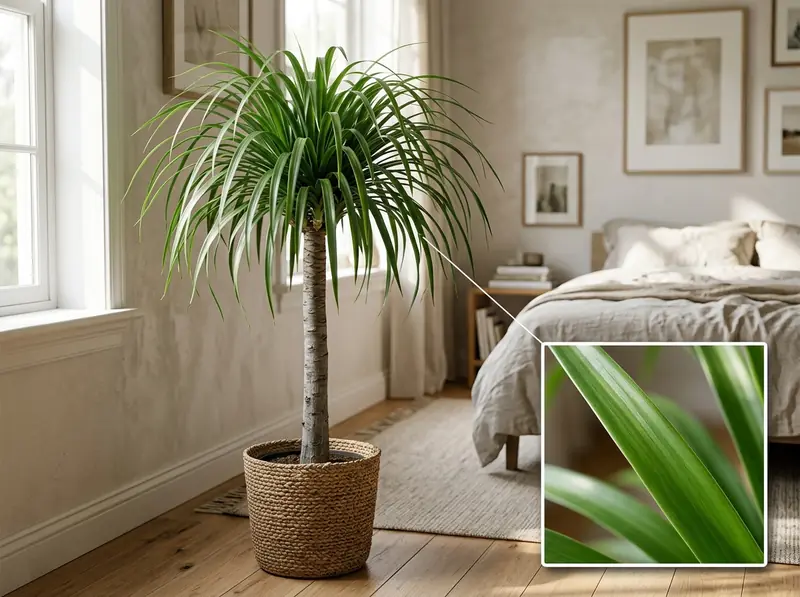
Umbrella Dracaena
Dracaena umbraculifera
- Medium to bright, indirect light
- Moderate watering
Toxic to cats and dogs AI-generated
 AI-generated
 AI-generated