
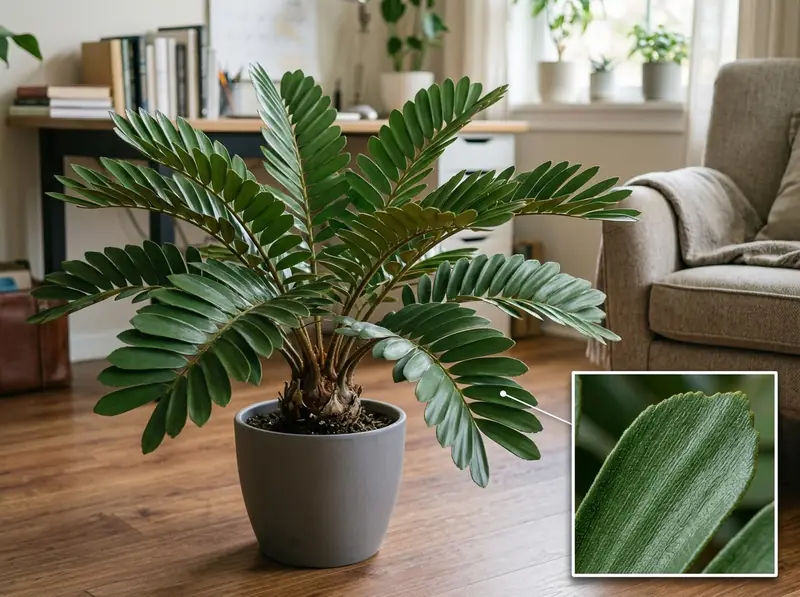
 AI-generated
Cardboard Palm
Zamia furfuracea
Also known as Cardboard Cycad
Cardboard palm is a slow-growing, sturdy cycad with glossy, arching fronds and a bulbous stem base. It is tough and drought-tolerant, and it does best in bright light with a fast-draining mix. The main thing to get right is not overwatering.
Saving is free with a KinClub account, and it works here and in the KinClub app. Sign up free
Care profile
- Light
- Bright, indirect lightLow → direct sun
- Water
- Let it dry outAbout every 14 days
- Difficulty
- EasyTricky → easy
- Coldest it tolerates
- 40°F
- Humidity
- Low
- Mature size
- Medium to largeSmall → tree-size
- Growth rate
- Slow
- How common
- Very commonRare → everywhere
- Plant family
- Zamiaceae
Pets and toxicity
Toxic to cats
Keep away from cats. Call your vet or a pet poison helpline if a cat chews it.
Toxic to dogs
Keep away from dogs. Call your vet or a pet poison helpline if a dog chews it.
Source: ASPCA toxic and non-toxic plants. If a pet eats any houseplant, call your vet or an animal poison helpline.
How to care for Cardboard Palm
Light
Give it bright light, including a few hours of gentle direct sun from an east or south window. It tolerates medium light but grows more slowly and looks thinner.
Watering
Water thoroughly when the top 2 inches of soil are dry, about every 2 weeks in summer and every 3 to 5 weeks in winter. Empty the saucer so the roots never sit in water.
Soil
Use a fast-draining mix, such as cactus or palm mix, or regular potting soil with about one-third perlite or coarse sand. The pot must have drainage holes.
Feeding
Feed with a slow-release palm or balanced fertilizer in spring, or a diluted liquid feed monthly from spring to late summer. Do not feed in fall and winter.
Repotting
Repot only every 2 to 3 years, when roots crowd the pot, into a container 1 to 2 inches wider. Keep the swollen stem base (caudex) partly above the soil line.
Propagation
Propagation at home is difficult. It grows from seed, which is slow and can take months to germinate, or from rare offsets at the base, which are hard to root.
Common problems
- Yellow lower fronds: usually overwatering or poor drainage, so let the soil dry and check that the drainage holes are clear.
- Brown leaf tips: caused by irregular watering or salt build-up, so water evenly and flush the soil occasionally.
- Scale or mealybugs on stems and leaflets: wipe them off with rubbing alcohol on a cotton swab and repeat weekly until they are gone.
- Stem base soft or rotting: caused by prolonged wet soil; cut back on watering and repot into dry, gritty mix if some firm tissue remains.
- Pale, bleached leaflets: too much harsh direct sun, so move the plant back from the window or filter the light.
Similar plants
Same light needs and difficulty.
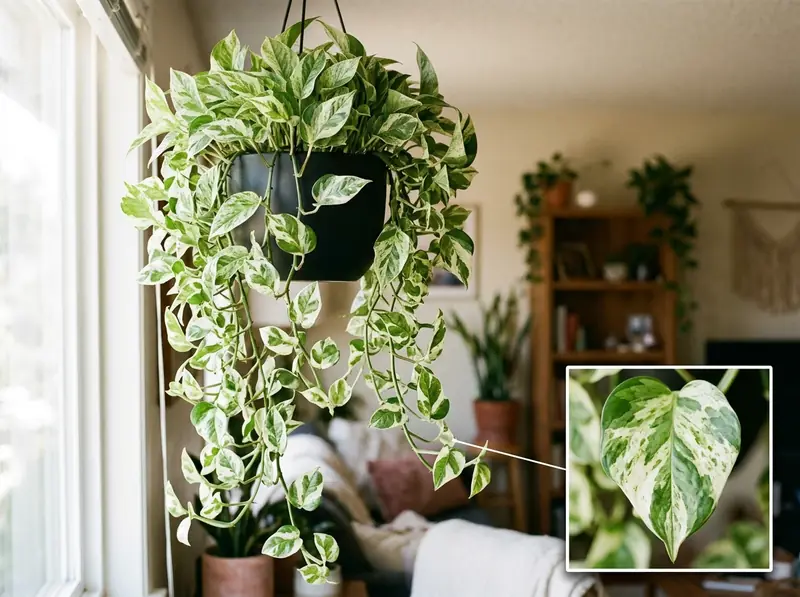 AI-generated
Snow Queen Pothos
Epipremnum aureum 'Snow Queen'
- Bright, indirect light
- Dry to moderate watering
Toxic to cats and dogs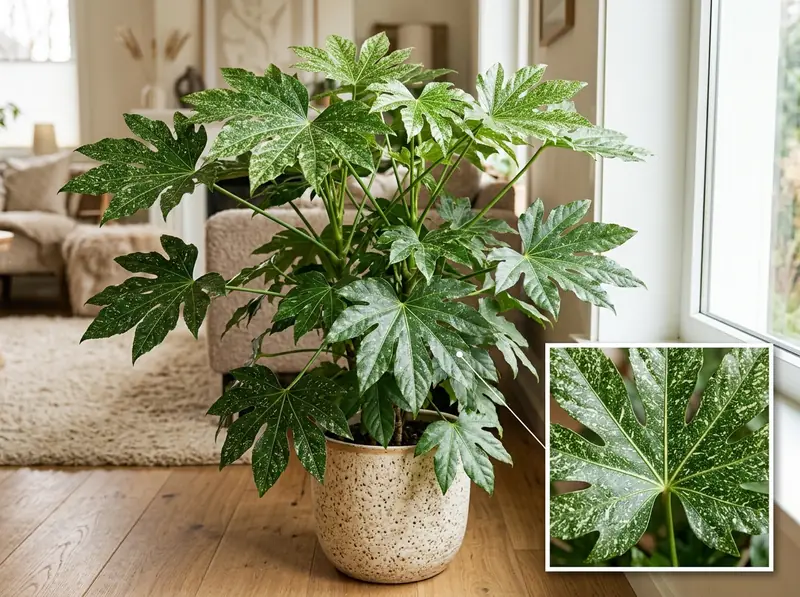 AI-generated
Spider's Web Fatsia
Fatsia japonica 'Spider's Web'
- Bright, indirect light
- Moderate watering
Pets: not yet checked AI-generated
Chinese Money Plant
Pilea peperomioides
- Bright, indirect light
- Dry to moderate watering
Pets: not yet checked AI-generated
Christmas Cactus
Schlumbergera × buckleyi
- Bright, indirect light
- Moderate watering
Pets: not yet checked