
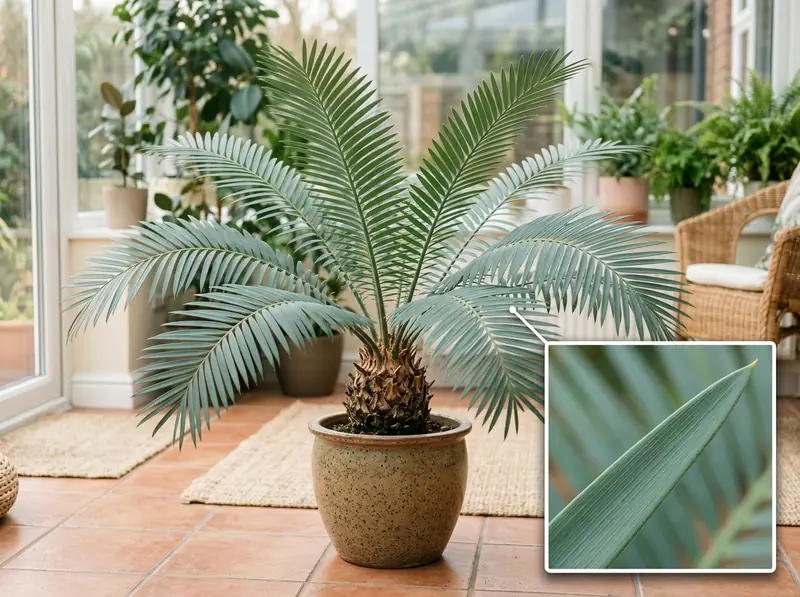
 AI-generated
Chestnut Dioon
Dioon edule
Also known as Zamia maelenii, Zamia rigida
Chestnut Dioon is a slow-growing, palm-like cycad with stiff, feathery, blue-green fronds that form a tidy rosette on a stout trunk. It is tough and drought tolerant, and it does best with bright light and a gritty soil that dries between waterings. Be patient, because it may produce only one flush of new fronds each year.
Saving is free with a KinClub account, and it works here and in the KinClub app. Sign up free
Care profile
- Light
- Bright, indirect to direct sunLow → direct sun
- Water
- Let it dry outAbout every 14 days
- Difficulty
- EasyTricky → easy
- Coldest it tolerates
- 30°F
- Humidity
- Low
- Mature size
- LargeSmall → tree-size
- Growth rate
- Slow
- How common
- CommonRare → everywhere
- Plant family
- Zamiaceae
Pets and toxicity
Toxic to cats
Keep away from cats. Call your vet or a pet poison helpline if a cat chews it.
Toxic to dogs
Keep away from dogs. Call your vet or a pet poison helpline if a dog chews it.
Source: ASPCA toxic and non-toxic plants. If a pet eats any houseplant, call your vet or an animal poison helpline.
How to care for Chestnut Dioon
Light
Give it a bright spot with several hours of direct morning or filtered sun, such as a south or east window. It tolerates medium light but grows more slowly there.
Watering
Water thoroughly, then let the top 2 inches of soil dry out before watering again, about every 2 weeks in summer. In winter water only every 3 to 5 weeks, since it is drought tolerant and dislikes wet roots.
Soil
Use a gritty, fast-draining mix, such as cactus mix with extra perlite or pumice (about one part grit to two parts mix). Use a pot with drainage holes.
Feeding
Feed with a slow-release fertilizer or half-strength balanced liquid feed in spring and summer, about every 6 to 8 weeks. Do not feed in autumn and winter.
Repotting
Repot only every 3 to 4 years, in spring, when roots crowd the pot. Go up just one pot size and keep the top of the trunk above the soil line.
Propagation
Mainly grown from fresh seed, which is slow and can take months to sprout. Occasionally offsets form at the base and can be separated, but this is uncommon indoors.
Common problems
- Yellowing lower fronds with soft trunk base: root rot from overwatering. Let the soil dry, repot into gritty mix, and trim any rotted roots.
- Brown crispy leaf tips: usually too little water or fertilizer buildup. Water deeply when dry and flush the soil occasionally.
- White cottony bits or brown bumps on fronds: mealybugs or scale. Wipe them off with rubbing alcohol on a cotton swab and repeat weekly.
- No new fronds for a long time: often normal, since it flushes once a year at most. Give brighter light and spring feeding.
Similar plants
Same light needs and difficulty.
 AI-generated
 AI-generated
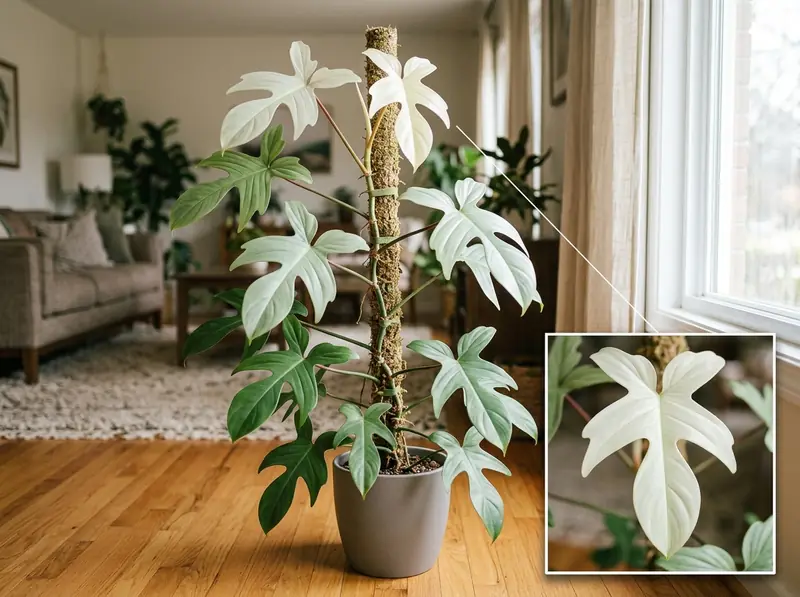
Florida Ghost Philodendron
Philodendron 'Florida Ghost'
- Bright, indirect light
- Moderate watering
Toxic to cats and dogs AI-generated
Chinese Money Plant
Pilea peperomioides
- Bright, indirect light
- Dry to moderate watering
Pets: not yet checked AI-generated
Christmas Cactus
Schlumbergera × buckleyi
- Bright, indirect light
- Moderate watering
Pets: not yet checked