
 AI-generated
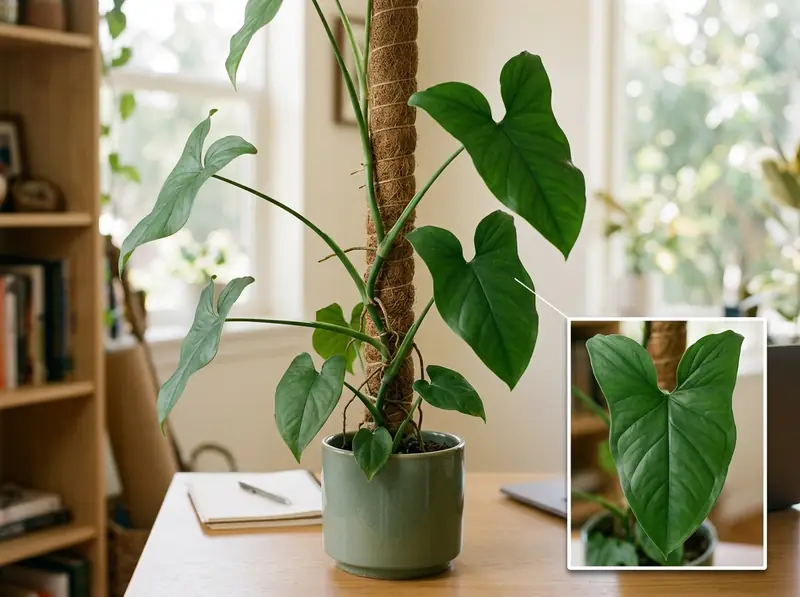
Chiapense Syngonium
Syngonium chiapense
Chiapense Syngonium is a climbing aroid from Mexico and Central America with arrowhead-shaped leaves that become more lobed as the plant matures. It is easy to grow in bright, indirect light with regular watering, and it does best with a moss pole to climb. Average home temperatures suit it well, and it roots easily from cuttings.
Saving is free with a KinClub account, and it works here and in the KinClub app. Sign up free
Care profile
- Light
- Bright, indirect lightLow → direct sun
- Water
- Moderate wateringAbout every 8 days
- Difficulty
- EasyTricky → easy
- Coldest it tolerates
- 55°F
- Humidity
- Medium
- Mature size
- LargeSmall → tree-size
- Growth rate
- Moderate
- How common
- EnthusiastRare → everywhere
- Plant family
- Araceae
Pets and toxicity
Cats and dogs: not yet checked
Not yet checked against ASPCA — don't assume it's safe for pets.
No toxicity source on record for this plant yet. If a pet eats any houseplant, call your vet or an animal poison helpline.
How to care for Chiapense Syngonium
Light
Give it bright, indirect light, such as a spot a few feet from an east or north-facing window. It tolerates medium light but grows more slowly, and direct midday sun can scorch the leaves.
Watering
Water thoroughly when the top 1 to 2 inches of soil feel dry, roughly every 7 to 10 days in the growing season. Let excess drain away and never leave the pot standing in water. Water less often in winter.
Soil
Use a chunky, well-draining aroid mix. A good blend is about 2 parts standard potting mix to 1 part perlite or orchid bark.
Feeding
Feed every 4 to 6 weeks in spring and summer with a balanced liquid houseplant fertilizer at half the label strength. Skip feeding in fall and winter.
Repotting
Repot every 1 to 2 years in spring when roots circle the pot or poke out of the drainage holes. Move up only 1 to 2 inches in pot diameter.
Propagation
Take a stem cutting with at least one node and a leaf, and root it in water or moist potting mix. Roots usually form in 2 to 4 weeks in a warm, bright spot.
Common problems
- Yellow lower leaves: usually overwatering, so let the soil dry more between waterings and check that the pot drains.
- Brown, crispy leaf edges: usually dry air or underwatering, so water more consistently and group it with other plants or use a humidifier.
- Leggy, sparse growth: not enough light or no support, so move it brighter, add a moss pole, and pinch back long stems.
- Fine webbing and speckled leaves: spider mites, so rinse the foliage and treat with insecticidal soap every 5 to 7 days for a few weeks.
- White cottony clusters in leaf joints: mealybugs, so dab with rubbing alcohol on a cotton swab and repeat weekly.
Similar plants
Same light needs and difficulty.
 AI-generated
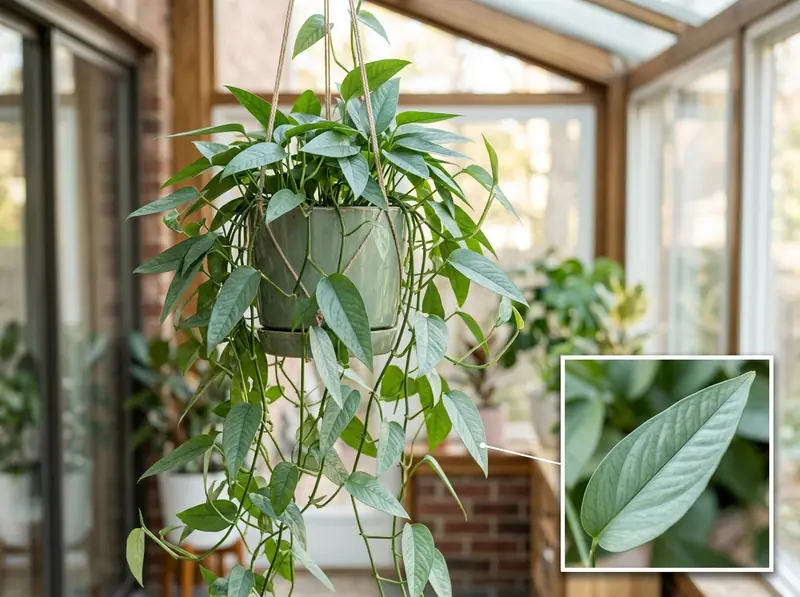
Cebu Blue Pothos
Epipremnum pinnatum 'Cebu Blue'
- Bright, indirect light
- Moderate watering
Toxic to cats and dogs AI-generated
 AI-generated
Chinese Money Plant
Pilea peperomioides
- Bright, indirect light
- Dry to moderate watering
Pets: not yet checked AI-generated
Christmas Cactus
Schlumbergera × buckleyi
- Bright, indirect light
- Moderate watering
Pets: not yet checked