AI-generated image, not a photograph of this plant. Real plants look different depending on light, soil, temperature and age.
AsphodelaceaeEnthusiast in stores
Coarctata Haworthia
Haworthiopsis coarctata
Also known as Haworthia coarctata
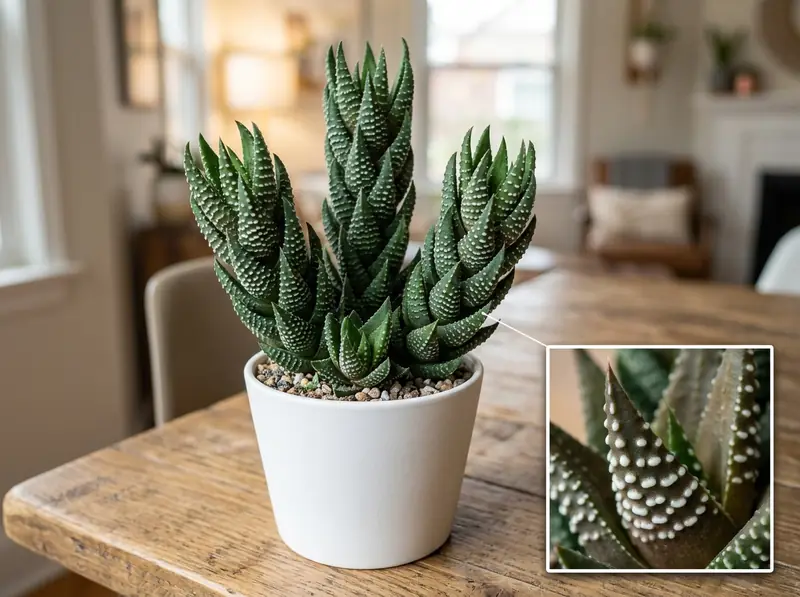
Coarctata haworthia (Haworthiopsis coarctata) grows tight, upright columns of dark green, pointed leaves with white bumps. It is a slow, sturdy succulent that looks sculptural on a sill and is easy for beginners.
Pets: not yet checked
💡
Saving is free with a KinClub account, and it works here and in the KinClub app. Sign up free
🪴 Care profile
Light
Bright, indirect lightLow → direct sun
Water
Let it dry outAbout every 14 days
Difficulty
EasyTricky → easy
Coldest it tolerates
40°F
Humidity
Low
Mature size
SmallSmall → tree-size
Growth rate
Slow
How common
EnthusiastRare → everywhere
Plant family
Asphodelaceae
🐾 Pets and toxicity
Cats and dogs: not yet checked
Not yet checked against ASPCA — don't assume it's safe for pets.
Bright indirect light from an east or lightly shaded south window keeps it compact and deeply green. Some direct morning sun is fine, but hot afternoon sun turns the leaves red-brown.
Watering
Soak the pot when the soil is fully dry, about every 2 weeks in the growing season and every 4-6 weeks in winter. Keep water off the crown to avoid rot.
Soil
Use a gritty cactus mix with extra pumice or perlite in a pot with drainage. The roots are fine and need air around them.
Feeding
Feed a few times in spring and summer with half-strength cactus fertilizer. Stop in fall and winter.
Repotting
Repot every 2-3 years in spring, or when offsets fill the pot. A shallow pot that is slightly wider than the clump is ideal.
Propagation
Cut or twist off offsets with a few roots in spring, let the end dry for a day, and pot in gritty mix. It clumps steadily, so division is simple.
Common problems
A soft, dark stem base means rot from overwatering: unpot, cut away mushy tissue, and replant in dry mix.
Reddish-brown color points to too much direct sun or drought stress: move back from the glass and water deeply.
Loose, leggy columns mean too little light, so move to a brighter window.
Mealybugs in the leaf axils: dab with an alcohol-dipped swab and repeat weekly.

 AI-generated
 AI-generated
 AI-generated
 AI-generated
 AI-generated