
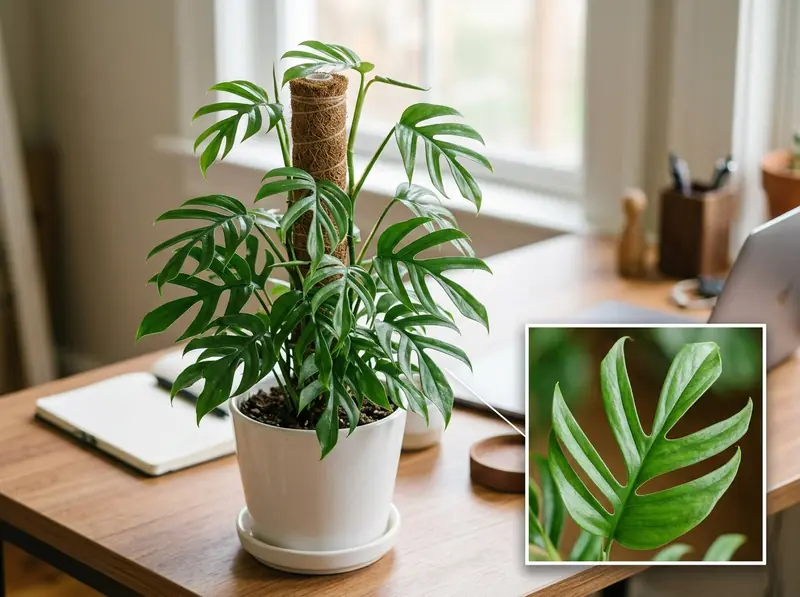
 AI-generated
Shangri La Pothos
Epipremnum aureum 'Shangri La'
Shangri La pothos is a compact, slow-growing climber with narrow, deeply cut leaves that look almost feathery. It is as forgiving as other pothos but grows noticeably slower, and does best on a small pole or trellis.
Saving is free with a KinClub account, and it works here and in the KinClub app. Sign up free
Care profile
- Light
- Bright, indirect lightLow → direct sun
- Water
- Dry to moderate wateringAbout every 10 days
- Difficulty
- EasyTricky → easy
- Coldest it tolerates
- 55°F
- Humidity
- Medium
- Mature size
- MediumSmall → tree-size
- Growth rate
- Slow
- How common
- RareRare → everywhere
- Plant family
- Araceae
Pets and toxicity
Toxic to cats
Keep away from cats. Call your vet or a pet poison helpline if a cat chews it.
Toxic to dogs
Keep away from dogs. Call your vet or a pet poison helpline if a dog chews it.
Source: ASPCA toxic and non-toxic plants. If a pet eats any houseplant, call your vet or an animal poison helpline.
How to care for Shangri La Pothos
Light
Prefers bright, indirect light, with a few hours of gentle morning sun at most. It tolerates medium light but grows slowly and the leaf cuts are less distinct. Avoid hot afternoon sun.
Watering
Water when the top 2 in of soil are dry, about every 10 days in the growing season and every 2 to 3 weeks in winter. Slow growth means it uses less water than regular pothos.
Soil
Use a chunky, well-draining mix, such as 2 parts potting mix to 1 part orchid bark or perlite, in a pot with drainage holes.
Feeding
Fertilize every 4 to 6 weeks from spring through summer with a half-strength balanced houseplant fertilizer. Skip in winter.
Repotting
Repot every 2 to 3 years in spring, one size up. It prefers being slightly snug, so don't overpot.
Propagation
Cut a stem below a node with 2 to 3 leaves and root in water or moist mix in 3 to 5 weeks. Rooting is a bit slower than for common pothos.
Common problems
- Leaves staying small and uncut often mean low light or no support; add a pole and brighter light.
- Yellowing with wet soil points to overwatering; let it dry and confirm the pot drains.
- Mealybugs and scale hide at nodes; wipe off with rubbing alcohol and check weekly.
- Crisp brown tips come from very dry air or irregular watering; water thoroughly when the soil dries.
Similar plants
Same light needs and difficulty.
 AI-generated
 AI-generated
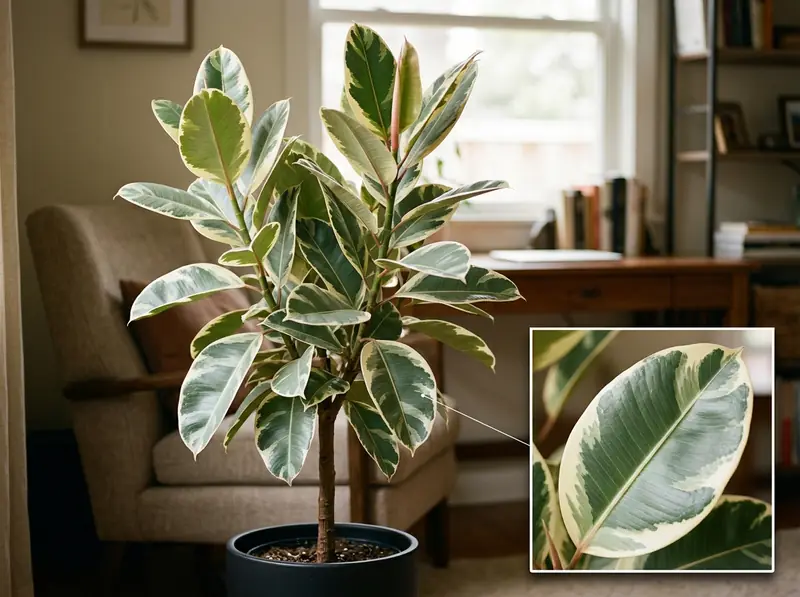
Tineke Rubber Plant
Ficus elastica 'Tineke'
- Bright, indirect light
- Moderate watering
Toxic to cats and dogs AI-generated
Chinese Money Plant
Pilea peperomioides
- Bright, indirect light
- Dry to moderate watering
Pets: not yet checked AI-generated
Christmas Cactus
Schlumbergera × buckleyi
- Bright, indirect light
- Moderate watering
Pets: not yet checked