
 AI-generated
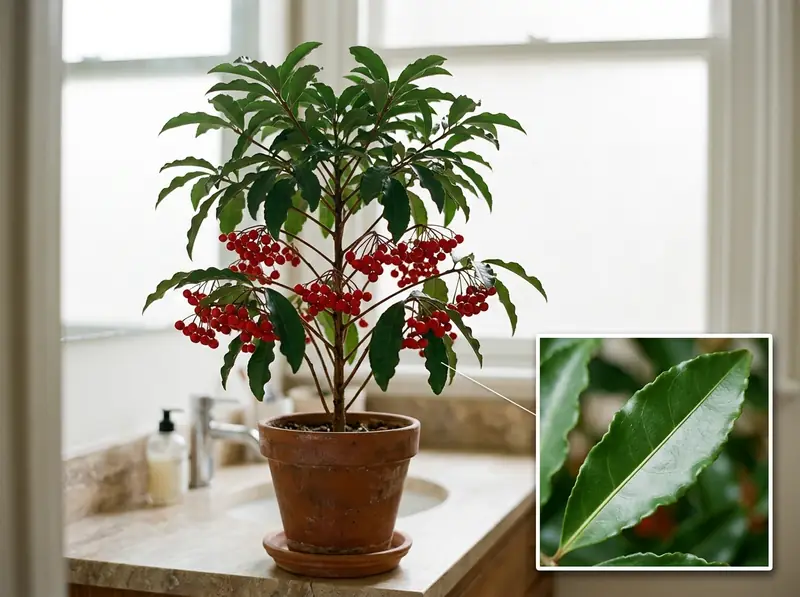
Coralberry
Ardisia crenata
Coralberry is a compact, glossy-leaved evergreen shrub with scalloped leaf edges, known for clusters of bright red berries that last for months, often through the winter holidays. It likes bright indirect light, evenly moist but well-drained soil, and a cool winter rest to set fruit. It grows slowly and is a good long-lived plant for a bright room.
Saving is free with a KinClub account, and it works here and in the KinClub app. Sign up free
Care profile
- Light
- Bright, indirect lightLow → direct sun
- Water
- Moderate wateringAbout every 7 days
- Difficulty
- ModerateTricky → easy
- Coldest it tolerates
- 45°F
- Humidity
- Medium
- Mature size
- MediumSmall → tree-size
- Growth rate
- Slow
- How common
- CommonRare → everywhere
- Plant family
- Primulaceae
Pets and toxicity
Cats and dogs: not yet checked
Not yet checked against ASPCA — don't assume it's safe for pets.
No toxicity source on record for this plant yet. If a pet eats any houseplant, call your vet or an animal poison helpline.
How to care for Coralberry
Light
Give bright indirect light, such as a spot near an east or west window, with a few hours of gentle morning sun if possible. Low light leads to leggy growth and fewer berries.
Watering
Water when the top inch of soil feels dry, roughly once a week in the growing season, and let excess drain away. Keep the soil lightly moist rather than soggy, and water a little less in winter.
Soil
Use a peat-based or coco-based potting mix with some perlite or bark added for drainage. A slightly acidic mix suits it best.
Feeding
Feed every 4 weeks from spring to early autumn with a balanced liquid fertilizer at half strength. Do not feed in winter.
Repotting
Repot every 2-3 years in spring, moving up only one pot size (1-2 inches wider). It flowers and fruits well when slightly root-bound.
Propagation
Grown mainly from seed: clean the pulp off a ripe berry, sow in moist mix at about 70°F, and expect slow germination over weeks to months. Stem cuttings are possible but root unreliably.
Common problems
- Leaves dropping in winter: usually a cold draft or dry heating; move away from vents and windows and keep the soil evenly moist.
- Brown leaf tips: low humidity or irregular watering; mist occasionally, group with other plants and water on a steady schedule.
- No flowers or berries: too little light or too warm a winter; give brighter light and a cooler rest at 55-65°F.
- Cottony white patches or brown bumps on stems: mealybugs or scale; wipe off with alcohol-dipped cotton swabs and repeat weekly.
- Yellow lower leaves: overwatering or poor drainage; let the top inch dry and make sure the pot drains.
Similar plants
Same light needs and difficulty.
 AI-generated
 AI-generated
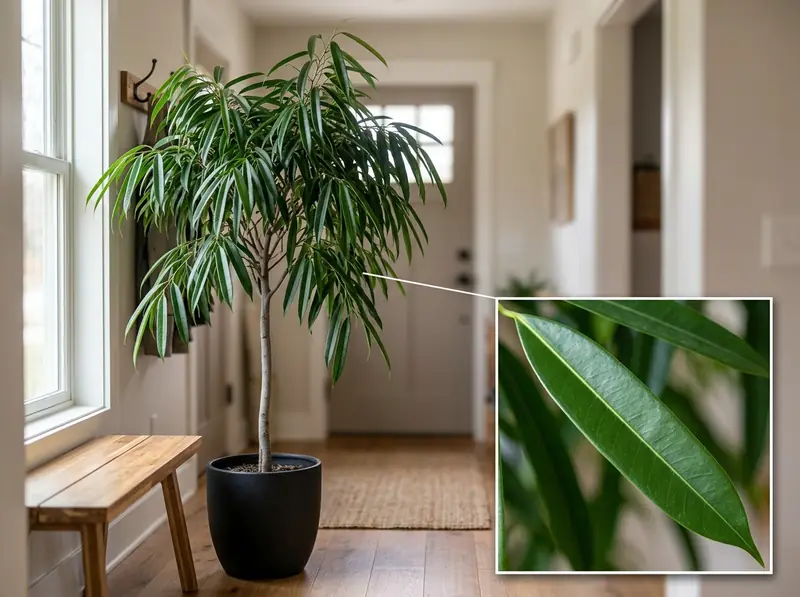
Alii Fig (Maclellandii)
Ficus maclellandii
- Bright, indirect light
- Moderate watering
Toxic to cats and dogs AI-generated
 AI-generated