
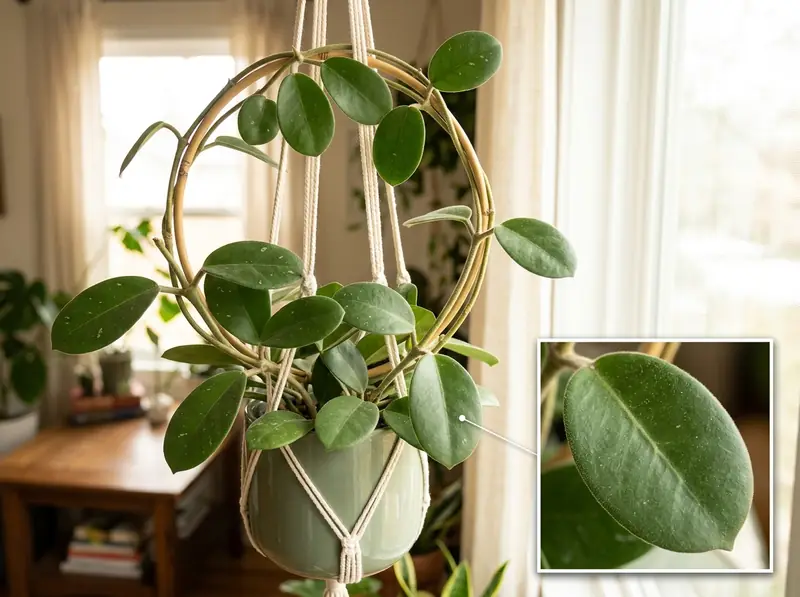
 AI-generated
Coronaria Hoya
Hoya coronaria
Hoya coronaria is a robust climber from Southeast Asia, with large, thick, slightly fuzzy leaves and star-shaped flowers with a deep center. It likes warmth, humidity, and a trellis, and is a little thirstier than most hoyas.
Saving is free with a KinClub account, and it works here and in the KinClub app. Sign up free
Care profile
- Light
- Bright, indirect lightLow → direct sun
- Water
- Dry to moderate wateringAbout every 8 days
- Difficulty
- ModerateTricky → easy
- Coldest it tolerates
- 60°F
- Humidity
- High
- Mature size
- Medium to largeSmall → tree-size
- Growth rate
- Moderate
- How common
- EnthusiastRare → everywhere
- Plant family
- Apocynaceae
Pets and toxicity
Cats and dogs: not yet checked
Not yet checked against ASPCA — don't assume it's safe for pets.
No toxicity source on record for this plant yet. If a pet eats any houseplant, call your vet or an animal poison helpline.
How to care for Coronaria Hoya
Light
Bright indirect light is best, such as an east window or a spot a few feet from a south one. Gentle morning sun helps flowering, but hot direct sun scorches the large leaves.
Watering
Water when the top inch or two of soil is dry, about every 8 days in the growing season. The large leaves lose water fast in dry air, so do not let it dry out entirely.
Soil
Use a chunky aroid mix of potting soil, orchid bark, and perlite. The mix should drain well but hold some moisture.
Feeding
Feed every 3-4 weeks in spring and summer with a balanced fertilizer at half strength. Skip in winter.
Repotting
Repot every 2 years in spring, moving up one size. It prefers to be a little pot-bound.
Propagation
Root 2-3 node stem cuttings in water or moist perlite in warmth. The thick vines root within a few weeks.
Common problems
- Yellow, soft leaves and wrinkled or mushy stems mean overwatering or a dense mix: let the pot dry more and repot into chunky bark mix.
- Wrinkled, limp leaves mean the plant is thirsty: give a deep soak, then let it drain.
- No flowers usually means not enough light: move to brighter light, and do not cut off the old flower stalks (peduncles), since they rebloom.
- Dry air and cold drafts brown the leaf edges: raise humidity and move away from vents.
Similar plants
Same light needs and difficulty.
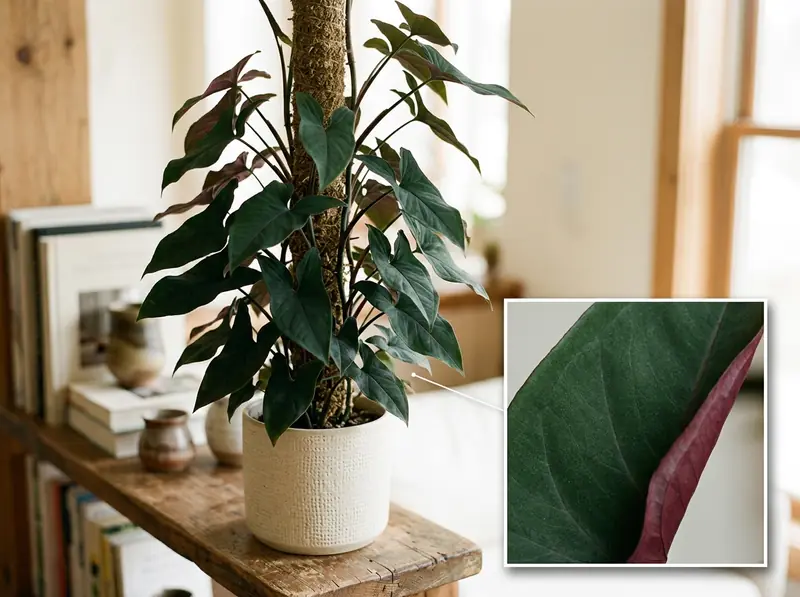 AI-generated
Llano Carti Road Syngonium
Syngonium erythrophyllum 'Llano Carti Road'
- Bright, indirect light
- Moderate watering
Pets: not yet checked AI-generated
 AI-generated
 AI-generated