
 AI-generated
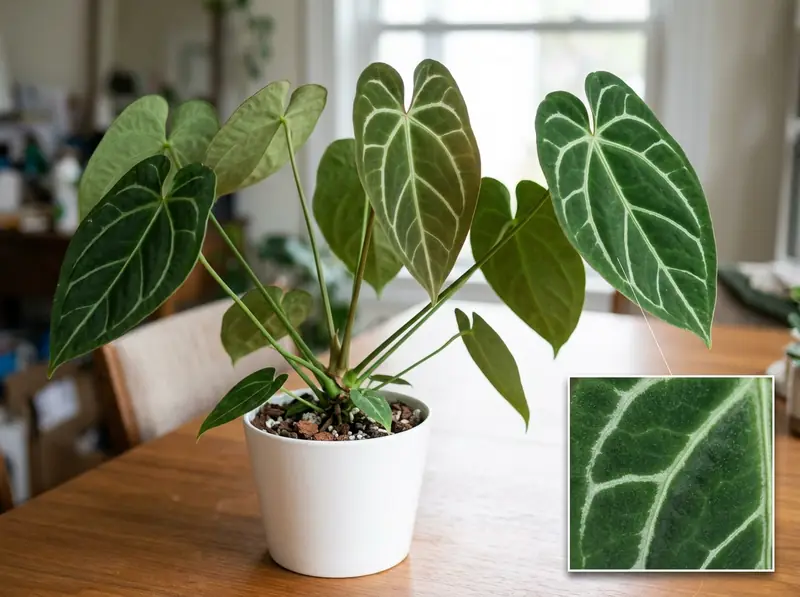
Crystal Anthurium
Anthurium crystallinum
Crystal anthurium is a tropical aroid grown for its velvety, heart-shaped leaves with bold white veins. It does best in bright, indirect light, high humidity and an airy, fast-draining mix. It suits a patient owner who can keep conditions steady, and it is easier in a humid spot.
Saving is free with a KinClub account, and it works here and in the KinClub app. Sign up free
Care profile
- Light
- Bright, indirect lightLow → direct sun
- Water
- Moderate to moist wateringAbout every 7 days
- Difficulty
- ModerateTricky → easy
- Coldest it tolerates
- 60°F
- Humidity
- High
- Mature size
- MediumSmall → tree-size
- Growth rate
- Slow to moderate
- How common
- CommonRare → everywhere
- Plant family
- Araceae
Pets and toxicity
Cats and dogs: not yet checked
Not yet checked against ASPCA — don't assume it's safe for pets.
No toxicity source on record for this plant yet. If a pet eats any houseplant, call your vet or an animal poison helpline.
How to care for Crystal Anthurium
Light
Give bright, indirect light, such as a few feet from an east window or set back from a south or west window. Direct midday sun scorches the leaves, while dim rooms dull the white veining.
Watering
Water when the top 1-2 inches of mix feel dry, roughly every 7 days in the growing season, until water drains out. Empty the saucer and water less often in winter.
Soil
Use a chunky, airy aroid mix, for example equal parts orchid bark, perlite and peat-free potting mix or coco coir. Roots need air and the mix should never stay soggy.
Feeding
Feed every 3-4 weeks from spring to early autumn with a balanced houseplant fertilizer at half the label strength. Pause in winter.
Repotting
Repot every 2 years in spring, or when roots circle the pot or poke out of the drainage holes. Move up only 1-2 inches in pot diameter, since it likes to be slightly snug.
Propagation
Take a stem section with a few leaves and aerial roots, and root it in moist sphagnum moss or water in a warm, humid spot. Mature plants can also be divided at repotting, though it takes patience.
Common problems
- Brown, crispy leaf edges: usually low humidity or dry mix, so raise humidity to 60% or more with a humidifier and water more consistently.
- Yellowing lower leaves: often overwatering or poor drainage, so let the top inches dry and check that the mix is airy.
- Brown or black spots with yellow halos: possible bacterial leaf blight, so remove affected leaves, keep foliage dry and improve airflow.
- Silvery streaks or distorted new growth: thrips or mites, so isolate the plant, rinse the leaves gently and treat with insecticidal soap weekly.
Similar plants
Same light needs and difficulty.
 AI-generated
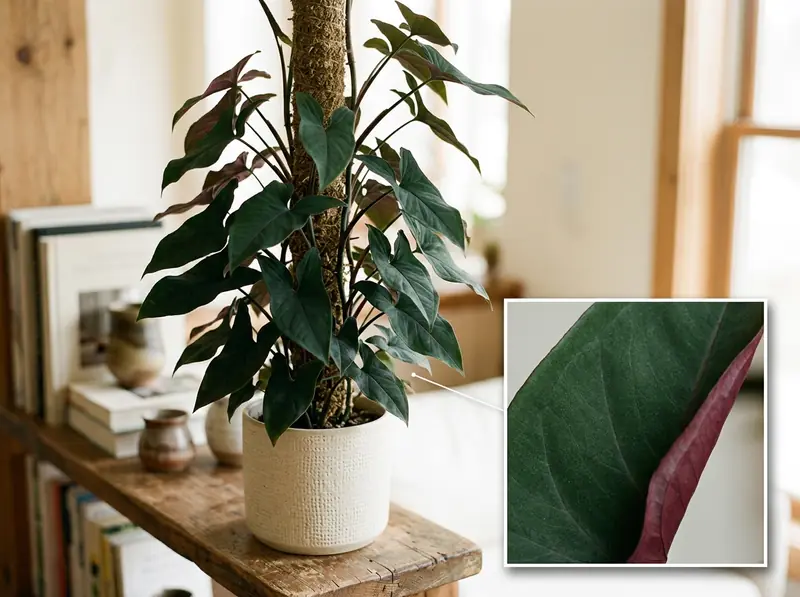
Llano Carti Road Syngonium
Syngonium erythrophyllum 'Llano Carti Road'
- Bright, indirect light
- Moderate watering
Pets: not yet checked AI-generated
 AI-generated
 AI-generated