
 AI-generated
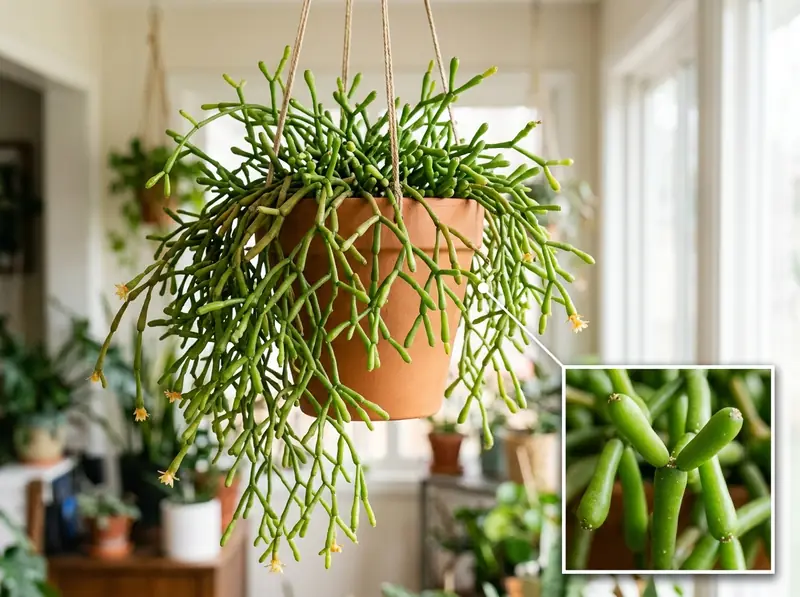
Dancing Bones Cactus
Rhipsalis salicornioides
Also known as Opuntia salicornioides
Dancing bones cactus is a jungle cactus from Central and South American forests, with bright green, bottle-shaped stem segments that branch and trail in a sculptural way. It is easy to grow in bright, indirect light with a gritty mix and watering only after the soil has dried. It looks best in a hanging basket or on a shelf edge, where the stems can drape.
Saving is free with a KinClub account, and it works here and in the KinClub app. Sign up free
Care profile
- Light
- Bright, indirect lightLow → direct sun
- Water
- Moderate wateringAbout every 10 days
- Difficulty
- EasyTricky → easy
- Coldest it tolerates
- 50°F
- Humidity
- Medium to high
- Mature size
- SmallSmall → tree-size
- Growth rate
- Moderate
- How common
- CommonRare → everywhere
- Plant family
- Cactaceae
Pets and toxicity
Cats and dogs: not yet checked
Not yet checked against ASPCA — don't assume it's safe for pets.
Source: ASPCA toxic and non-toxic plants. If a pet eats any houseplant, call your vet or an animal poison helpline.
How to care for Dancing Bones Cactus
Light
Give it bright, indirect light, such as a spot near an east or north-facing window or a few feet back from a south window. Gentle morning sun is fine, but strong midday sun can scorch or yellow the stems.
Watering
Water thoroughly when the top inch or two of mix has dried, usually every 7 to 14 days in the growing season, and let excess drain away. Cut back to every 3 to 4 weeks in winter, and never let it sit in water.
Soil
Use a fast-draining mix, such as cactus mix with extra orchid bark or perlite added (about one part bark or perlite to two parts mix). Choose a pot with drainage holes.
Feeding
Feed monthly in spring and summer with a balanced houseplant fertilizer diluted to half strength. Skip feeding in fall and winter.
Repotting
Repot only every 2 to 3 years, in spring, when roots fill the pot. It likes being slightly snug, so go up just one pot size, and handle the brittle stems gently.
Propagation
Take a cutting of a few stem segments, let the cut end dry for a day or two, then push it into barely damp, gritty mix. It usually roots within a few weeks; keep the mix only lightly moist.
Common problems
- Mushy, translucent stems at the base: this is root or stem rot from overwatering. Cut off healthy tips, let them dry, and re-root in fresh gritty mix.
- Shriveled, wrinkled stems: the plant is underwatered. Give a deep soak and keep to a regular schedule.
- Yellow or reddish stems: too much direct sun. Move it to bright, filtered light.
- White cottony clusters in stem joints: mealybugs. Dab with cotton swabs dipped in rubbing alcohol and repeat weekly until gone.
- Small brown bumps on stems: scale insects. Scrape them off gently or wipe with alcohol, then treat with insecticidal soap.
Similar plants
Same light needs and difficulty.
 AI-generated
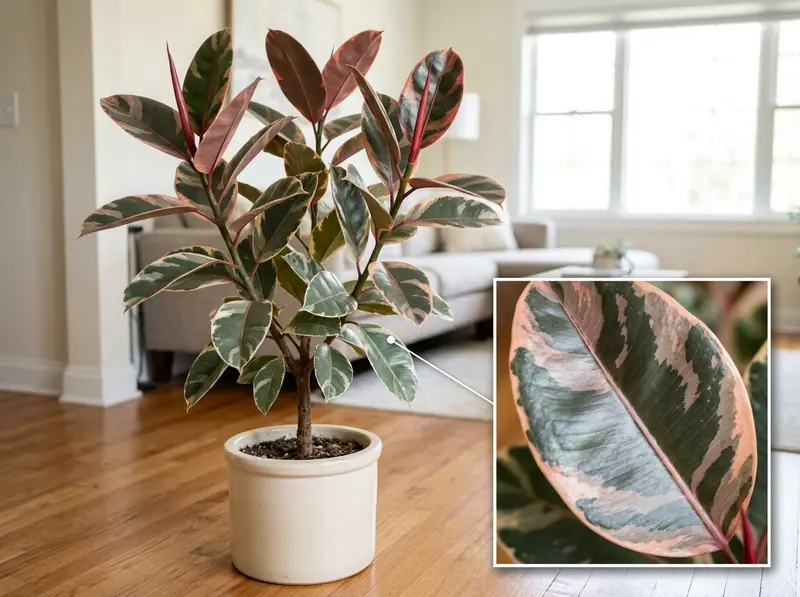
Ruby Rubber Plant
Ficus elastica 'Ruby'
- Bright, indirect light
- Moderate watering
Toxic to cats and dogs AI-generated
 AI-generated
Chinese Money Plant
Pilea peperomioides
- Bright, indirect light
- Dry to moderate watering
Pets: not yet checked AI-generated
Christmas Cactus
Schlumbergera × buckleyi
- Bright, indirect light
- Moderate watering
Pets: not yet checked