
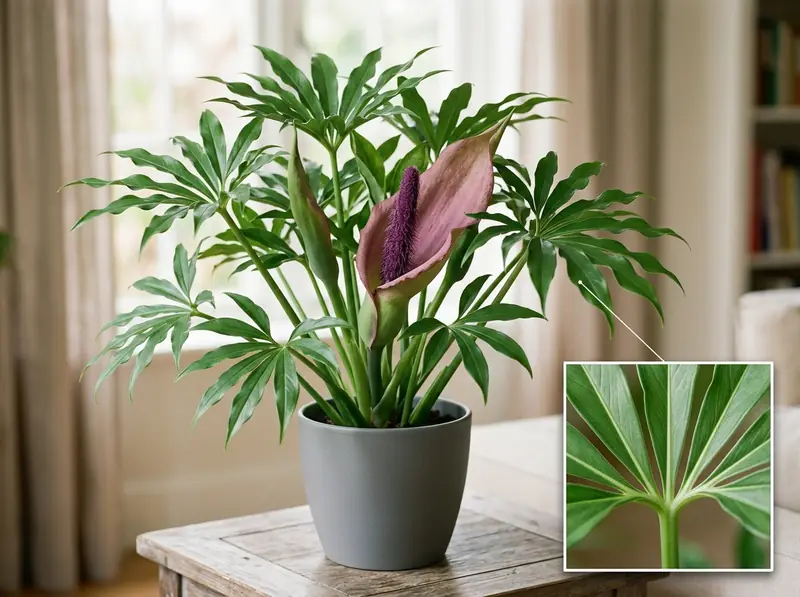
 AI-generated
Dead Horse Arum
Helicodiceros muscivorus
The dead horse arum is a Mediterranean tuberous aroid famous for its hairy purple flower that smells like rotting meat to attract flies. Its leaves grow in the cool months and it rests in summer, so it follows a winter-growing schedule.
Saving is free with a KinClub account, and it works here and in the KinClub app. Sign up free
Care profile
- Light
- Bright, indirect to direct sunLow → direct sun
- Water
- Moderate wateringAbout every 10 days
- Difficulty
- Moderate to challengingTricky → easy
- Coldest it tolerates
- 35°F
- Humidity
- Low to medium
- Mature size
- MediumSmall → tree-size
- Growth rate
- Moderate
- How common
- RareRare → everywhere
- Plant family
- Araceae
Pets and toxicity
Cats and dogs: not yet checked
Not yet checked against ASPCA — don't assume it's safe for pets.
No toxicity source on record for this plant yet. If a pet eats any houseplant, call your vet or an animal poison helpline.
How to care for Dead Horse Arum
Light
Prefers bright, indirect light with some gentle morning sun in fall through spring when it is growing. Keep it cooler, about 50 to 65°F, which suits its Mediterranean origin. Avoid hot afternoon sun.
Watering
Water when the top inch of soil is dry, about every 10 days while the leaves are growing in fall to spring. When the foliage yellows in summer, stop watering entirely and keep the tuber dry.
Soil
Use a well-draining gritty mix, such as 2 parts potting mix to 1 part perlite or sand, in a pot with drainage holes.
Feeding
Feed a balanced liquid fertilizer at half strength every 4 weeks while the leaves are growing. No feeding during summer dormancy.
Repotting
Repot the tuber every 2 or 3 years at the end of dormancy, in early fall, into a deep pot. Plant it just below the soil surface.
Propagation
Separate offset tubers when dormant and replant in fall, or sow seed; seedlings take several years to flower. Offsets are the easiest route.
Common problems
- Yellowing leaves in late spring are normal dormancy; stop watering and rest the tuber dry.
- Soft tuber rot comes from watering in dormancy; dig it up, trim rot, and replant in dry mix.
- Aphids cluster on new leaves; rinse and spray with insecticidal soap.
- The flower gives off a strong rotten-meat smell for a day or two; move it outdoors during bloom.
Similar plants
Same light needs and difficulty.
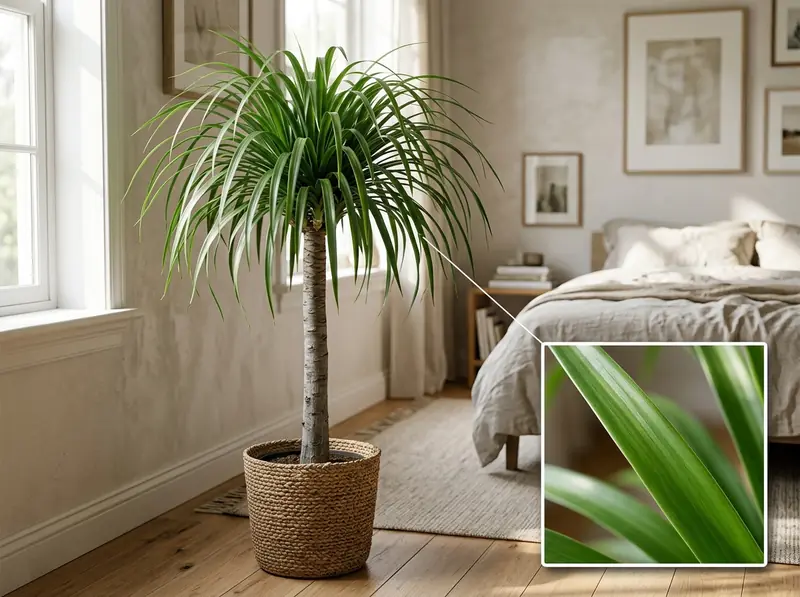 AI-generated
Umbrella Dracaena
Dracaena umbraculifera
- Medium to bright, indirect light
- Moderate watering
Toxic to cats and dogs AI-generated
 AI-generated
 AI-generated