
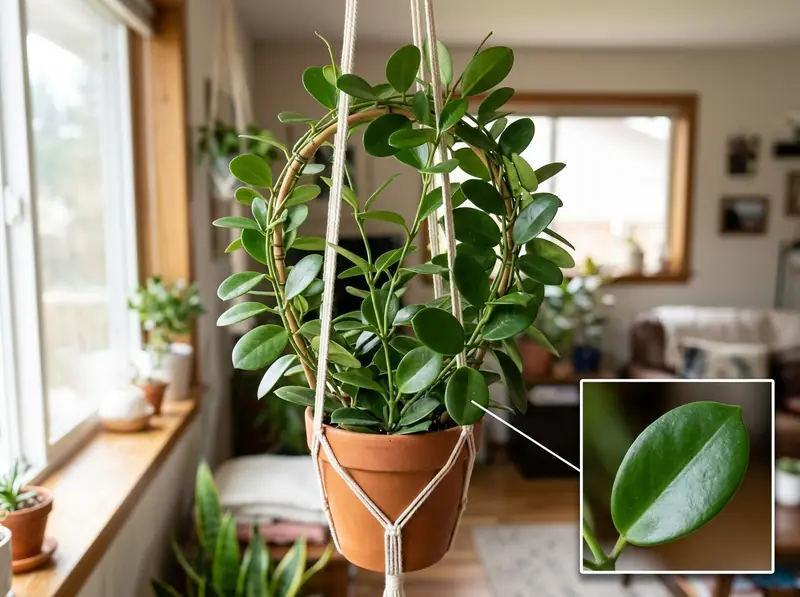
 AI-generated
Densifolia Hoya
Hoya densifolia
Hoya densifolia is a climbing hoya with thick, leathery leaves set closely along the vine and clusters of small, scented flowers. It is a fairly easy hoya for a bright window or a trellis.
Saving is free with a KinClub account, and it works here and in the KinClub app. Sign up free
Care profile
- Light
- Bright, indirect lightLow → direct sun
- Water
- Dry to moderate wateringAbout every 10 days
- Difficulty
- Easy to moderateTricky → easy
- Coldest it tolerates
- 55°F
- Humidity
- Medium
- Mature size
- MediumSmall → tree-size
- Growth rate
- Moderate to fast
- How common
- EnthusiastRare → everywhere
- Plant family
- Apocynaceae
Pets and toxicity
Cats and dogs: not yet checked
Not yet checked against ASPCA — don't assume it's safe for pets.
No toxicity source on record for this plant yet. If a pet eats any houseplant, call your vet or an animal poison helpline.
How to care for Densifolia Hoya
Light
Bright indirect light, such as an east window or a few feet from a south one, keeps it compact and encourages blooms. Avoid hot afternoon sun.
Watering
Water when the top inch or two of soil is dry, about every 10 days in the growing season and every 2-3 weeks in winter. Let the pot drain fully each time.
Soil
Use a chunky, well-draining mix of orchid bark, perlite, and potting soil. The roots need air.
Feeding
Feed every 4 weeks in spring and summer with a half-strength balanced fertilizer. Skip in winter.
Repotting
Repot every 2 years in spring, going up one pot size. It does well slightly root-bound.
Propagation
Root 2-3 node stem cuttings in water or moist perlite in a warm, bright place. Rooting usually takes a few weeks.
Common problems
- Yellow, soft leaves and wrinkled or mushy stems mean overwatering or a dense mix: let the pot dry more and repot into chunky bark mix.
- Wrinkled, limp leaves mean the plant is thirsty: give a deep soak, then let it drain.
- No flowers usually means not enough light: move to brighter light, and do not cut off the old flower stalks (peduncles), since they rebloom.
- Mealybugs hide in the crowded leaf nodes: wipe with alcohol on a swab and repeat weekly.
Similar plants
Same light needs and difficulty.
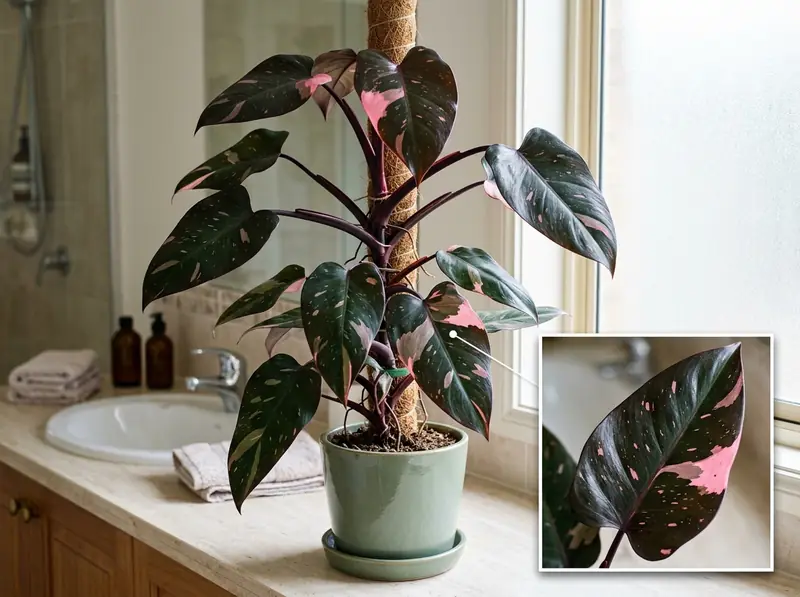 AI-generated
Pink Princess Philodendron
Philodendron erubescens 'Pink Princess'
- Bright, indirect light
- Moderate watering
Toxic to cats and dogs AI-generated
 AI-generated
 AI-generated