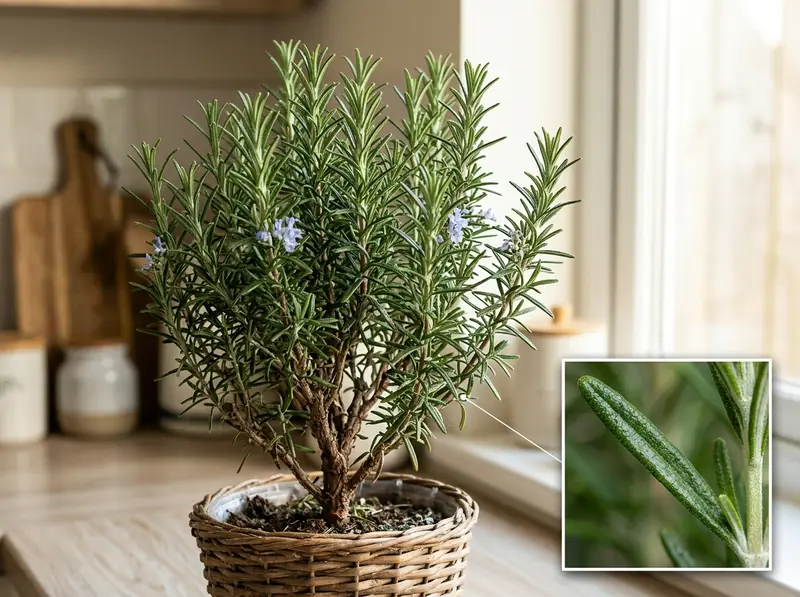
AI-generated image, not a photograph of this plant. Real plants look different depending on light, soil, temperature and age.
RoridulaceaeRare in stores
Dewy Pine
Roridula gorgonias
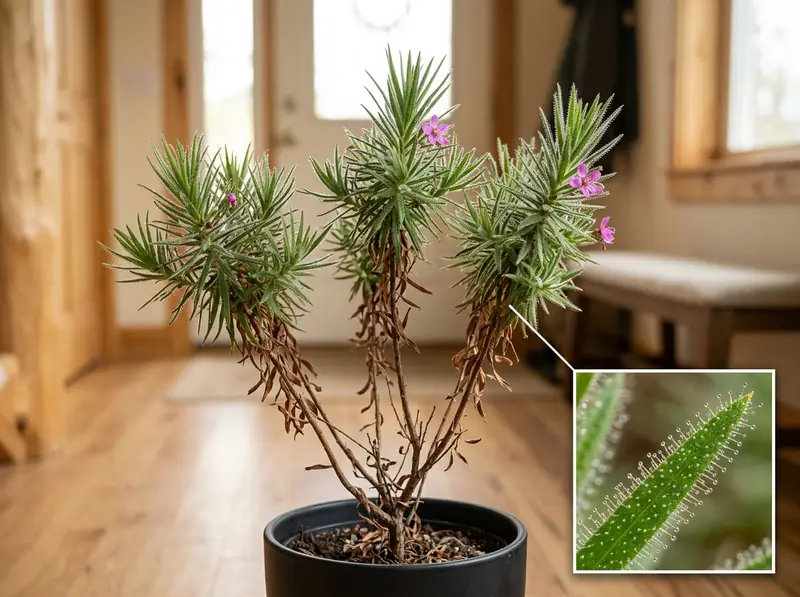
Dewy pine is a South African shrub covered in sticky needle leaves that trap insects. Unusually, it relies on a tiny bug to digest the prey. It needs bright light, cool air and soft water, and is for experienced growers.
Pets: not yet checked
💡
Saving is free with a KinClub account, and it works here and in the KinClub app. Sign up free
🪴 Care profile
Light
Direct sunLow → direct sun
Water
Keep moistAbout every 4 days
Difficulty
ChallengingTricky → easy
Coldest it tolerates
35°F
Humidity
Medium to high
Mature size
MediumSmall → tree-size
Growth rate
Slow
How common
RareRare → everywhere
Plant family
Roridulaceae
🐾 Pets and toxicity
Cats and dogs: not yet checked
Not yet checked against ASPCA — don't assume it's safe for pets.
No toxicity source on record for this plant yet. If a pet eats any houseplant, call your vet or an animal poison helpline.
🌿 How to care for Dewy Pine
Light
Needs bright light and several hours of direct sun, such as a south or west window or a greenhouse. Low light stops dew production. Keep it cool, ideally 50 to 75 F with good air movement.
Watering
Keep evenly damp in the growing season with a shallow tray of distilled or rainwater, and let the tray partly empty in winter. Never use tap water or salts.
Soil
Use a lean acidic mix of peat moss with sharp sand or perlite. It dislikes lime or added fertilizer.
Feeding
Do not fertilize. Its sticky leaves catch insects, and nutrients in the soil can harm the roots.
Repotting
Repot rarely, every 2 to 3 years, in spring into a deep pot with the same peat and sand mix. Avoid disturbing the roots.
Propagation
Seed is the usual route and is slow and uneven; cuttings are difficult. Buy established plants instead.
Common problems
Root rot comes from stale, soggy peat; use a deep pot and fresh soft water.
Needle leaves lose their dew in low light or dry air; move it to a sunnier, breezier place.
Unlike other carnivorous plants, it does not digest prey itself, so do not worry about dead insects on the leaves.
Sooty or moldy patches appear in stagnant air; add airflow around the plant.

 AI-generated
 AI-generated
 AI-generated
 AI-generated
 AI-generated