
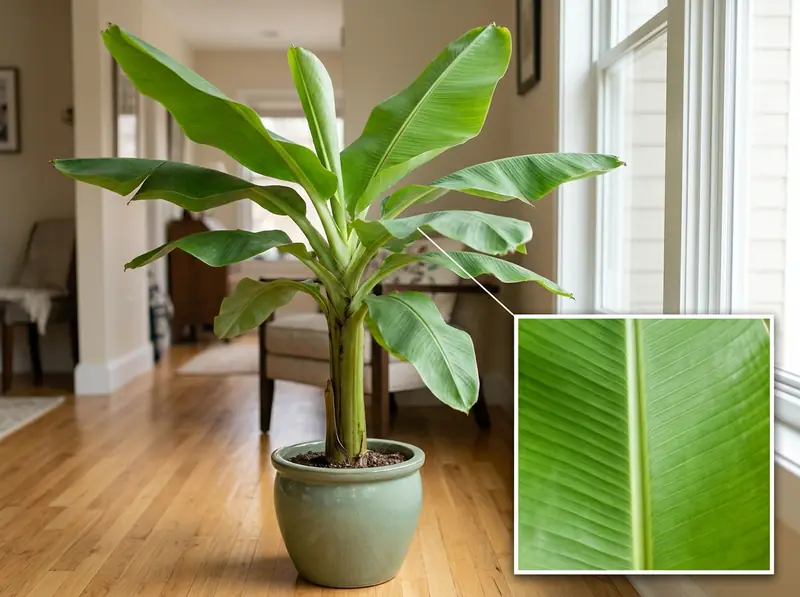
 AI-generated
Dwarf Banana
Musa acuminata
Also known as Banana, Plantain, Edible Banana, Musa Paradisiaca
Dwarf banana is a fast-growing tropical with big paddle-shaped leaves that gives a bold jungle look, though it rarely fruits indoors. It needs the brightest spot you have, steady moisture, warmth and humidity. Expect it to reach 4-6 feet indoors and to need repotting yearly.
Saving is free with a KinClub account, and it works here and in the KinClub app. Sign up free
Care profile
- Light
- Direct sunLow → direct sun
- Water
- Keep moistAbout every 5 days
- Difficulty
- ModerateTricky → easy
- Coldest it tolerates
- 55°F
- Humidity
- High
- Mature size
- LargeSmall → tree-size
- Growth rate
- Fast
- How common
- Very commonRare → everywhere
- Plant family
- Musaceae
Pets and toxicity
Non-toxic to cats
Listed as non-toxic to cats by the ASPCA.
Non-toxic to dogs
Listed as non-toxic to dogs by the ASPCA.
Source: ASPCA toxic and non-toxic plants. If a pet eats any houseplant, call your vet or an animal poison helpline.
How to care for Dwarf Banana
Light
Give it at least 4-6 hours of direct sun, such as a south or west window, or very bright light. Turn the pot a quarter turn each week so it grows evenly.
Watering
Keep the soil evenly damp but never soggy, usually watering every 4-7 days in the growing season when the top inch feels dry. Water less in winter, letting the top 2 inches dry out, and empty the saucer after watering.
Soil
Use a rich, well-draining potting mix with added perlite or bark (about one-quarter by volume). Make sure the pot has drainage holes.
Feeding
Feed every 2-4 weeks from spring to early autumn with a balanced liquid fertilizer at half strength. Stop or reduce feeding in winter.
Repotting
Repot every year in spring into a pot 2-4 inches wider, as bananas fill pots quickly. Move up to 12-14 inch pots for an established plant.
Propagation
Separate pups (suckers) that have a few leaves and their own roots, at least 6-12 inches tall, using a clean knife. Pot them individually in moist mix and keep them warm.
Common problems
- Brown leaf edges: usually low humidity or irregular watering; mist or use a humidifier and water more evenly.
- Torn or split leaves: normal for bananas as leaves unfurl; remove badly damaged ones and avoid windy spots.
- Yellowing lower leaves: old leaves die naturally, but many at once suggests overwatering or hunger; adjust watering and feed.
- Spider mites (fine webbing, stippling): wipe leaves, rinse the plant and treat with insecticidal soap weekly.
- Leaf drop in winter: caused by cold, low light or drafts; move to a warm bright spot above 60°F.
Similar plants
Same light needs and difficulty.
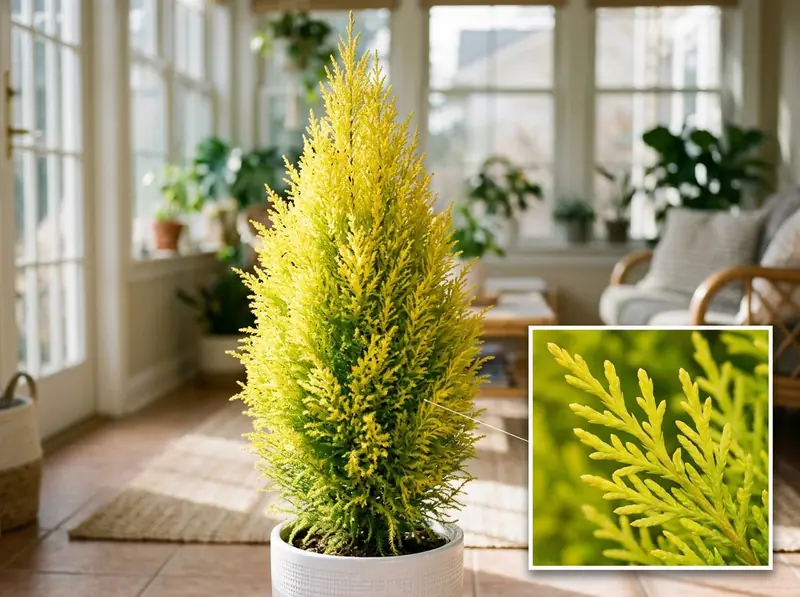 AI-generated
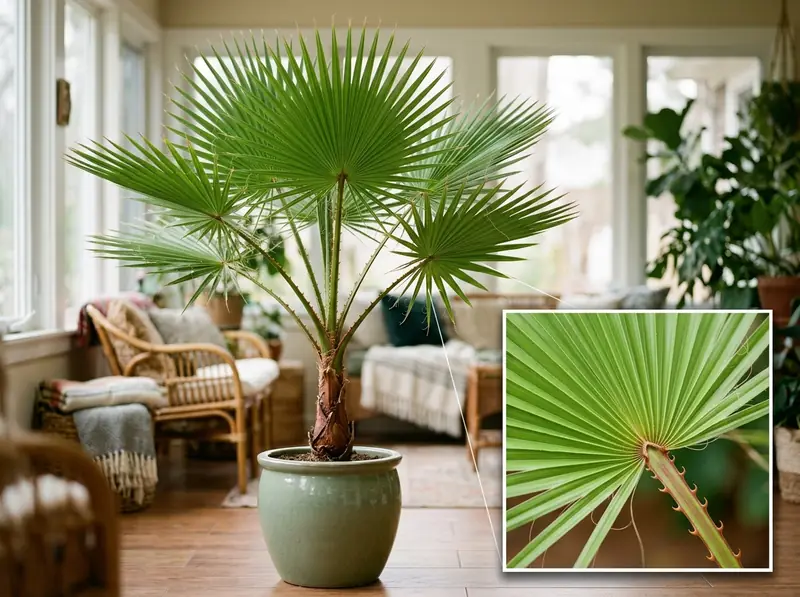 AI-generated
 AI-generated
 AI-generated