
 AI-generated
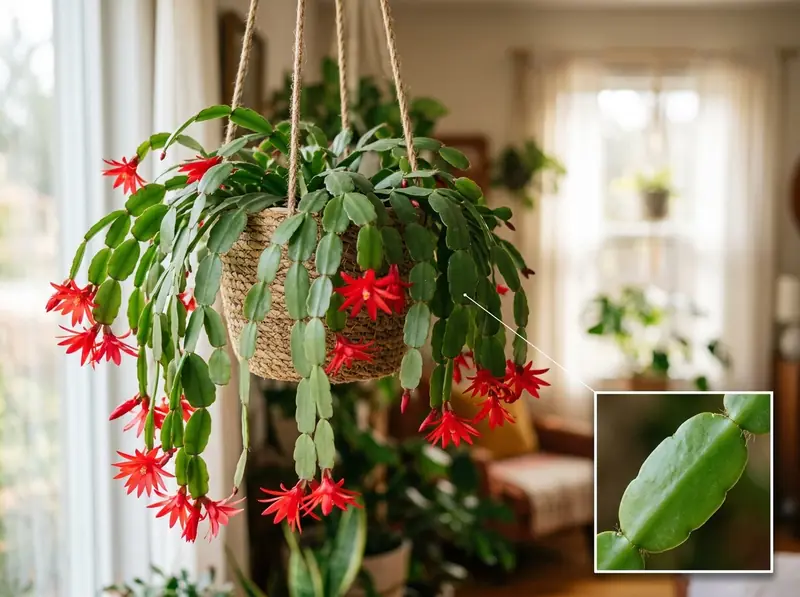
Easter Cactus
Hatiora gaertneri
Easter cactus is a compact, trailing forest cactus with flat, scalloped segments that bears bright star-shaped flowers in red, pink, orange or white in spring. It's easy to keep alive but needs a cool, drier fall rest to bloom well, and it prefers bright indirect light and a fast-draining mix.
Saving is free with a KinClub account, and it works here and in the KinClub app. Sign up free
Care profile
- Light
- Bright, indirect lightLow → direct sun
- Water
- Moderate wateringAbout every 10 days
- Difficulty
- ModerateTricky → easy
- Coldest it tolerates
- 45°F
- Humidity
- Medium
- Mature size
- SmallSmall → tree-size
- Growth rate
- Slow
- How common
- CommonRare → everywhere
- Plant family
- Cactaceae
Pets and toxicity
Cats and dogs: not yet checked
Not yet checked against ASPCA — don't assume it's safe for pets.
No toxicity source on record for this plant yet. If a pet eats any houseplant, call your vet or an animal poison helpline.
How to care for Easter Cactus
Light
Give it bright, indirect light, such as near an east window or a few feet back from a south or west window. Protect it from hot midday sun, which can scorch the flat segments.
Watering
During active growth and budding, water when the top inch of soil is dry, roughly every 10 days, and let excess drain away. After flowering, water less, and in the fall rest period give only enough to keep segments from shriveling.
Soil
Use a fast-draining cactus mix, ideally with extra perlite or bark added (about one part perlite to three parts mix). Choose a pot with drainage holes.
Feeding
Feed every 2 to 4 weeks from spring through summer with a balanced houseplant fertilizer at half strength. Stop feeding in fall and winter until buds appear, then resume lightly.
Repotting
Repot every 2 to 3 years after flowering, going up only one pot size, since it blooms best when slightly root-bound. Handle gently because the segments break off easily.
Propagation
Twist off a segment chain of 2 to 3 segments, let the cut end dry for a day or two, then push it about half an inch into barely moist cactus mix. It roots in a few weeks.
Common problems
- Buds drop before opening: this is usually caused by moving or turning the plant, drafts or dry soil once buds form, so keep it in one spot and water steadily.
- No flowers in spring: it probably missed the cool, dim, dry fall rest, so give 6 weeks of 50-55°F nights and less water.
- Soft, dark stems at the base: this is rot from overwatering, so cut off healthy segments, discard the rotted parts and repot cuttings in fresh dry mix.
- White cottony clusters in joints: mealybugs, so dab them with rubbing alcohol on a cotton swab and repeat weekly until gone.
- Shriveled segments with moist soil: roots may be rotted or damaged, so check the roots and repot in fresh mix if they are brown and mushy.
Similar plants
Same light needs and difficulty.
 AI-generated
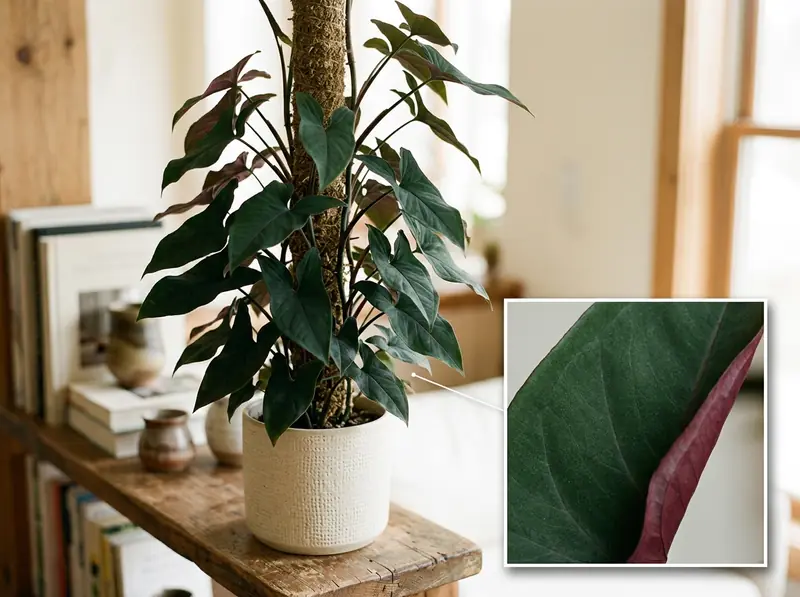
Llano Carti Road Syngonium
Syngonium erythrophyllum 'Llano Carti Road'
- Bright, indirect light
- Moderate watering
Pets: not yet checked AI-generated
 AI-generated
 AI-generated