
 AI-generated
Easter Lily Cactus
Echinopsis oxygona
Also known as Echinopsis multiplex
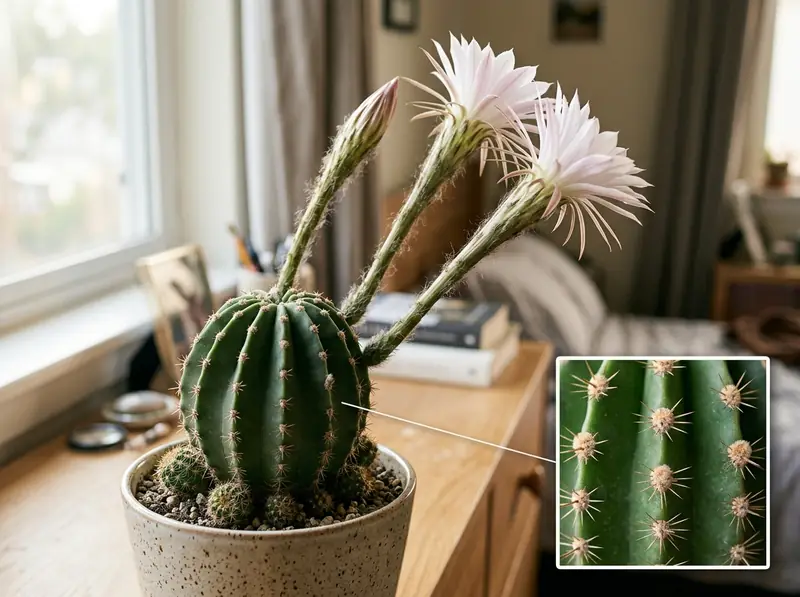
Easter lily cactus (Echinopsis oxygona) is a small, globe-shaped, ribbed cactus that produces huge, trumpet-shaped, fragrant flowers on long stems. The blooms last only a day or two, but a cool, dry winter rest brings them back every year.
Saving is free with a KinClub account, and it works here and in the KinClub app. Sign up free
Care profile
- Light
- Direct sunLow → direct sun
- Water
- Let it dry outAbout every 14 days
- Difficulty
- EasyTricky → easy
- Coldest it tolerates
- 30°F
- Humidity
- Low
- Mature size
- SmallSmall → tree-size
- Growth rate
- Moderate
- How common
- EnthusiastRare → everywhere
- Plant family
- Cactaceae
Pets and toxicity
Non-toxic to cats
Listed as non-toxic to cats by the ASPCA.
Non-toxic to dogs
Listed as non-toxic to dogs by the ASPCA.
Source: ASPCA toxic and non-toxic plants. If a pet eats any houseplant, call your vet or an animal poison helpline.
How to care for Easter Lily Cactus
Light
Bright light with several hours of direct sun, such as a south or west window. Good light is needed for flowering.
Watering
Water deeply when the soil is fully dry, about every 2 weeks in summer. From November to February water only once or twice, or not at all, while it rests cool.
Soil
A gritty cactus mix with extra pumice or coarse sand. Use a terracotta pot with a drainage hole.
Feeding
Feed every month from spring to midsummer with a high-potash cactus fertilizer to support flowering, then stop.
Repotting
Repot every 2 to 3 years in spring when offsets fill the pot. Handle with thick gloves or folded newspaper and wait a few days before watering.
Propagation
Detach offsets (pups) with a clean knife in spring, let the cut dry for a week, and pot them in gritty mix. They root easily.
Common problems
- No flowers: give it more sun and a cool, dry rest of 40 to 50 F over winter.
- Mealybugs or scale on the ribs: dab with alcohol on a swab.
- Soft base from overwatering: unpot, cut away rot, and repot in dry gritty mix.
Similar plants
Same light needs and difficulty.
 AI-generated
 AI-generated
 AI-generated
 AI-generated