
 AI-generated
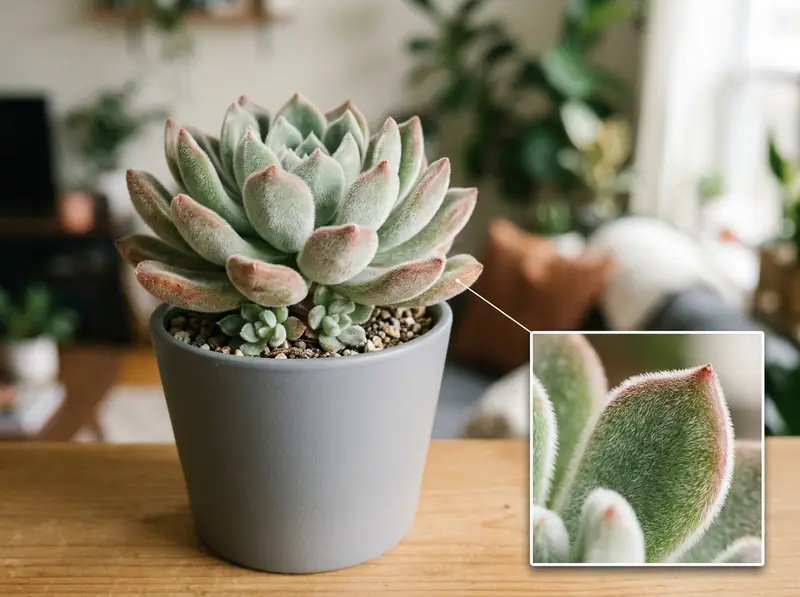
Woolly Rose Echeveria
Echeveria 'Doris Taylor'
Woolly Rose Echeveria is a small succulent rosette covered in soft white hairs, with reddish edges on the leaves. It needs lots of bright light, a gritty fast-draining mix, and infrequent watering. It slowly forms clusters of offsets that are easy to share.
Saving is free with a KinClub account, and it works here and in the KinClub app. Sign up free
Care profile
- Light
- Direct sunLow → direct sun
- Water
- Let it dry outAbout every 14 days
- Difficulty
- EasyTricky → easy
- Coldest it tolerates
- 40°F
- Humidity
- Low
- Mature size
- SmallSmall → tree-size
- Growth rate
- Slow
- How common
- CommonRare → everywhere
Pets and toxicity
Cats and dogs: not yet checked
Not yet checked against ASPCA — don't assume it's safe for pets.
Source: ASPCA toxic and non-toxic plants. If a pet eats any houseplant, call your vet or an animal poison helpline.
How to care for Woolly Rose Echeveria
Light
Give it at least 4-6 hours of bright light, including some direct sun from a south or west window. Acclimate it gradually to stronger sun to avoid sunburn, and use a grow light if indoor light is weak.
Watering
Soak the soil thoroughly, then wait until it is completely dry before watering again, about every 2 weeks in the growing season. In winter, water only every 4-6 weeks, or just enough to keep leaves from shriveling.
Soil
Use a gritty cactus and succulent mix, ideally with extra perlite or pumice (about half the mix). Use a pot with a drainage hole; unglazed terracotta helps the soil dry faster.
Feeding
Feed with a diluted (quarter to half strength) cactus fertilizer once a month in spring and summer. Skip feeding in fall and winter.
Repotting
Repot every 2-3 years in spring, or when offsets crowd the pot. Choose a pot only slightly wider than the plant, and wait a few days after repotting before watering.
Propagation
Twist off healthy offsets (pups) with a bit of stem, let the cut end callus for 2-3 days, then set on dry gritty mix. Leaves can also be used: let them callus and lay on soil, misting lightly once roots appear.
Common problems
- Stretched, leggy growth from too little light: move to a sunnier spot; beheading and replanting the rosette restores the shape.
- Mushy, translucent lower leaves from overwatering: stop watering, remove rotten leaves, and repot into dry gritty mix if the stem is soft.
- Mealybugs in the fuzzy leaves and leaf joints: dab with a cotton swab dipped in rubbing alcohol and repeat weekly until gone.
- Dry, crispy lower leaves are normal as the plant ages: gently pull them off to prevent pests and rot.
- Brown spots on the fuzzy leaves from water drops or sunburn: water at the base and acclimate to sun gradually.
Similar plants
Same light needs and difficulty.
 AI-generated
 AI-generated
 AI-generated
 AI-generated