
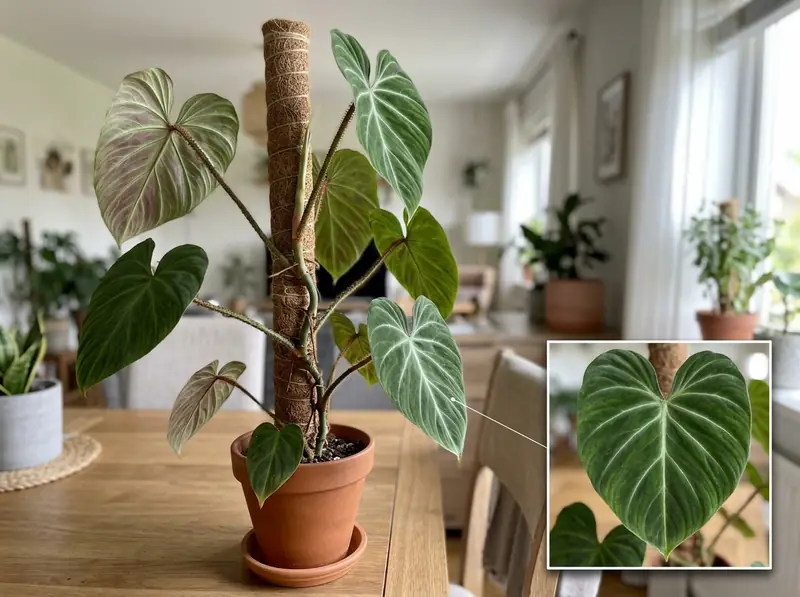
 AI-generated
Ecuador Philodendron
Philodendron verrucosum
Also known as Philodendron carderi, Philodendron daguense, Philodendron discolor, Philodendron lindenii, Philodendron pilatonense
Ecuador philodendron is a prized aroid with velvety, heart-shaped green leaves, pale veins and reddish-purple undersides. It likes warmth, high humidity, bright filtered light and an airy mix, which makes it more demanding than most philodendrons. Support it with a moss pole and keep conditions steady for the best leaves.
Saving is free with a KinClub account, and it works here and in the KinClub app. Sign up free
Care profile
- Light
- Bright, indirect lightLow → direct sun
- Water
- Moderate wateringAbout every 7 days
- Difficulty
- Moderate to challengingTricky → easy
- Coldest it tolerates
- 60°F
- Humidity
- High
- Mature size
- Medium to largeSmall → tree-size
- Growth rate
- Moderate
- How common
- CommonRare → everywhere
- Plant family
- Araceae
Pets and toxicity
Toxic to cats
Keep away from cats. Call your vet or a pet poison helpline if a cat chews it.
Toxic to dogs
Keep away from dogs. Call your vet or a pet poison helpline if a dog chews it.
Source: ASPCA toxic and non-toxic plants. If a pet eats any houseplant, call your vet or an animal poison helpline.
How to care for Ecuador Philodendron
Light
Give bright, filtered light, such as a spot a few feet from an east window or behind a sheer curtain. Avoid direct midday sun, which scorches the velvety leaves.
Watering
Water when the top inch of mix feels dry, roughly every 7 days in the growing season, and let excess drain away. Use room-temperature water and never leave the pot standing in a saucer of water.
Soil
Use a chunky, airy aroid mix, for example 2 parts potting soil, 1 part orchid bark and 1 part perlite. It should hold slight moisture but drain quickly.
Feeding
Feed every 3 to 4 weeks in spring and summer with a balanced houseplant fertilizer at half the label strength. Skip feeding in winter.
Repotting
Repot every 1 to 2 years in spring, going up only 1 to 2 inches in pot diameter, since it dislikes sitting in too much wet soil. Handle the fine roots gently.
Propagation
Take a stem cutting with at least one node and a leaf, and root it in damp sphagnum moss or perlite in a warm, humid spot. Rooting can take several weeks, and stem cuttings are slower than with common philodendrons.
Common problems
- Brown crispy leaf edges: air is too dry, so raise humidity to about 60% or more with a humidifier or cabinet.
- Yellowing lower leaves: usually overwatering or poor drainage, so let the mix dry slightly and repot into chunkier mix if needed.
- Root rot: mushy stems and black roots, so cut away rotted parts and repot in fresh airy mix.
- Spider mites or thrips show as stippling or silvery flecks: wipe leaves gently and treat with insecticidal soap weekly.
- Leaf damage from cold drafts: keep it away from windows and vents in winter and above about 60°F.
Similar plants
Same light needs and difficulty.
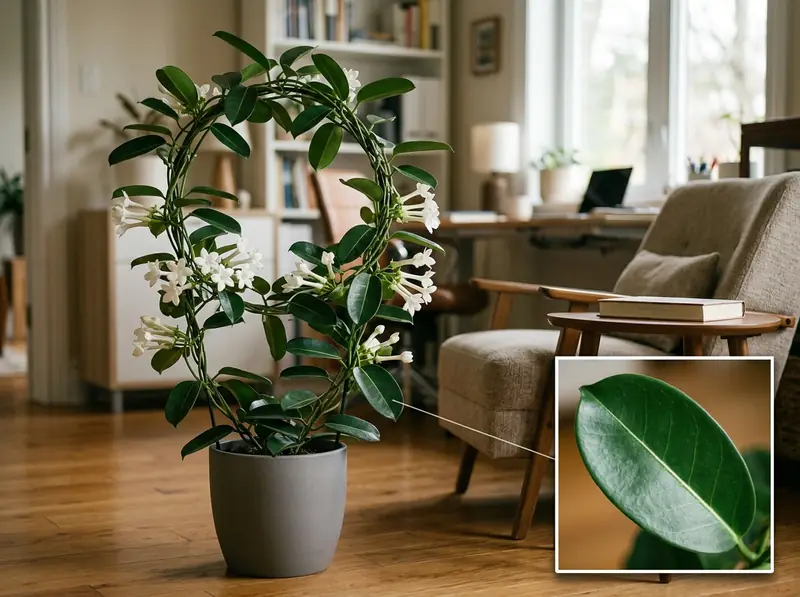 AI-generated
Madagascar Jasmine
Stephanotis floribunda
- Bright, indirect light
- Moderate watering
Non-toxic to cats and dogs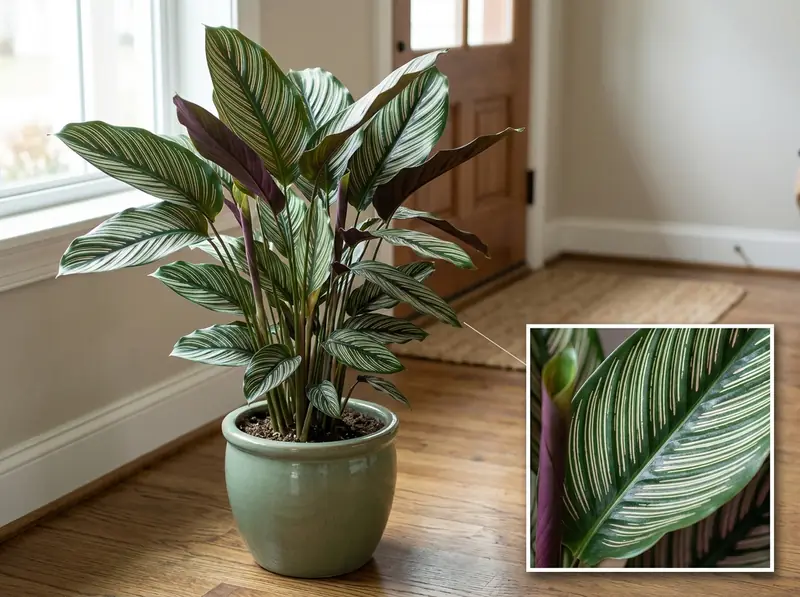 AI-generated
Majestica Calathea
Goeppertia majestica
- Medium to bright, indirect light
- Keep moist
Pets: not yet checked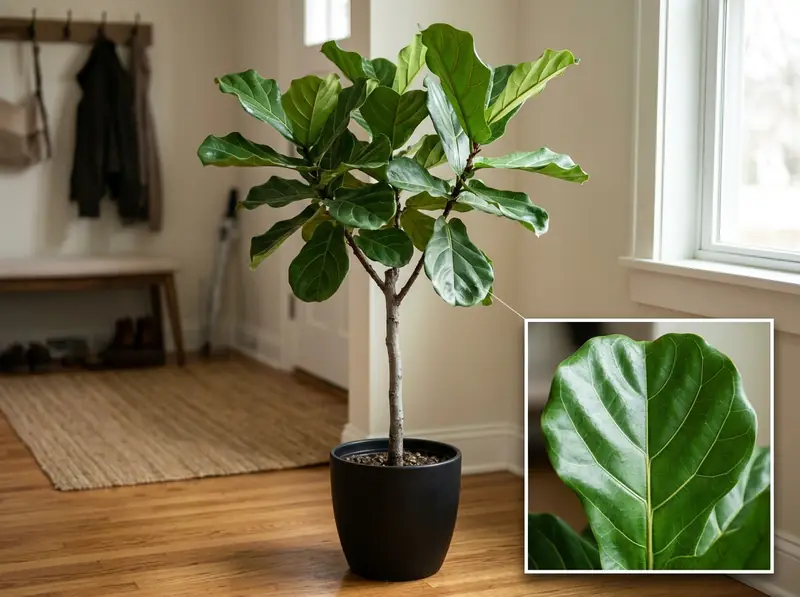 AI-generated
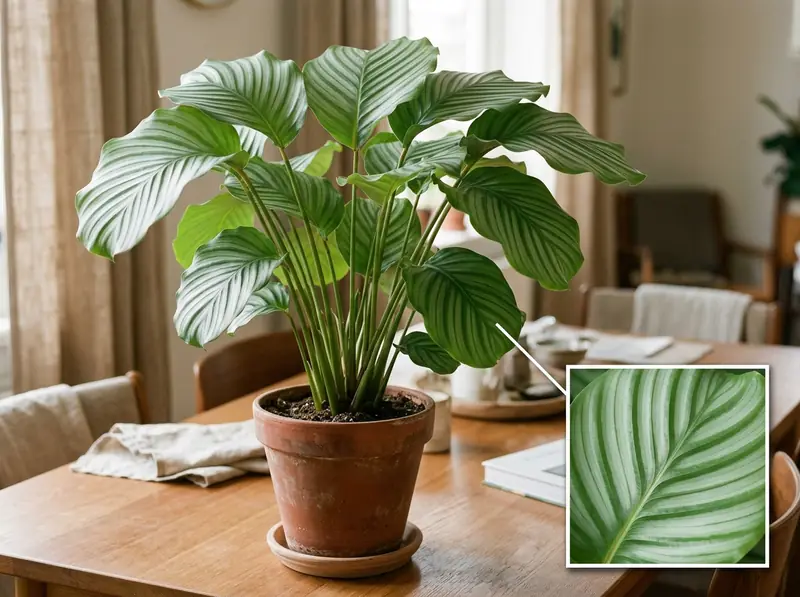 AI-generated
Calathea Orbifolia
Goeppertia orbifolia
- Medium to bright, indirect light
- Keep moist
Pets: not yet checked