
 AI-generated
Egyptian Star Cluster
Pentas lanceolata
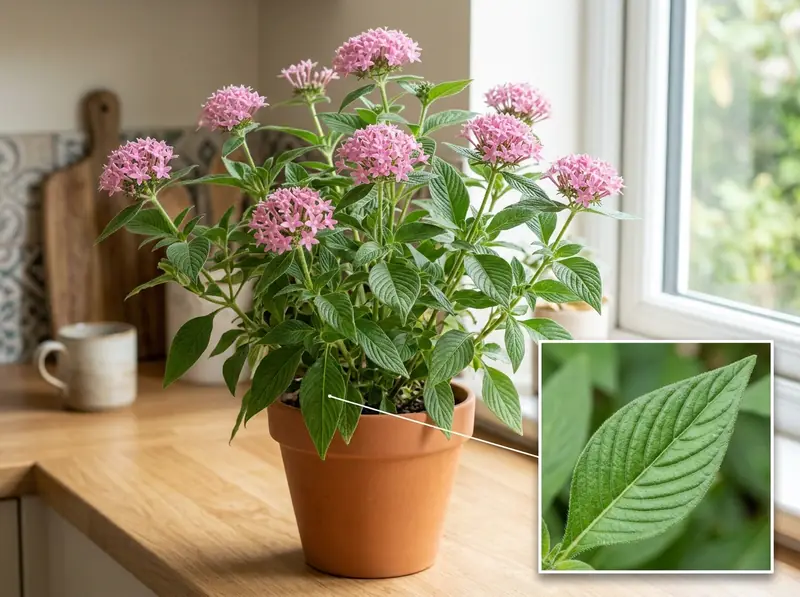
Egyptian star cluster is a fast-growing, shrubby flowering plant with rounded clusters of small star-shaped flowers in pink, red, lavender or white. Indoors it needs a sunny window or a grow light to bloom well, along with steady moisture and regular pruning. Hummingbirds and butterflies love it outdoors, and it makes a cheerful seasonal houseplant that can go outside in summer.
Saving is free with a KinClub account, and it works here and in the KinClub app. Sign up free
Care profile
- Light
- Direct sunLow → direct sun
- Water
- Moderate wateringAbout every 5 days
- Difficulty
- ModerateTricky → easy
- Coldest it tolerates
- 40°F
- Humidity
- Medium
- Mature size
- MediumSmall → tree-size
- Growth rate
- Fast
- How common
- CommonRare → everywhere
- Plant family
- Rubiaceae
Pets and toxicity
Cats and dogs: not yet checked
Not yet checked against ASPCA — don't assume it's safe for pets.
No toxicity source on record for this plant yet. If a pet eats any houseplant, call your vet or an animal poison helpline.
How to care for Egyptian Star Cluster
Light
Give it at least 4-6 hours of direct sun, such as a south- or west-facing window. In winter, a grow light placed 6-12 inches above the plant for 12 hours a day helps it keep blooming.
Watering
Water thoroughly when the top inch of soil is dry, until water runs out of the drainage holes, then empty the saucer. It is thirsty in summer, often needing water every 3-5 days, and it needs much less in winter.
Soil
Use a standard well-draining potting mix with some perlite added (about one part perlite to three parts mix). A slightly acidic to neutral pH suits it.
Feeding
Feed every 2 weeks in spring and summer with a balanced or bloom-boosting liquid fertilizer at half strength. Feed monthly or stop in winter when growth slows.
Repotting
Repot every year or two in spring into a pot 1-2 inches wider, once roots fill the pot. Always use a pot with drainage holes.
Propagation
Take 4-6 inch softwood stem cuttings in spring or summer, remove the lower leaves, and root them in water or moist mix. Roots usually form in 2-3 weeks.
Common problems
- Leggy growth with few blooms: move it to a sunnier spot or add a grow light, and prune back by a third in late winter.
- Yellowing lower leaves: the soil is staying too wet, so let the top inch dry between waterings and check that the pot drains.
- Fine webbing and speckled leaves (spider mites): rinse the plant in the shower and spray with insecticidal soap weekly for 3 weeks.
- Sticky leaves and tiny white flies (whiteflies or aphids): wipe or rinse the leaves, then use insecticidal soap and yellow sticky traps.
- Leaf drop after a move or a cold draft: keep it above 50°F, away from cold windows, and keep conditions steady.
Similar plants
Same light needs and difficulty.
 AI-generated
 AI-generated
 AI-generated
 AI-generated