
 AI-generated
Ethiopian Banana
Ensete ventricosum
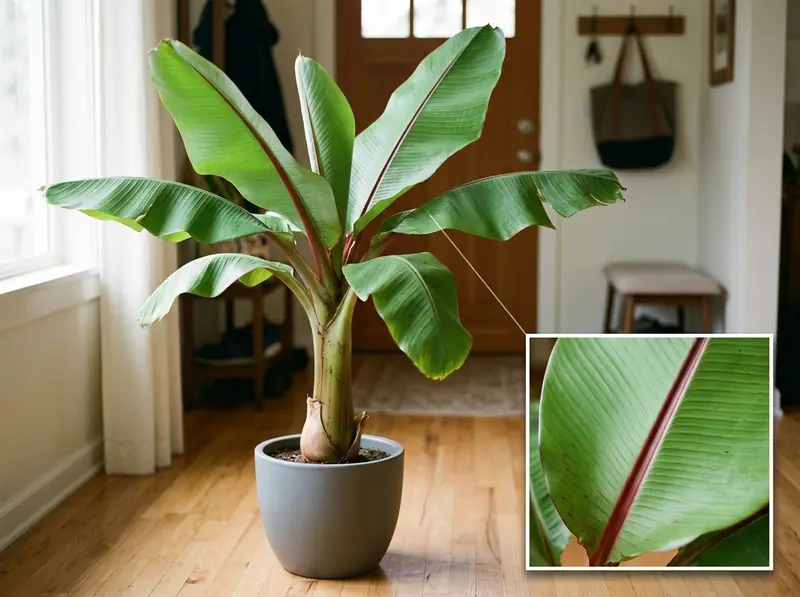
Ethiopian banana is a fast-growing, bold foliage plant with huge paddle-shaped leaves, often with a red midrib. It needs lots of sun, regular water and warmth, and can outgrow a room within a few years. It does not produce edible fruit and is grown for its tropical look.
Saving is free with a KinClub account, and it works here and in the KinClub app. Sign up free
Care profile
- Light
- Direct sunLow → direct sun
- Water
- Keep moistAbout every 5 days
- Difficulty
- ModerateTricky → easy
- Coldest it tolerates
- 50°F
- Humidity
- Medium to high
- Mature size
- Tree-sizeSmall → tree-size
- Growth rate
- Fast
- How common
- CommonRare → everywhere
- Plant family
- Musaceae
Pets and toxicity
Cats and dogs: not yet checked
Not yet checked against ASPCA — don't assume it's safe for pets.
No toxicity source on record for this plant yet. If a pet eats any houseplant, call your vet or an animal poison helpline.
How to care for Ethiopian Banana
Light
Give it as much light as you can: a south or west window with several hours of direct sun is ideal. Plants in dim rooms grow weak and stretched.
Watering
Water thoroughly when the top inch of soil is dry, roughly every 5 to 7 days in summer, until water runs from the drainage holes. Cut back to every 10 to 14 days in winter, when growth slows.
Soil
Use a rich, well-draining potting mix, such as standard potting soil with about 20 to 30 percent perlite or coarse sand added. The pot must have drainage holes.
Feeding
Feed every 2 to 4 weeks from spring to early autumn with a balanced liquid fertilizer at half strength. Stop feeding in winter.
Repotting
Repot each spring or when roots fill the pot, moving up 2 to 4 inches in diameter. Fast growers can need repotting every year or two.
Propagation
Plants are usually grown from seed, which is soaked for a day and sown warm at 75 to 85°F. Occasionally offsets form at the base and can be separated, but this is uncommon.
Common problems
- Brown, shredded leaf edges are normal as leaves age and tear in wind; raise humidity and trim only dead tissue.
- Crispy brown tips and webbing point to spider mites; wipe leaves with water and use insecticidal soap weekly.
- Yellow lower leaves are often natural aging, but if many yellow at once, check for soggy soil and reduce watering.
- Slow growth or small leaves in winter usually means low light or cold; move to a brighter, warmer spot.
Similar plants
Same light needs and difficulty.
 AI-generated
 AI-generated
 AI-generated
 AI-generated