AI-generated image, not a photograph of this plant. Real plants look different depending on light, soil, temperature and age.
AraceaeCommon in stores
Fancy-Leaf Caladium
Caladium bicolor
Also known as Malanga, Elephant's Ears, Stoplight, Seagull, Mother-in-law Plant, Pink Cloud, Texas Wonder, Angel-Wings, Exposition, Candidum, Fancy-leaved Caladium, Taro
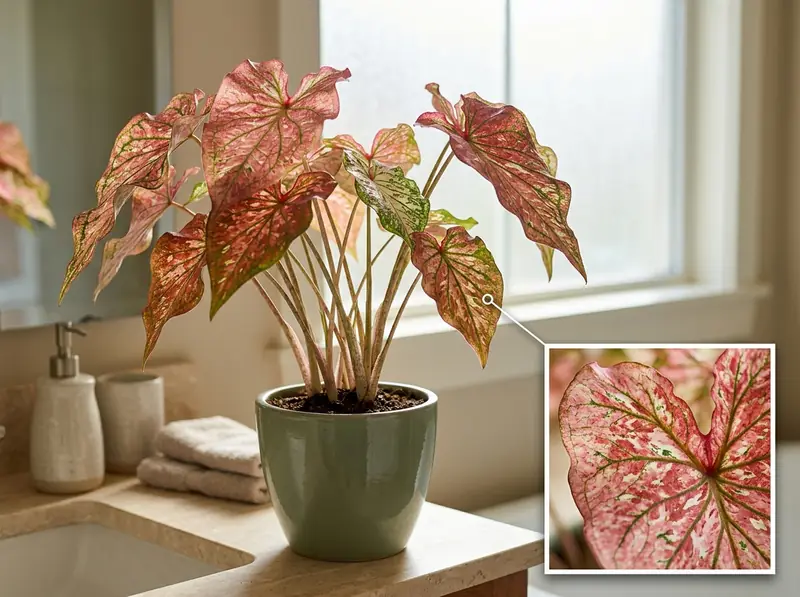
Fancy-leaf caladium is grown for its large, heart-shaped leaves splashed with pink, red, white and green. It likes warmth, humidity and steady moisture, and it grows from tubers that go dormant in fall and winter. Expect a new flush of leaves each spring after a dry rest.
Toxic to cats and dogs
💡
Saving is free with a KinClub account, and it works here and in the KinClub app. Sign up free
🪴 Care profile
Light
Bright, indirect lightLow → direct sun
Water
Keep moistAbout every 5 days
Difficulty
ModerateTricky → easy
Coldest it tolerates
60°F
Humidity
High
Mature size
Small to mediumSmall → tree-size
Growth rate
Fast
How common
CommonRare → everywhere
Plant family
Araceae
🐾 Pets and toxicity
Toxic to cats
Keep away from cats. Call your vet or a pet poison helpline if a cat chews it.
Toxic to dogs
Keep away from dogs. Call your vet or a pet poison helpline if a dog chews it.
Give bright indirect light, such as a few feet from an east or lightly shaded south window. Avoid direct midday sun, which scorches the thin leaves.
Watering
Keep the soil evenly damp but not soggy during active growth, usually watering every 4-6 days when the top half inch starts to dry. Use room-temperature water and cut back as leaves die down in fall.
Soil
Use a loose, peaty, well-draining potting mix with some perlite added. The pot must have drainage holes.
Feeding
Feed every 2-4 weeks in spring and summer with a balanced liquid fertilizer at half strength. Stop feeding when the leaves begin to die back.
Repotting
Plant tubers knobby side up, about 2 inches deep, in spring when temperatures are warm. Repot or divide tubers yearly after dormancy into fresh mix.
Propagation
Divide the tubers in spring, making sure each piece has at least one bud or 'eye'. Let cut surfaces dry for a day before planting in warm, damp mix.
Common problems
Leaves yellow and die back in fall: this is natural dormancy, so stop watering and store the tubers dry and warm until spring.
Brown crispy leaf edges: air is too dry or watering is uneven, so raise humidity with a pebble tray and water more regularly.
Tuber rot: soil stayed too wet or too cold, so use a well-draining mix and wait for warmth before watering heavily.
Spider mites cause speckled leaves: rinse leaves, wipe undersides, and raise humidity.
Leggy, faded plants: move to brighter indirect light.

 AI-generated
 AI-generated
 AI-generated
 AI-generated
 AI-generated