
 AI-generated
Felt Bush
Kalanchoe beharensis
Also known as Kalanchoe van-tieghemii
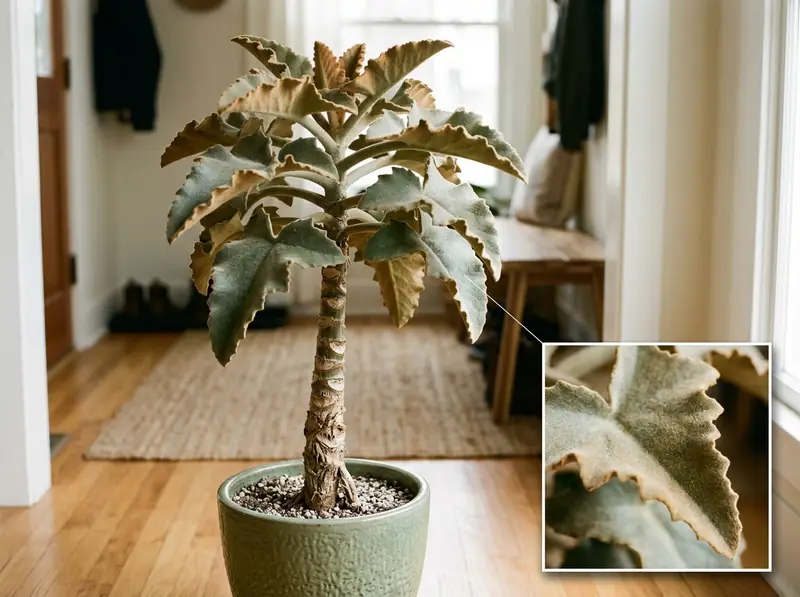
Felt bush is a striking succulent with large, triangular, velvety leaves in silvery-brown tones on an upright, eventually tall stem. It is easy in a sunny window with gritty soil and infrequent watering. Keep the leaves dry and handle gently, since they bruise and break off readily.
Saving is free with a KinClub account, and it works here and in the KinClub app. Sign up free
Care profile
- Light
- Direct sunLow → direct sun
- Water
- Let it dry outAbout every 14 days
- Difficulty
- EasyTricky → easy
- Coldest it tolerates
- 50°F
- Humidity
- Low
- Mature size
- LargeSmall → tree-size
- Growth rate
- Slow to moderate
- How common
- CommonRare → everywhere
- Plant family
- Crassulaceae
Pets and toxicity
Toxic to cats
Keep away from cats. Call your vet or a pet poison helpline if a cat chews it.
Toxic to dogs
Keep away from dogs. Call your vet or a pet poison helpline if a dog chews it.
Source: ASPCA toxic and non-toxic plants. If a pet eats any houseplant, call your vet or an animal poison helpline.
How to care for Felt Bush
Light
Give it several hours of bright light, ideally a south or west window with some direct sun. Turn the pot a quarter turn every week or two to keep growth even.
Watering
Soak the soil thoroughly, then let it dry out almost completely before watering again, about every 2 weeks in summer. In winter water only every 3 to 5 weeks, just enough to keep leaves from wrinkling.
Soil
Use a gritty cactus or succulent mix, or regular potting mix with about one-third perlite or coarse sand. The pot must have drainage holes.
Feeding
Feed with a half-strength cactus or balanced fertilizer once a month in spring and summer. Do not feed in fall and winter.
Repotting
Repot every 2 to 3 years in spring into a pot only 1 to 2 inches wider, preferably a heavy one, as tall plants get top-heavy. Handle gently because the brittle leaves snap off easily.
Propagation
Leaves that fall off or are removed can be laid on dry gritty soil and will root and form plantlets in a few weeks. Stem tip cuttings should callus for a few days, then be planted in gritty mix.
Common problems
- Mealybugs hide in the felt and leaf joints; dab with rubbing alcohol on a cotton swab and repeat weekly until gone.
- Yellow, mushy lower leaves mean overwatering; let soil dry fully and check that the pot drains.
- Stretched, sparse growth means too little light; move to a brighter window.
- Leaf drop when touched or moved is normal for this plant; handle it as little as possible.
- Brown spots on leaves come from water sitting on the felt or sunburn; water the soil only and acclimate to strong sun gradually.
Similar plants
Same light needs and difficulty.
 AI-generated
 AI-generated
 AI-generated
 AI-generated