
 AI-generated
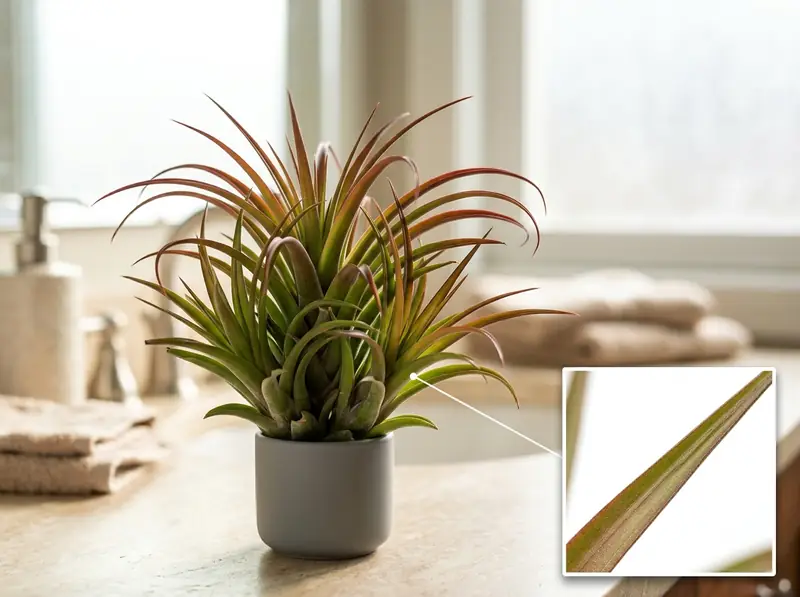
Flabellata Air Plant
Tillandsia flabellata
Tillandsia flabellata is a small, slow-growing air plant that forms a rosette of stiff leaves, which can turn bright red when it is about to bloom. It needs no soil, just bright light, a weekly soak and good airflow so it dries quickly. It is forgiving for beginners and makes pups that grow into a clump over time.
Saving is free with a KinClub account, and it works here and in the KinClub app. Sign up free
Care profile
- Light
- Bright, indirect lightLow → direct sun
- Water
- Dry to moderate wateringAbout every 7 days
- Difficulty
- Easy to moderateTricky → easy
- Coldest it tolerates
- 45°F
- Humidity
- Medium to high
- Mature size
- SmallSmall → tree-size
- Growth rate
- Slow
- How common
- EnthusiastRare → everywhere
- Plant family
- Bromeliaceae
Pets and toxicity
Cats and dogs: not yet checked
Not yet checked against ASPCA — don't assume it's safe for pets.
No toxicity source on record for this plant yet. If a pet eats any houseplant, call your vet or an animal poison helpline.
How to care for Flabellata Air Plant
Light
Give bright, indirect light, such as a spot near an east or south window with a sheer curtain. Morning sun is fine, but avoid hot midday sun through glass.
Watering
Soak in room-temperature water for 10 to 20 minutes, or rinse thoroughly, about once a week. Shake off excess and let it dry fully within 4 hours. Water a little less often in winter.
Soil
No soil is needed, because it absorbs water and nutrients through its leaves. Mount it on bark, driftwood or a shelf, or set it loosely in a holder. Avoid burying the base, and don't use copper-treated wood.
Feeding
Feed once a month in spring and summer with a bromeliad or air plant fertilizer diluted to quarter strength. Add it to the soaking water.
Repotting
No repotting is needed. If you mount it, use a non-metal fastener or a dab of floral adhesive, and keep the base free of tight wraps that hold moisture.
Propagation
Separate pups when they reach about one third to half the size of the parent, by gently twisting them off. Or leave them to form a clump. Mature plants usually bloom once and then produce several pups.
Common problems
- Rotting center: water trapped in the base. Dry the plant upside down after watering, increase airflow, and water less often.
- Curled, crispy leaves: dehydration. Soak for 30 to 60 minutes once, then water more regularly.
- Faded color and no growth: too little light. Move to a brighter spot or add a grow light.
- Brown leaf tips: dry air or minerals in the water. Use rain or filtered water and mist lightly between soaks.
Similar plants
Same light needs and difficulty.
 AI-generated
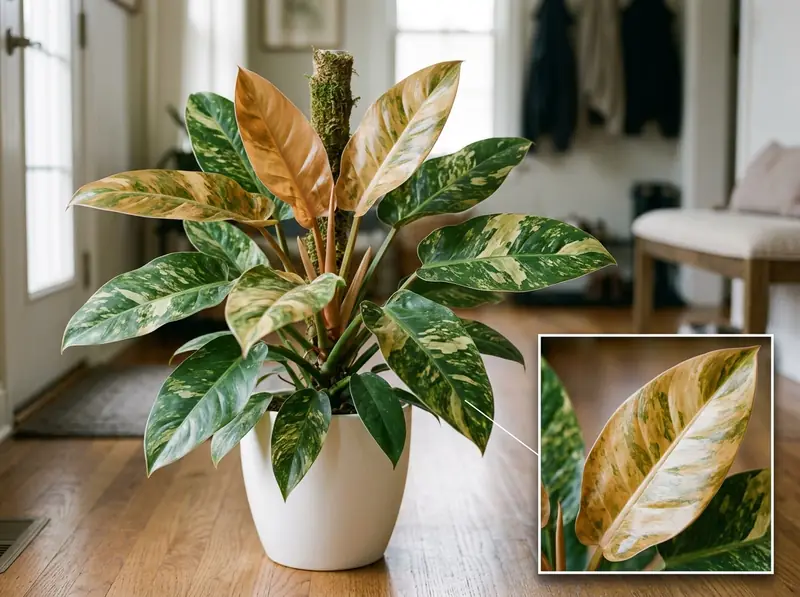
Caramel Marble Philodendron
Philodendron 'Caramel Marble'
- Bright, indirect light
- Moderate watering
Toxic to cats and dogs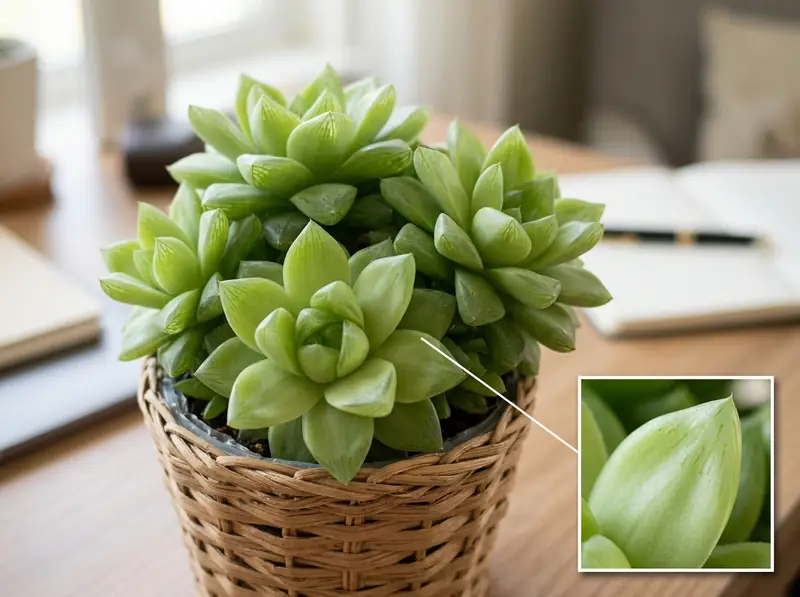 AI-generated
Cathedral Window Haworthia
Haworthia cymbiformis
- Bright, indirect light
- Let it dry out
Pets: not yet checked AI-generated
Chinese Money Plant
Pilea peperomioides
- Bright, indirect light
- Dry to moderate watering
Pets: not yet checked AI-generated
Christmas Cactus
Schlumbergera × buckleyi
- Bright, indirect light
- Moderate watering
Pets: not yet checked