
 AI-generated
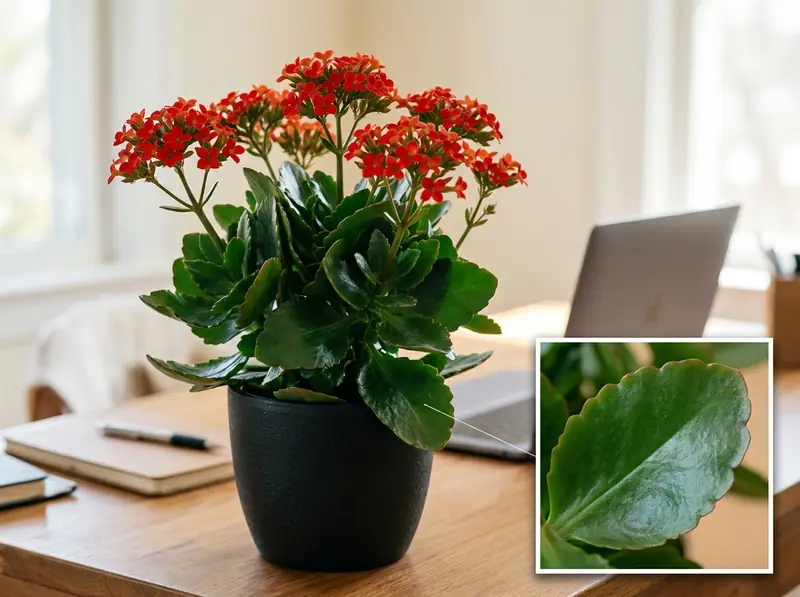
Flaming Katy
Kalanchoe blossfeldiana
Also known as Kalanchoe coccinea
Flaming Katy is a compact succulent with thick, glossy scalloped leaves and long-lasting clusters of small flowers in red, orange, pink, yellow or white. It is easy to grow on a bright windowsill if you water sparingly. Many people enjoy it as a colourful gift plant that can be encouraged to rebloom with long nights.
Saving is free with a KinClub account, and it works here and in the KinClub app. Sign up free
Care profile
- Light
- Bright, indirect lightLow → direct sun
- Water
- Let it dry outAbout every 14 days
- Difficulty
- EasyTricky → easy
- Coldest it tolerates
- 45°F
- Humidity
- Low
- Mature size
- SmallSmall → tree-size
- Growth rate
- Moderate
- How common
- Very commonRare → everywhere
- Plant family
- Crassulaceae
Pets and toxicity
Toxic to cats
Keep away from cats. Call your vet or a pet poison helpline if a cat chews it.
Toxic to dogs
Keep away from dogs. Call your vet or a pet poison helpline if a dog chews it.
Source: ASPCA toxic and non-toxic plants. If a pet eats any houseplant, call your vet or an animal poison helpline.
How to care for Flaming Katy
Light
Give it a bright spot with several hours of gentle morning or winter sun, such as an east or south window. Avoid hot, unfiltered midday summer sun, which can scorch the leaves.
Watering
Water thoroughly, then wait until the soil is dry about 2 inches down, usually every 2 to 3 weeks. Water less in winter and never leave the pot standing in water.
Soil
Use a gritty cactus and succulent mix, or regular potting mix blended about half and half with perlite or coarse sand. The pot must have drainage holes.
Feeding
While it is growing or in bloom, feed every 4 to 6 weeks with a half-strength balanced fertilizer or a bloom-type houseplant feed. Skip feeding in winter when growth is slow.
Repotting
Repot only every year or two, in spring after flowering, into a pot 1 to 2 inches wider. Many owners treat it as a short-lived plant and replace or refresh it after a few years.
Propagation
Take 3 to 4 inch stem cuttings, let the cut end dry for a day or two, then push into barely damp gritty mix. They root in 2 to 4 weeks. Leaf cuttings also work.
Common problems
- Leggy, sparse growth: move to brighter light and pinch back stem tips after flowering to keep it compact.
- No flowers: it needs long nights of 14 hours of darkness for about 6 weeks, plus bright days, to set buds.
- Powdery mildew (white dusty film on leaves): improve air circulation, avoid wetting leaves, and remove badly affected leaves.
- Stem rot or yellow mushy leaves: usually overwatering; let the soil dry out fully, or take healthy cuttings if the base is soft.
- Spent flowers looking untidy: snip off faded flower clusters at the base of their stalk to encourage more blooms.
Similar plants
Same light needs and difficulty.
 AI-generated
 AI-generated
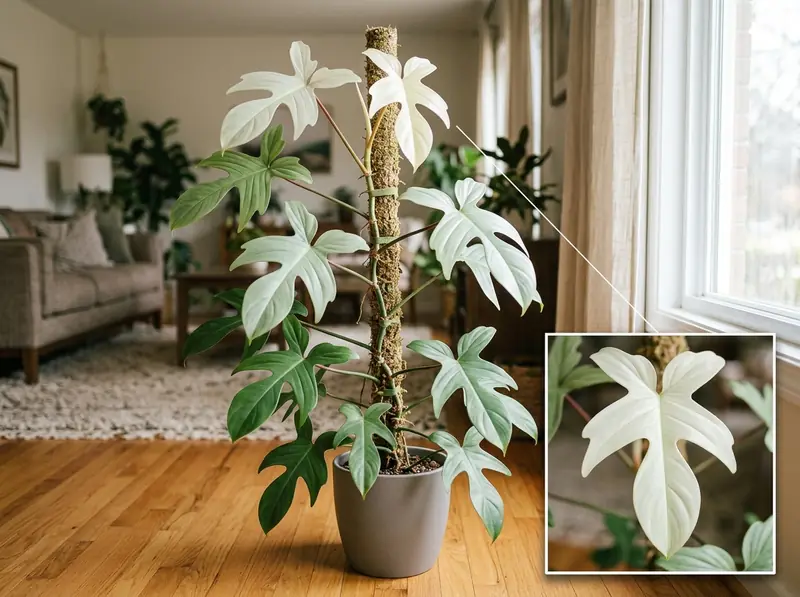
Florida Ghost Philodendron
Philodendron 'Florida Ghost'
- Bright, indirect light
- Moderate watering
Toxic to cats and dogs AI-generated
Chinese Money Plant
Pilea peperomioides
- Bright, indirect light
- Dry to moderate watering
Pets: not yet checked AI-generated
Christmas Cactus
Schlumbergera × buckleyi
- Bright, indirect light
- Moderate watering
Pets: not yet checked