
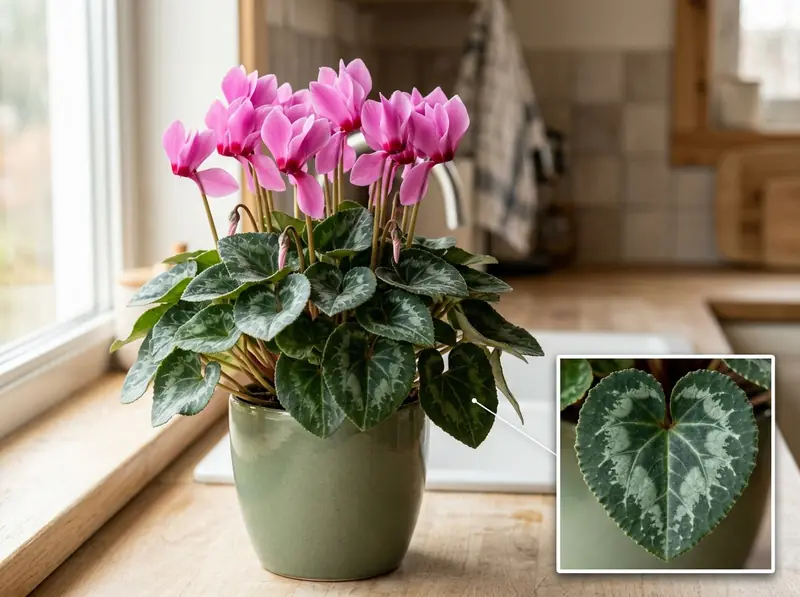
 AI-generated
Florist's Cyclamen
Cyclamen persicum
Also known as Cyclamen albidum, Cyclamen aleppicum, Cyclamen antiochium, Cyclamen hederaceum, Cyclamen hederifolium, Cyclamen latifolium, Cyclamen punicum, Cyclamen pyrolifolium, Cyclamen tunetanum, Cyclamen utopicum, Cyclamen vernale, Cyclamen vulgare
Florist's cyclamen is a compact flowering plant that blooms for months in fall through spring, with pink, red, white or purple flowers above marbled heart-shaped leaves. It prefers a cool, bright room at about 50-65°F and steady, careful watering. It is often treated as a seasonal plant, but it can be rested over summer and brought back to bloom.
Saving is free with a KinClub account, and it works here and in the KinClub app. Sign up free
Care profile
- Light
- Bright, indirect lightLow → direct sun
- Water
- Moderate to moist wateringAbout every 5 days
- Difficulty
- ModerateTricky → easy
- Coldest it tolerates
- 40°F
- Humidity
- Medium to high
- Mature size
- SmallSmall → tree-size
- Growth rate
- Slow to moderate
- How common
- Very commonRare → everywhere
- Plant family
- Primulaceae
Pets and toxicity
Toxic to cats
Keep away from cats. Call your vet or a pet poison helpline if a cat chews it.
Toxic to dogs
Keep away from dogs. Call your vet or a pet poison helpline if a dog chews it.
Source: ASPCA toxic and non-toxic plants. If a pet eats any houseplant, call your vet or an animal poison helpline.
How to care for Florist's Cyclamen
Light
Give bright, indirect light, such as an east or north window, or a spot a few feet back from a south window. Gentle winter sun is fine, but avoid hot midday sun.
Watering
Water when the top inch of soil feels dry, about every 4-7 days in a cool room. Water at the pot edge or from below, and pour off any excess after 15-20 minutes.
Soil
Use a well-draining potting mix with some perlite or coarse sand added. Keep the top of the tuber slightly above the soil line.
Feeding
While in bloom, feed every 2 weeks with a balanced liquid fertilizer at half strength. Stop feeding when the plant goes dormant.
Repotting
Repot only when dormant, usually in late summer, into a pot about 1 inch wider. Keep the top third of the tuber above the soil.
Propagation
Home propagation is difficult and is normally done from seed, which takes 12-18 months to flower. Cuttings do not work, and dividing tubers is not recommended.
Common problems
- Yellowing leaves after flowering: this is normal dormancy as temperatures warm, so reduce watering and rest the tuber in a cool, dry, shaded place.
- Drooping plant: check the soil, then soak from below if it is dry. If it is wet, let it dry and check the crown for rot.
- Buds dropping or flowers fading fast: the room is too warm or dry, so move the plant to a spot at 60-65°F.
- Gray mold on stems or flowers: remove affected parts and improve airflow. Water only at the soil level.
- Curled, distorted leaves and buds: check for thrips or cyclamen mites, and isolate and treat the plant.
Similar plants
Same light needs and difficulty.
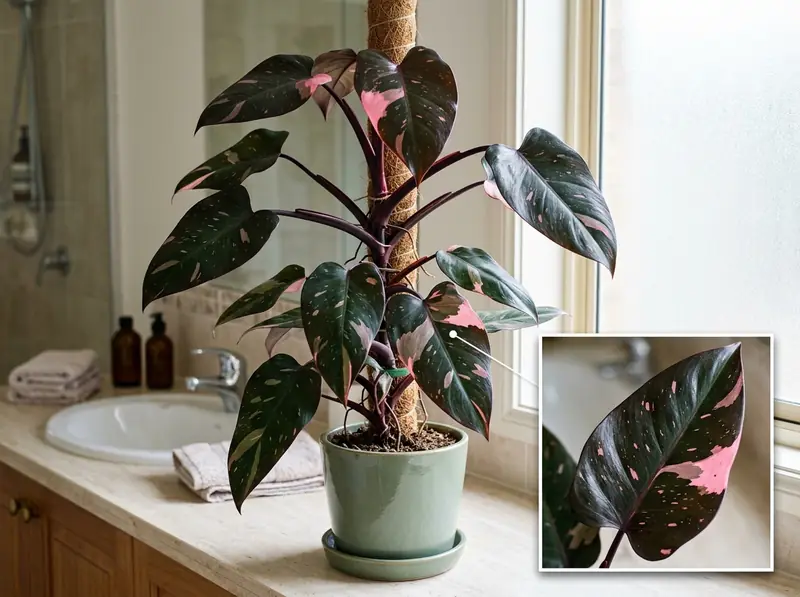 AI-generated
Pink Princess Philodendron
Philodendron erubescens 'Pink Princess'
- Bright, indirect light
- Moderate watering
Toxic to cats and dogs AI-generated
 AI-generated
 AI-generated