
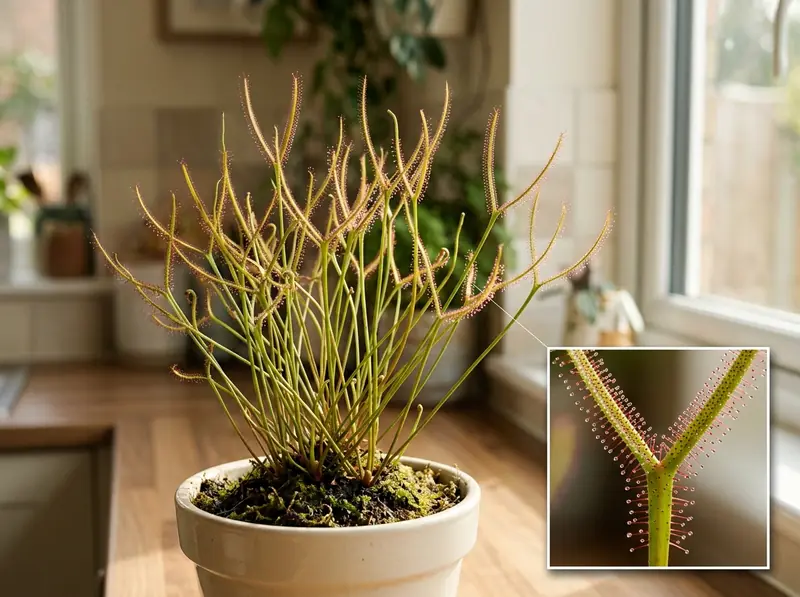
 AI-generated
Forked Sundew
Drosera binata
Forked sundew is an Australian and New Zealand sundew with long, upright stalks that fork into two or more sticky arms, like antlers. It is hardy and widely grown, and a good beginner pick if you use pure water.
Saving is free with a KinClub account, and it works here and in the KinClub app. Sign up free
Care profile
- Light
- Direct sunLow → direct sun
- Water
- Keep moistAbout every 3 days
- Difficulty
- ModerateTricky → easy
- Coldest it tolerates
- 30°F
- Humidity
- Medium to high
- Mature size
- SmallSmall → tree-size
- Growth rate
- Moderate to fast
- How common
- RareRare → everywhere
- Plant family
- Droseraceae
Pets and toxicity
Cats and dogs: not yet checked
Not yet checked against ASPCA — don't assume it's safe for pets.
No toxicity source on record for this plant yet. If a pet eats any houseplant, call your vet or an animal poison helpline.
How to care for Forked Sundew
Light
Give 4 to 6 hours of direct sun, such as a south or west window, or a strong grow light for 12 to 14 hours. Strong light brings out the dew.
Watering
Use only distilled, rain or reverse-osmosis water. Keep the pot standing in about 1 inch of water in spring and summer, and just damp in winter.
Soil
Use a mix of 1 part peat moss to 1 part perlite or silica sand, with no fertilizer, in a deep plastic pot.
Feeding
Do not fertilize. It catches tiny insects; a bit of insect feed is optional.
Repotting
Repot or divide every year or two in late winter into fresh peat and sand; it spreads by roots and may fill the pot.
Propagation
Take root cuttings: cut 1-inch pieces of root, lay them flat on damp peat, and cover lightly. New plants form within weeks.
Common problems
- It dies back in cool winters (below 50 F) and regrows in spring; keep it damp, not wet, until then.
- No dew on the leaves means low light or dry air; move it to a sunnier window.
- Tap water or fertilizer browns the tips and roots; use only pure water.
- Aphids are occasional; rinse them off with water and wipe the leaves with a damp cloth.
Similar plants
Same light needs and difficulty.
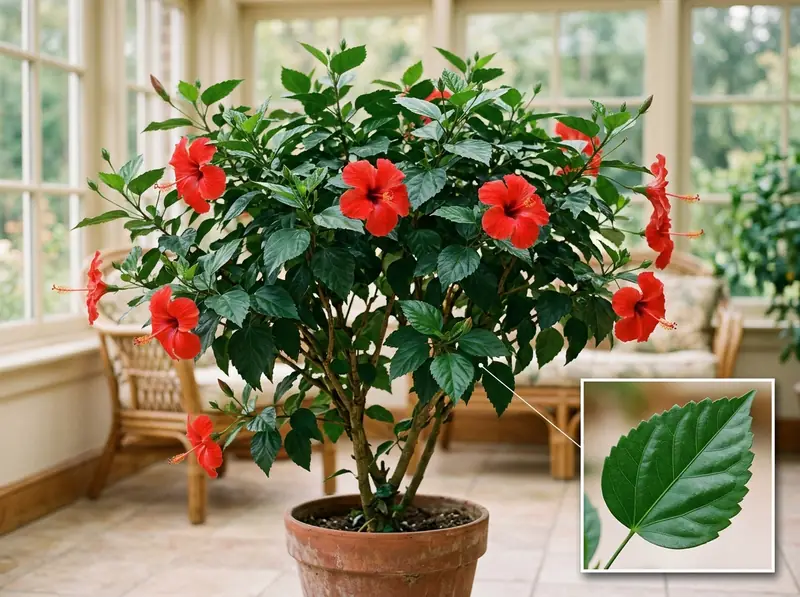 AI-generated
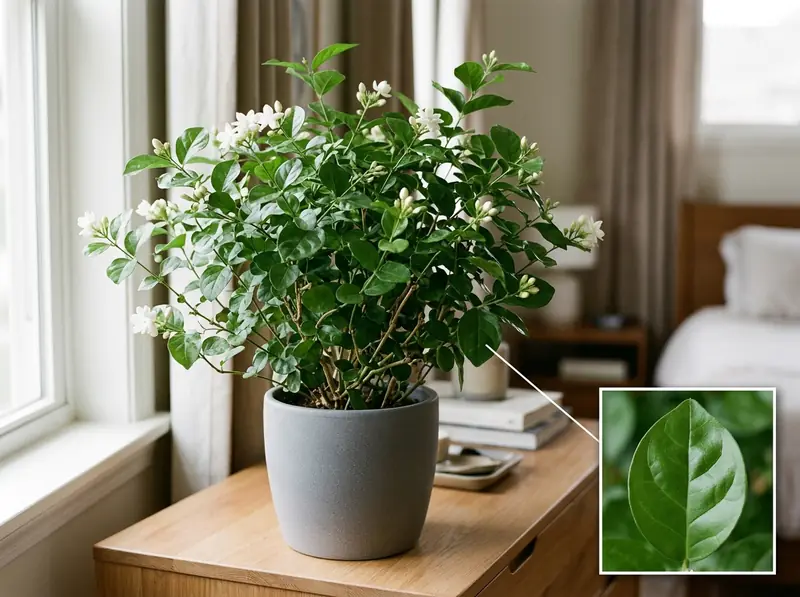 AI-generated
 AI-generated
 AI-generated