
 AI-generated
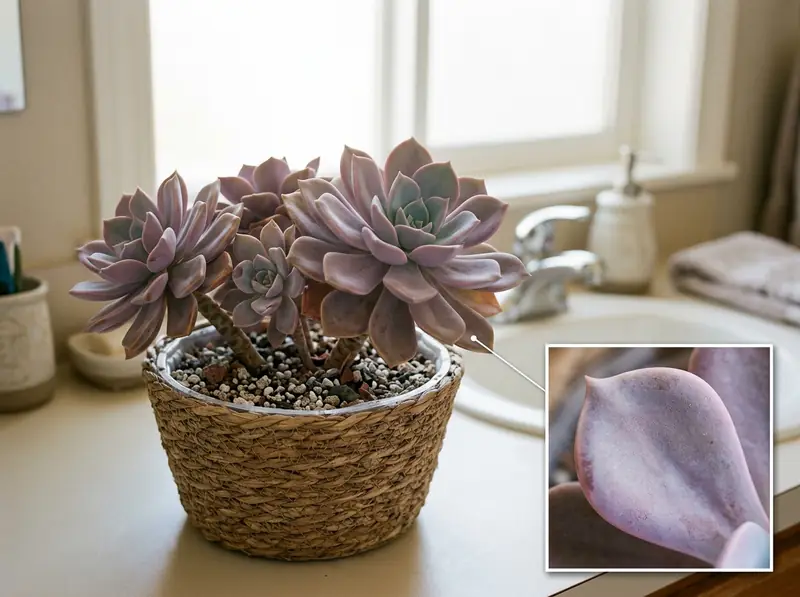
Fred Ives Graptoveria
Graptoveria 'Fred Ives'
Fred Ives is a hardy succulent hybrid with broad, silvery-lilac to pink-purple rosettes, a cross of Graptopetalum and Echeveria. It needs plenty of sun, a gritty mix and infrequent watering. It is easy to multiply from fallen leaves and suits a bright windowsill.
Saving is free with a KinClub account, and it works here and in the KinClub app. Sign up free
Care profile
- Light
- Direct sunLow → direct sun
- Water
- Let it dry outAbout every 14 days
- Difficulty
- EasyTricky → easy
- Coldest it tolerates
- 35°F
- Humidity
- Low
- Mature size
- SmallSmall → tree-size
- Growth rate
- Slow to moderate
- How common
- CommonRare → everywhere
Pets and toxicity
Cats and dogs: not yet checked
Not yet checked against ASPCA — don't assume it's safe for pets.
No toxicity source on record for this plant yet. If a pet eats any houseplant, call your vet or an animal poison helpline.
How to care for Fred Ives Graptoveria
Light
Give it at least 4 to 6 hours of direct sun, ideally from a south or west window. Bright light keeps the rosettes tight and brings out the dusty pink and purple tones.
Watering
Soak the soil thoroughly, then wait until it is completely dry before watering again, about every 2 to 3 weeks in summer. In winter, water only about once a month, or less if the room is cool.
Soil
Use a gritty cactus and succulent mix, or add about half perlite or pumice to regular potting mix. Use a pot with a drainage hole, and terracotta helps the soil dry faster.
Feeding
Feed with a half-strength cactus fertilizer once or twice in spring and summer. Do not feed in autumn or winter.
Repotting
Repot every 2 to 3 years in spring, only when the plant outgrows its pot, into a pot 1 to 2 inches wider. Let the soil stay dry for a few days after repotting before watering.
Propagation
Twist off a healthy leaf, let the end dry for a few days, and lay it on dry gritty soil in bright light. Roots and a tiny rosette form in a few weeks. Offsets and stem cuttings also root easily after drying for a few days.
Common problems
- Stretched, leggy growth: move to a sunnier window or add a grow light. Behead the rosette and re-root it to restore a compact shape.
- Mushy, translucent leaves or a soft stem: this is rot from overwatering. Cut away the affected parts, let the healthy piece dry for several days, and replant in fresh dry gritty mix.
- Cottony white masses between leaves are mealybugs: dab them with a cotton swab dipped in rubbing alcohol and repeat weekly until gone.
- Shriveled lower leaves: a few dry, papery lower leaves are normal aging and can be pulled off. If many leaves are wrinkled, give a thorough soak.
- Sunburn spots after a move into strong sun: acclimate the plant gradually over 1 to 2 weeks and keep it from touching hot glass.
Similar plants
Same light needs and difficulty.
 AI-generated
 AI-generated
 AI-generated
 AI-generated